College of Life Sciences, Zhejiang Normal University, Jinhua 321004, China.
Key Laboratory of Novel Targets and Drug Study for Neural Repair of Zhejiang Province, School of Medicine, Hangzhou City University, Hangzhou 310015, China.
Molecules. 2023 Mar 28;28(7):3020. doi: 10.3390/molecules28073020.
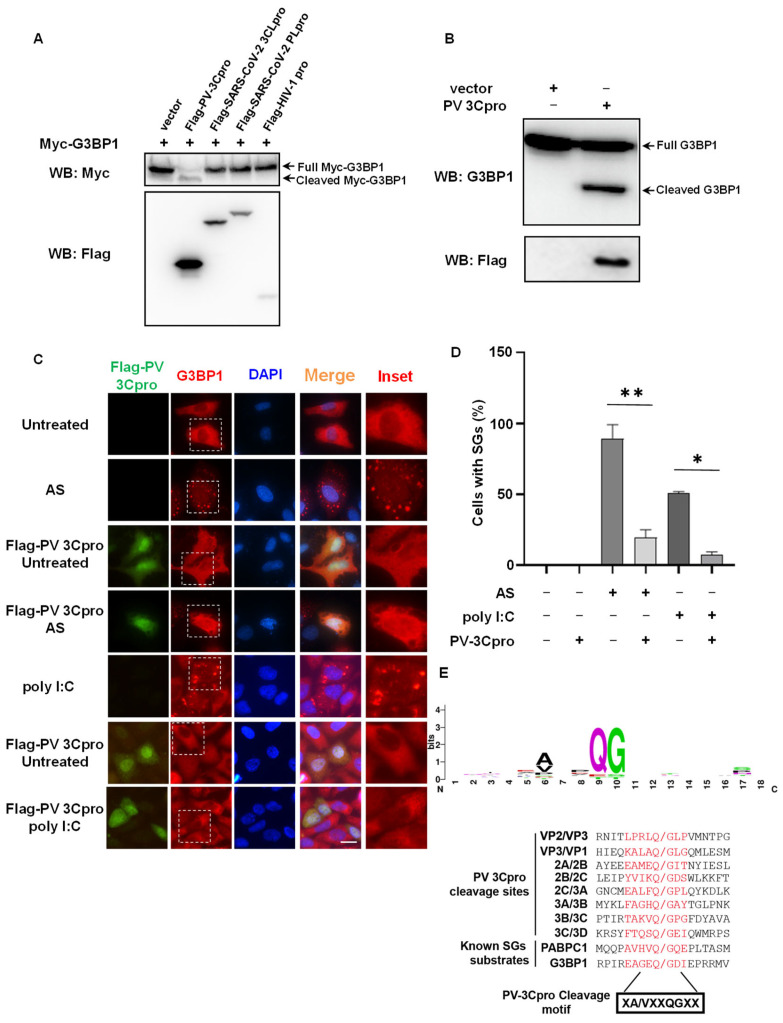
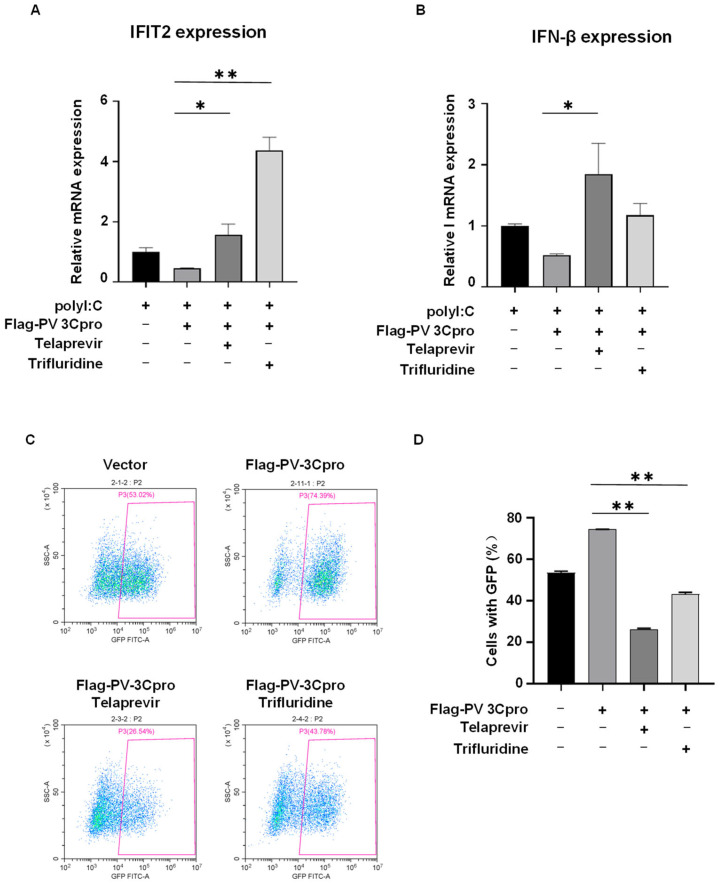
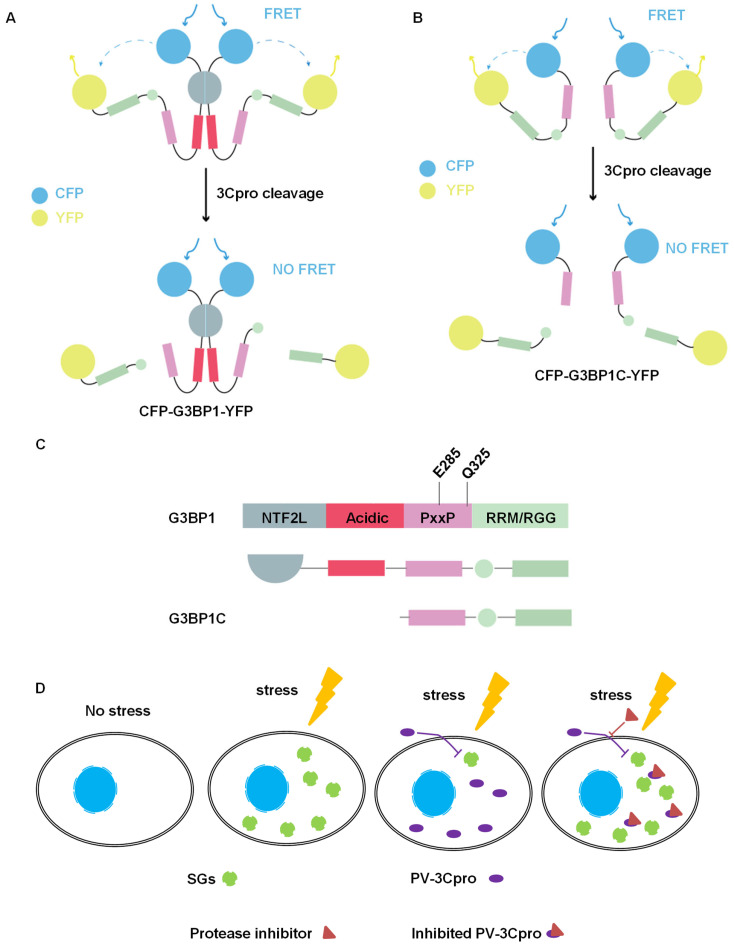
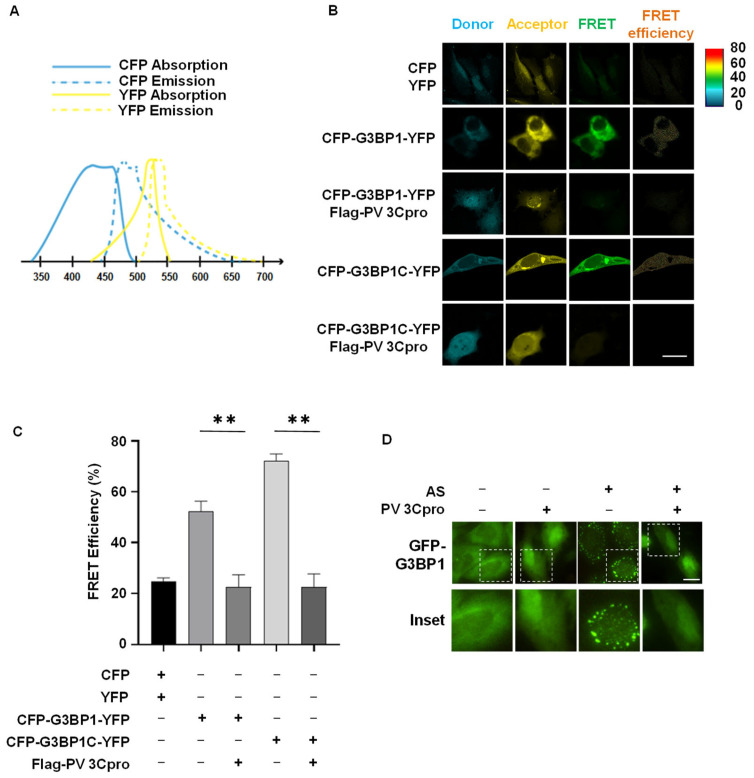
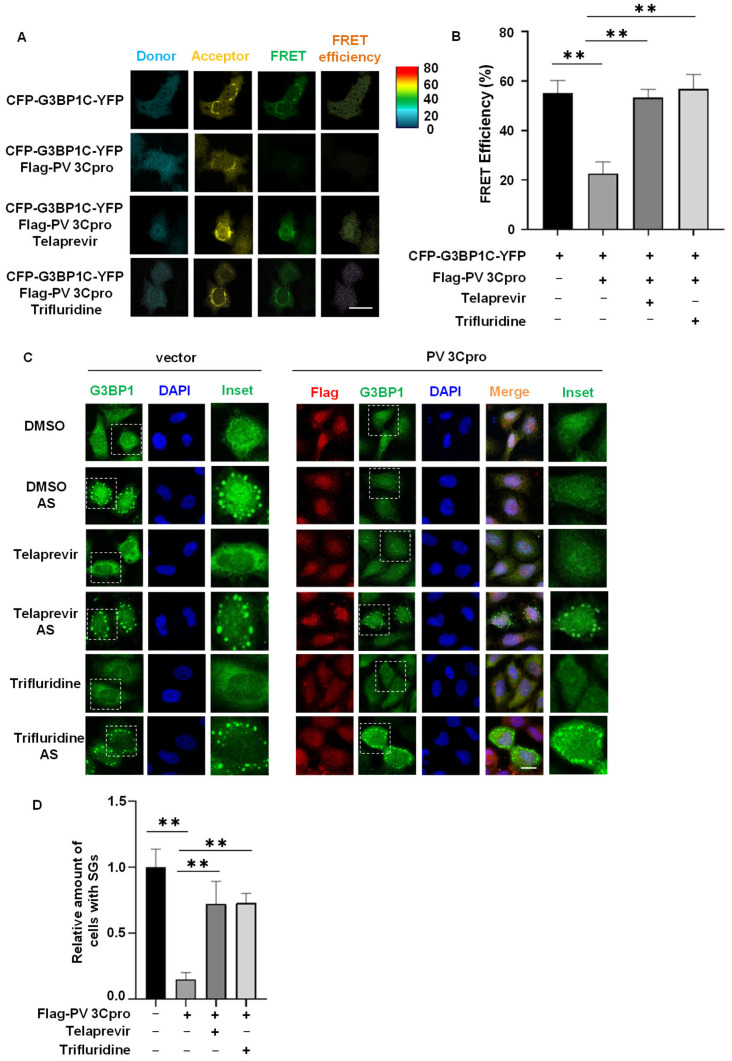
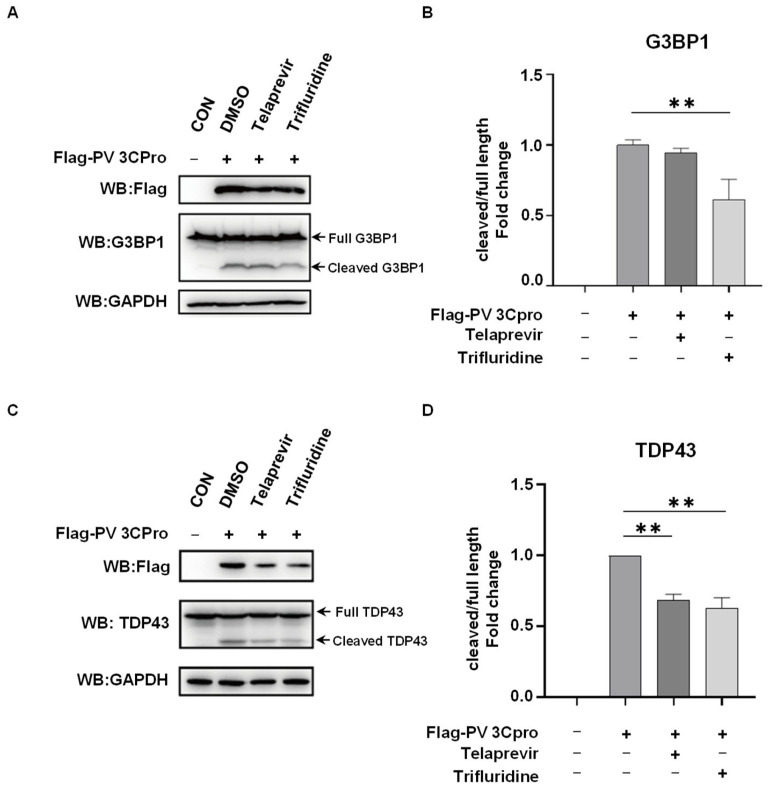
3C proteases (3Cpros) of picornaviruses and 3C-like proteases (3CLpros) of coronaviruses and caliciviruses represent a group of structurally and functionally related viral proteases that play pleiotropic roles in supporting the viral life cycle and subverting host antiviral responses. The design and screening for 3C/3CLpro inhibitors may contribute to the development broad-spectrum antiviral therapeutics against viral diseases related to these three families. However, current screening strategies cannot simultaneously assess a compound's cytotoxicity and its impact on enzymatic activity and protease-mediated physiological processes. The viral induction of stress granules (SGs) in host cells acts as an important antiviral stress response by blocking viral translation and stimulating the host immune response. Most of these viruses have evolved 3C/3CLpro-mediated cleavage of SG core protein G3BP1 to counteract SG formation and disrupt the host defense. Yet, there are no SG-based strategies screening for 3C/3CLpro inhibitors. Here, we developed a fluorescence resonance energy transfer (FRET) and SG dual-based system to screen for 3C/3CLpro inhibitors in living cells. We took advantage of FRET to evaluate the protease activity of poliovirus (PV) 3Cpro and live-monitor cellular SG dynamics to cross-verify its effect on the host antiviral response. Our drug screen uncovered a novel role of Telaprevir and Trifluridine as inhibitors of PV 3Cpro. Moreover, Telaprevir and Trifluridine also modulated 3Cpro-mediated physiological processes, including the cleavage of host proteins, inhibition of the innate immune response, and consequent facilitation of viral replication. Taken together, the FRET and SG dual-based system exhibits a promising potential in the screening for inhibitors of viral proteases that cleave G3BP1.
3C 蛋白酶(3Cpros)和冠状病毒及杯状病毒的 3C 样蛋白酶(3CLpros)是一组结构和功能相关的病毒蛋白酶,它们在支持病毒生命周期和颠覆宿主抗病毒反应方面发挥着多种作用。3C/3CLpro 抑制剂的设计和筛选可能有助于开发针对与这三个家族相关的病毒疾病的广谱抗病毒治疗方法。然而,目前的筛选策略不能同时评估化合物的细胞毒性及其对酶活性和蛋白酶介导的生理过程的影响。病毒诱导宿主细胞中的应激颗粒(SGs)作为一种重要的抗病毒应激反应,通过阻断病毒翻译和刺激宿主免疫反应来发挥作用。这些病毒中的大多数已经进化出了 3C/3CLpro 介导的 SG 核心蛋白 G3BP1 的切割,以对抗 SG 的形成并破坏宿主防御。然而,目前还没有基于 SG 的筛选 3C/3CLpro 抑制剂的策略。在这里,我们开发了一种荧光共振能量转移(FRET)和 SG 双重基础系统,用于在活细胞中筛选 3C/3CLpro 抑制剂。我们利用 FRET 来评估脊髓灰质炎病毒(PV)3Cpro 的蛋白酶活性,并实时监测细胞 SG 动力学,以交叉验证其对宿主抗病毒反应的影响。我们的药物筛选发现了 Telaprevir 和 Trifluridine 作为 PV 3Cpro 抑制剂的新作用。此外,Telaprevir 和 Trifluridine 还调节了 3Cpro 介导的生理过程,包括宿主蛋白的切割、先天免疫反应的抑制以及随后促进病毒复制。总之,FRET 和 SG 双重基础系统在筛选切割 G3BP1 的病毒蛋白酶抑制剂方面具有很大的潜力。