Ranke Peter Sjolte, Kessy Beatrice Modest, Mbise Franco Peniel, Nielsen Martin Reinhardt, Arukwe Augustine, Røskaft Eivin
Centre for Biodiversity Dynamics, Department of Biology, Norwegian University of Science and Technology (NTNU), Høgskoleringen, NO-7491 Trondheim, Norway.
Tanzania National Parks (TANAPA), Dodoma Road, P.O. Box 3134, Arusha, Tanzania.
Biol Conserv. 2023 Jun;282:110037. doi: 10.1016/j.biocon.2023.110037. Epub 2023 Apr 3.
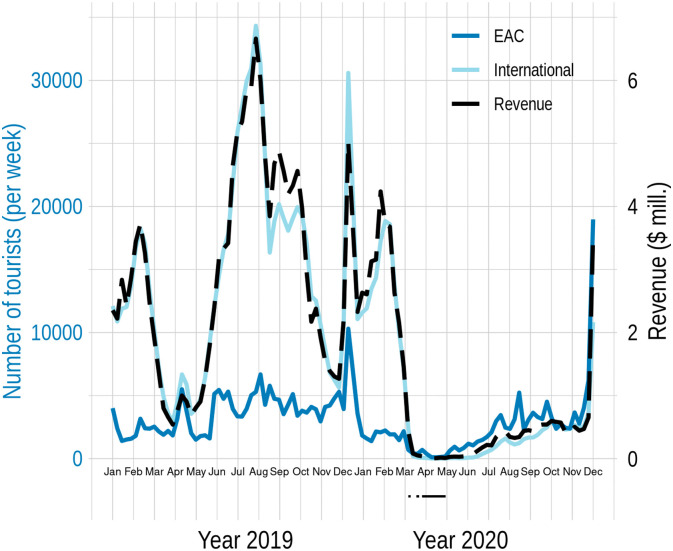
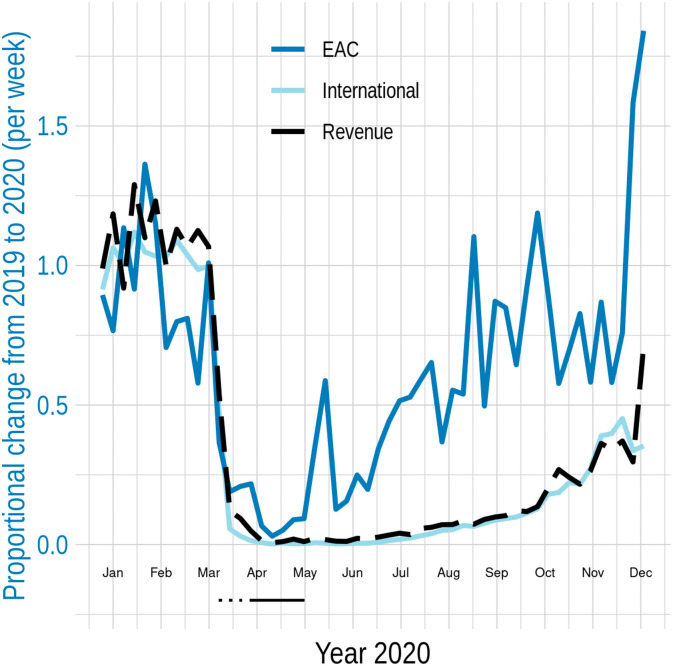
In many low-income countries, the conservation of natural resources in protected areas relies on tourism revenue. However, tourist numbers in Africa were severely reduced by the COVID-19 pandemic, thus, putting the conservation of these important protected areas at risk. We use records from gate passings at national parks across Tanzania to demonstrate the immediate and severe impact on tourist numbers and revenues resulting from the COVID-19 pandemic and associated restrictions, and whether international and local (East African) tourists were affected equally. We discuss mechanisms that may reduce future negative impacts of sudden loss of revenue from international tourism, such as increasing the revenue portfolio and thereby decrease the dependency on revenues from international tourists. More important, we encourage local governments, national park authorities, and the world community to further develop and initiate external funding options to reduce the dependency on income from international nature-based tourism to preserve national parks and biodiversity. An additional long-term goal for ensuring sustained conservation would be to increase benefits to local communities adjacent to national parks, encouraging local involvement and thereby reducing the dependence on external funding in the future.
在许多低收入国家,保护区自然资源的保护依赖于旅游收入。然而,新冠疫情严重减少了非洲的游客数量,从而使这些重要保护区的保护面临风险。我们利用坦桑尼亚各国家公园的入园记录,来证明新冠疫情及相关限制措施对游客数量和收入产生的直接和严重影响,以及国际游客和本地(东非)游客是否受到同等影响。我们讨论了一些机制,这些机制可能会减少国际旅游业收入突然损失带来的未来负面影响,比如增加收入来源组合,从而减少对国际游客收入的依赖。更重要的是,我们鼓励地方政府、国家公园管理部门和国际社会进一步开发并启动外部资金选项,以减少对基于国际自然旅游收入的依赖,从而保护国家公园和生物多样性。确保持续保护的另一个长期目标是增加国家公园周边当地社区的收益,鼓励当地参与,从而减少未来对外部资金的依赖。