Departamento de Bioquímica, Instituto de Química, Universidade de São Paulo, São Paulo, Brazil.
Centro Internacional de Pesquisa (CIPE), A. C. Camargo Cancer Center, São Paulo, Brazil.
Aging Cell. 2023 Jun;22(6):e13827. doi: 10.1111/acel.13827. Epub 2023 Apr 14.
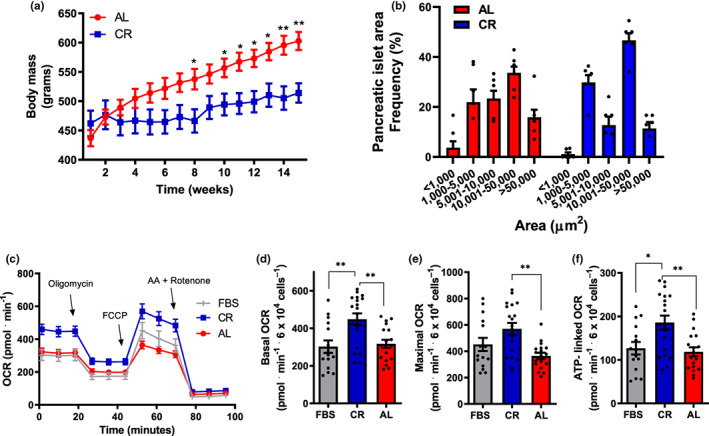
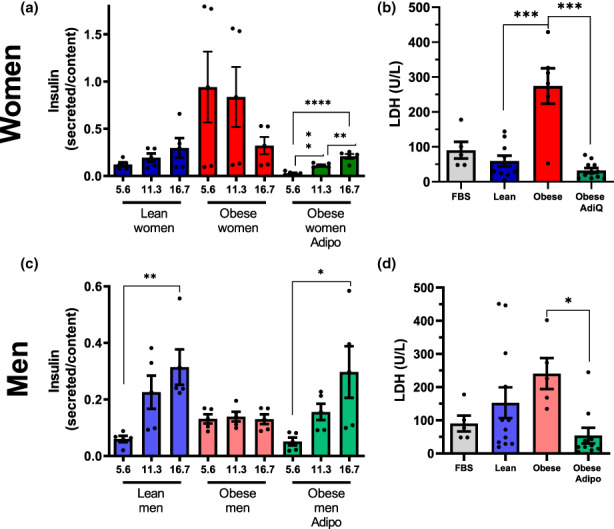
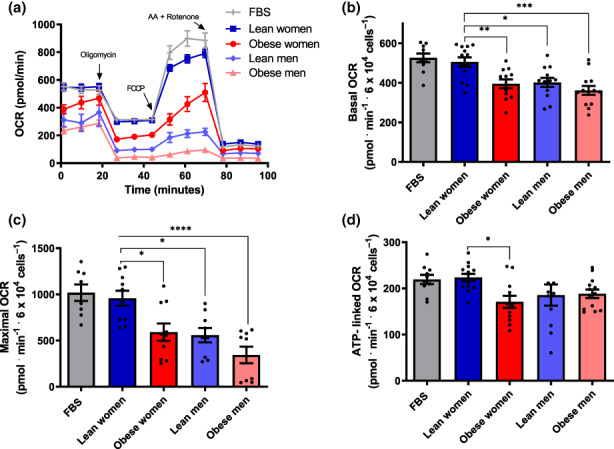
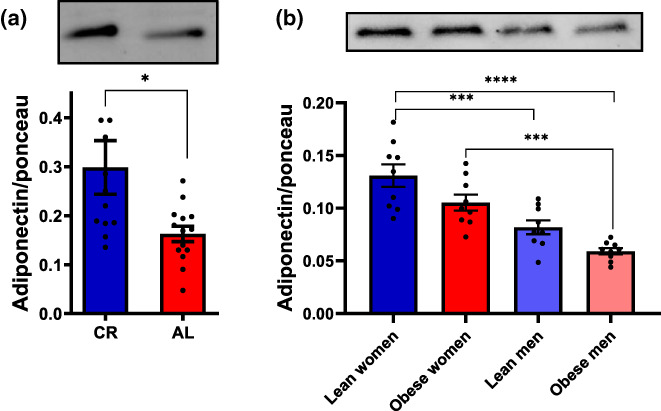
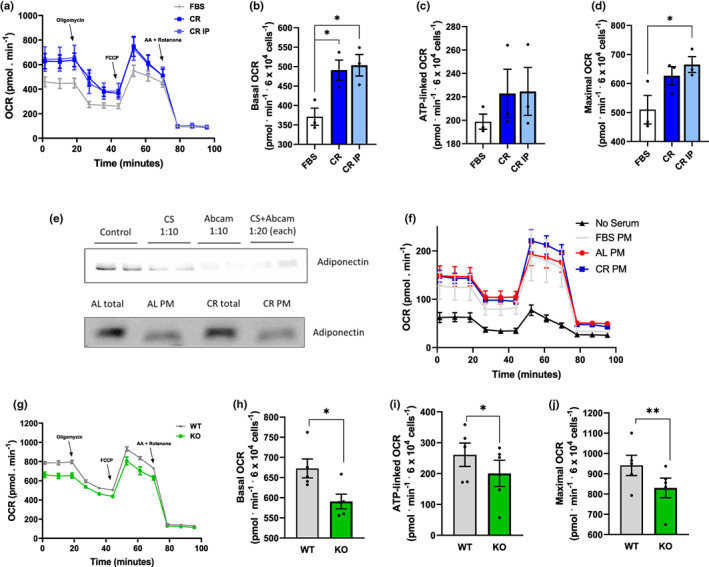
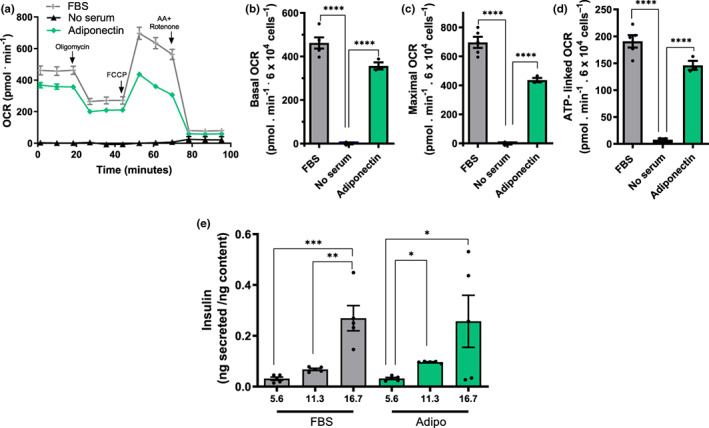
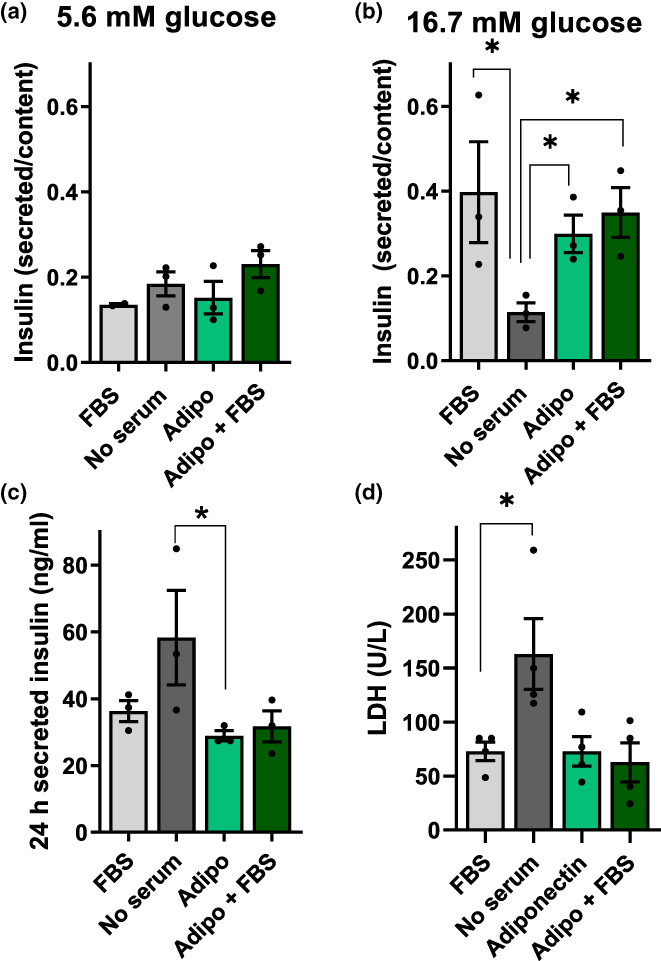
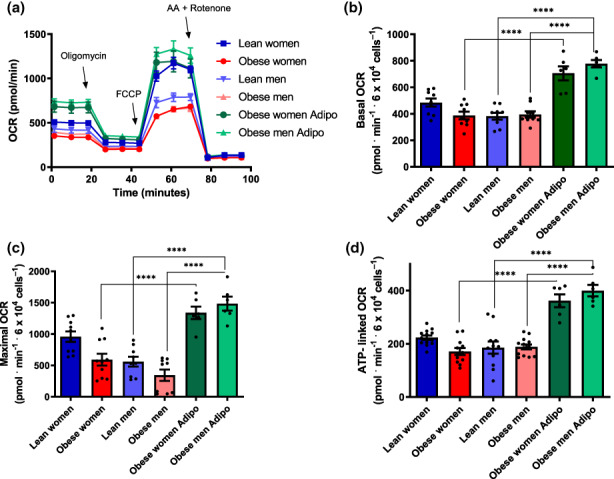
Obesity significantly decreases life expectancy and increases the incidence of age-related dysfunctions, including β-cell dysregulation leading to inadequate insulin secretion. Here, we show that diluted plasma from obese human donors acutely impairs β-cell integrity and insulin secretion relative to plasma from lean subjects. Similar results were observed with diluted sera from obese rats fed ad libitum, when compared to sera from lean, calorically restricted, animals. The damaging effects of obese circulating factors on β-cells occurs in the absence of nutrient overload, and mechanistically involves mitochondrial dysfunction, limiting glucose-supported oxidative phosphorylation and ATP production. We demonstrate that increased levels of adiponectin, as found in lean plasma, are the protective characteristic preserving β-cell function; indeed, sera from adiponectin knockout mice limits β-cell metabolic fluxes relative to controls. Furthermore, oxidative phosphorylation and glucose-sensitive insulin secretion, which are completely abrogated in the absence of this hormone, are restored by the presence of adiponectin alone, surprisingly even in the absence of other serological components, for both the insulin-secreting INS1 cell line and primary islets. The addition of adiponectin to cells treated with plasma from obese donors completely restored β-cell functional integrity, indicating the lack of this hormone was causative of the dysfunction. Overall, our results demonstrate that low circulating adiponectin is a key damaging element for β-cells, and suggest strong therapeutic potential for the modulation of the adiponectin signaling pathway in the prevention of age-related β-cell dysfunction.
肥胖显著降低了预期寿命,并增加了与年龄相关的功能障碍的发生率,包括导致胰岛素分泌不足的β细胞失调。在这里,我们表明肥胖供体的稀释血浆会急性损害β细胞的完整性和胰岛素分泌,与瘦供体的血浆相比。当与瘦的、热量限制的动物的血清相比时,用肥胖大鼠的稀释血清进行的类似研究也得到了相似的结果。肥胖循环因子对β细胞的损伤作用发生在没有营养过载的情况下,其机制涉及线粒体功能障碍,限制了葡萄糖支持的氧化磷酸化和 ATP 产生。我们证明,在瘦血浆中发现的脂联素水平升高是保护β细胞功能的特征;事实上,脂联素敲除小鼠的血清相对于对照使β细胞代谢通量受到限制。此外,氧化磷酸化和葡萄糖敏感的胰岛素分泌在缺乏这种激素的情况下完全被废除,而脂联素的存在单独恢复了这些功能,甚至在没有其他血清成分的情况下也是如此,对于胰岛素分泌的 INS1 细胞系和原代胰岛都是如此。将脂联素添加到用肥胖供体的血浆处理的细胞中,完全恢复了β细胞的功能完整性,表明缺乏这种激素是β细胞功能障碍的原因。总的来说,我们的结果表明,循环脂联素水平低是β细胞的一个关键损伤因素,并表明通过调节脂联素信号通路来预防与年龄相关的β细胞功能障碍具有很强的治疗潜力。