Department of Biology, Wesleyan University, Middletown, CT 06457, United States of America.
Department of Biology, Wesleyan University, Middletown, CT 06457, United States of America.
Genomics. 2023 May;115(3):110625. doi: 10.1016/j.ygeno.2023.110625. Epub 2023 Apr 15.
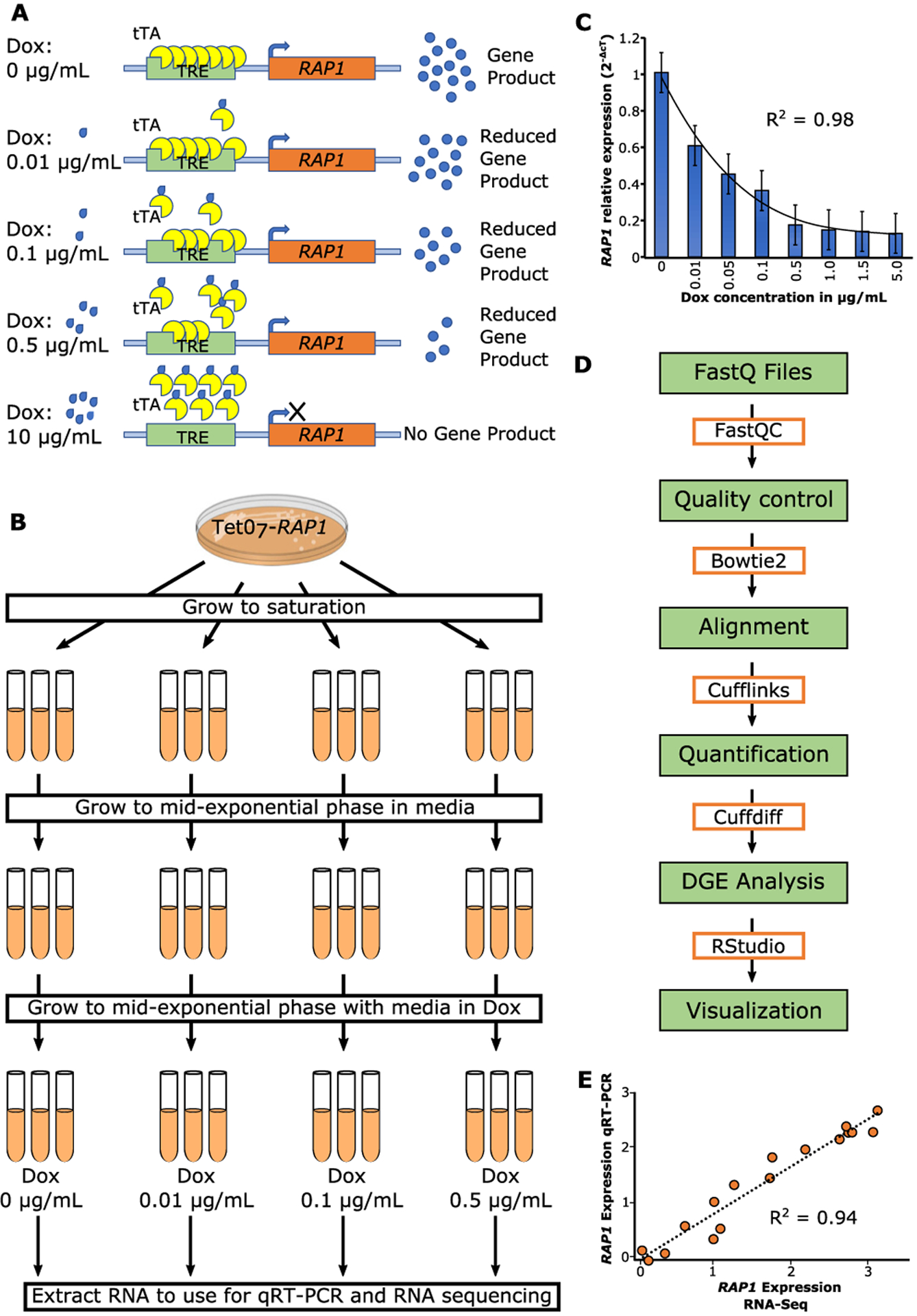
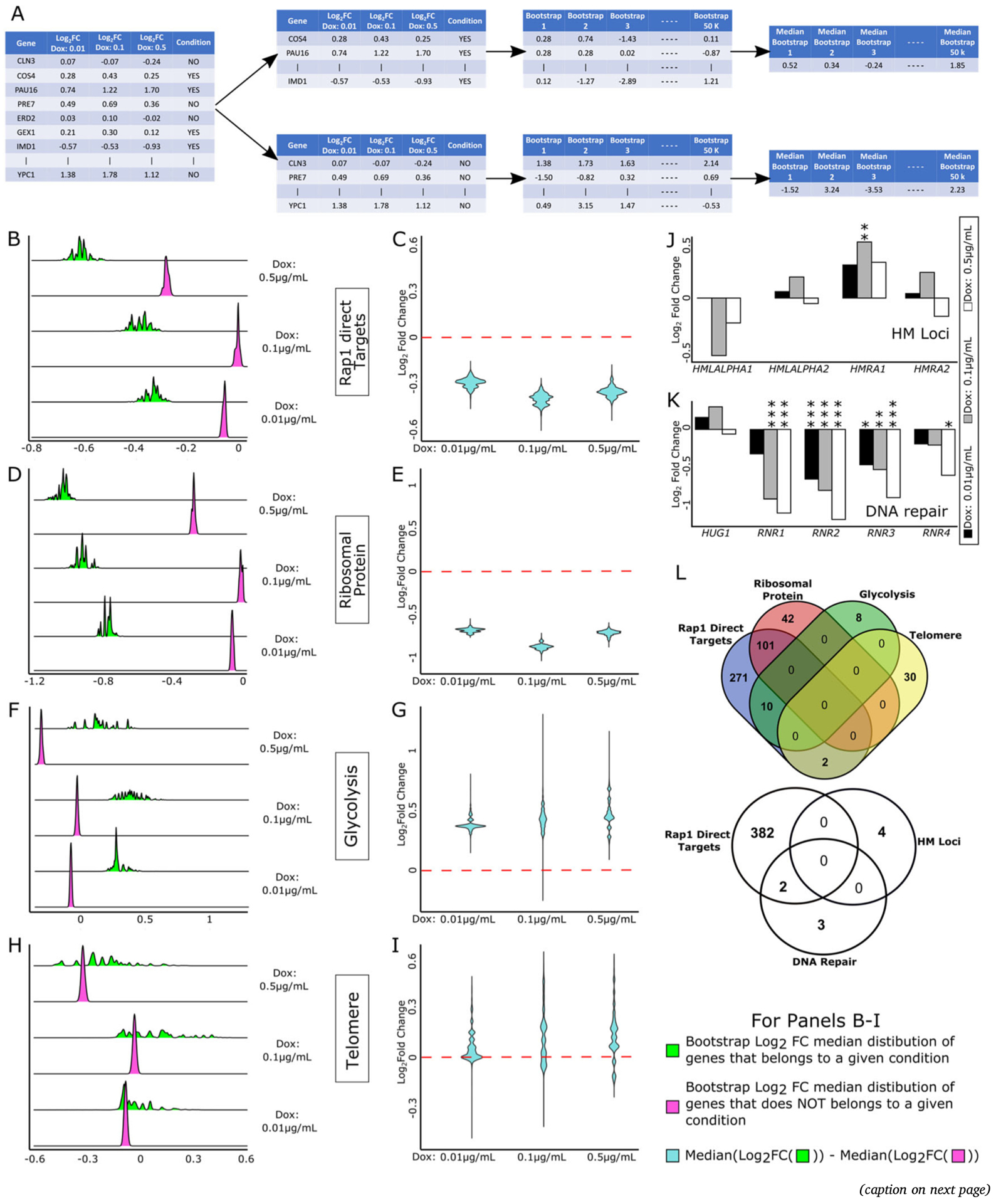
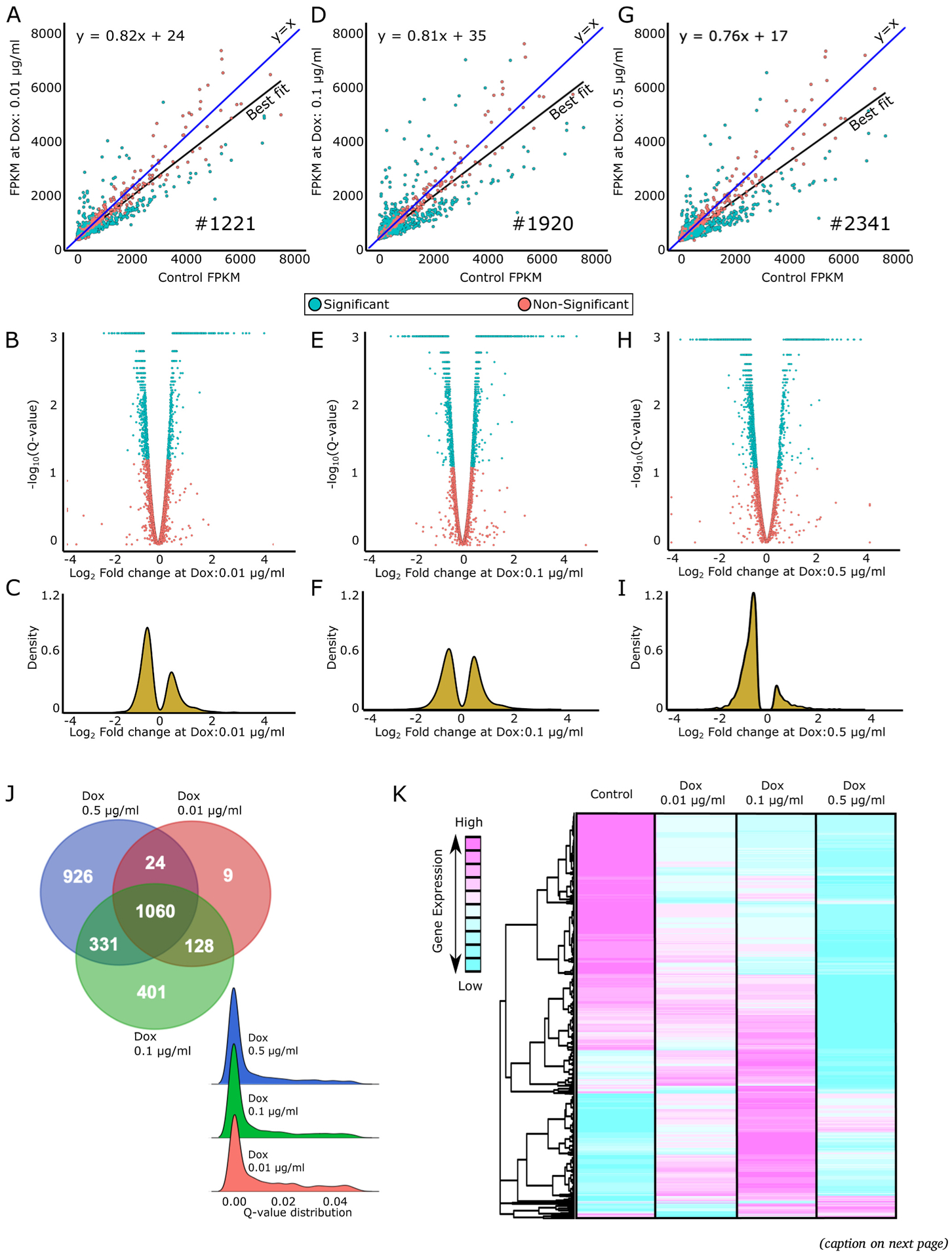
Precise regulation of transcription in gene expression is critical for all aspects of normal organism form, fitness, and function and even minor alterations in the level, location, and timing of gene expression can result in phenotypic variation within and between species including evolutionary innovations and human disease states. Eukaryotic transcription is regulated by a complex interplay of multiple factors working both at a physical and molecular levels influencing this process. In Saccharomyces cerevisiae, the TF with the greatest number of putative regulatory targets is the essential gene Repressor Activator Protein 1 (RAP1). While much is known about the roles of Rap1 in gene regulation and numerous cellular processes, the response of Rap1 target genes to systematic titration of RAP1 expression level remains unknown. To fill this knowledge gap, we used a strain with a tetracycline-titratable promoter replacing wild-type regulatory sequences of RAP1 to systematically reduce the expression level of RAP1 and followed this with RNA sequencing (RNA-seq) to measure genome-wide gene expression responses. Previous research indicated that Rap1 plays a significant regulatory role in particular groups of genes including telomere-proximal genes, homothallic mating (HM) loci, glycolytic genes, DNA repair genes, and ribosomal protein genes; therefore, we focused our analyses on these groups and downstream targets to determine how they respond to reductions in RAP1 expression level. Overall, despite being known as both an activator and as a repressor of its target genes, we found that Rap1 acts as an activator for more target genes than as a repressor. Additionally, we found that Rap1 functions as an activator of ribosomal protein genes and a repressor for HM loci genes consistent with predictions from the literature. Unexpectedly, we found that Rap1 functions as a repressor of glycolytic enzyme genes contrary to prior reports of it having the opposite effect. We also compared the expression of RAP1 to five different genes related to DNA repair pathway and found that decreasing RAP1 downregulated four of those five genes. Finally, we found no effect of RAP1 depletion on telomere-proximal genes despite its functioning to silence telomeric repeat-containing RNAs. Together our results enrich our understanding of this important transcriptional regulator.
精确调控基因表达是所有正常生物形态、适应性和功能的关键,即使基因表达的水平、位置和时间发生微小变化,也会导致物种内和物种间表型的变异,包括进化创新和人类疾病状态。真核转录受多种因素的复杂相互作用调控,这些因素在物理和分子水平上都影响着这一过程。在酿酒酵母中,具有最多潜在调控靶点的转录因子是必需基因阻遏物激活蛋白 1(RAP1)。尽管人们对 Rap1 在基因调控和许多细胞过程中的作用有了很多了解,但 Rap1 靶基因对 RAP1 表达水平系统滴定的反应仍然未知。为了填补这一知识空白,我们使用了一种带有四环素滴定启动子的菌株,该启动子取代了 RAP1 的野生型调控序列,从而系统地降低了 Rap1 的表达水平,随后进行 RNA 测序(RNA-seq)以测量全基因组基因表达反应。先前的研究表明,Rap1 在特定基因群中发挥着重要的调控作用,包括端粒近端基因、同型交配(HM)位点、糖酵解基因、DNA 修复基因和核糖体蛋白基因;因此,我们将分析重点放在这些基因群及其下游靶基因上,以确定它们如何对 RAP1 表达水平的降低做出反应。总的来说,尽管 Rap1 被认为是其靶基因的激活剂和抑制剂,但我们发现 Rap1 作为激活剂的靶基因比作为抑制剂的靶基因更多。此外,我们发现 Rap1 作为核糖体蛋白基因的激活剂和 HM 位点基因的抑制剂发挥作用,这与文献中的预测一致。出乎意料的是,我们发现 Rap1 作为糖酵解酶基因的抑制剂发挥作用,与先前报道的相反作用。我们还将 RAP1 的表达与五个与 DNA 修复途径相关的不同基因进行了比较,发现 RAP1 的消耗下调了其中五个基因中的四个。最后,尽管 Rap1 对端粒重复 RNA 具有沉默作用,但我们发现 Rap1 耗尽对端粒近端基因没有影响。总之,我们的研究结果丰富了对这一重要转录调控因子的理解。