Mahaling Binapani, Pandala Narendra, Wang Heuy-Ching, Lavik Erin B
Department of Chemical, Biochemical and Environmental Engineering, University of Maryland Baltimore County, Baltimore, Maryland 21250, United States.
Ocular Trauma Task Area, US Army Institute of Surgical Research, JBSA Fort Sam Houston, Houston, Texas-78234, United States.
ACS Bio Med Chem Au. 2022 Jul 12;2(5):499-508. doi: 10.1021/acsbiomedchemau.2c00013. eCollection 2022 Oct 19.
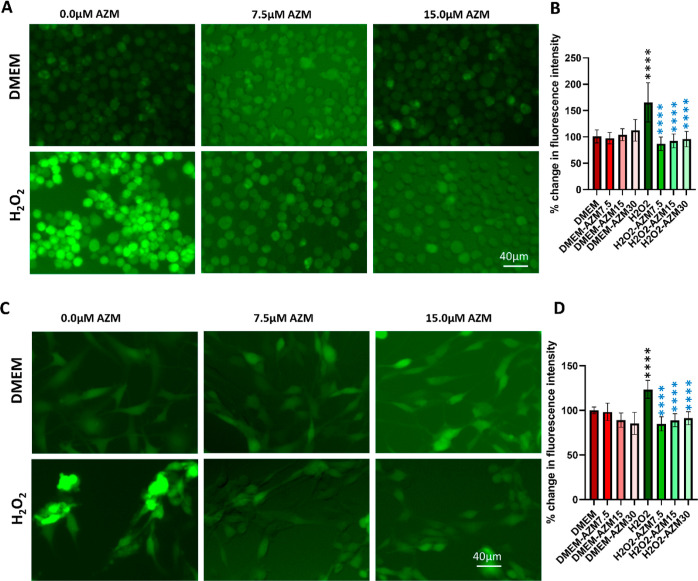
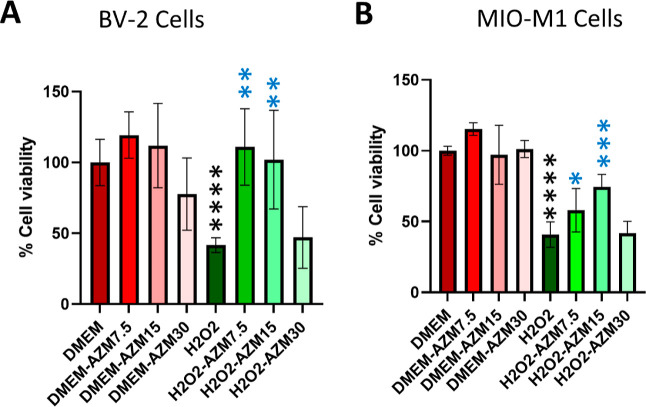
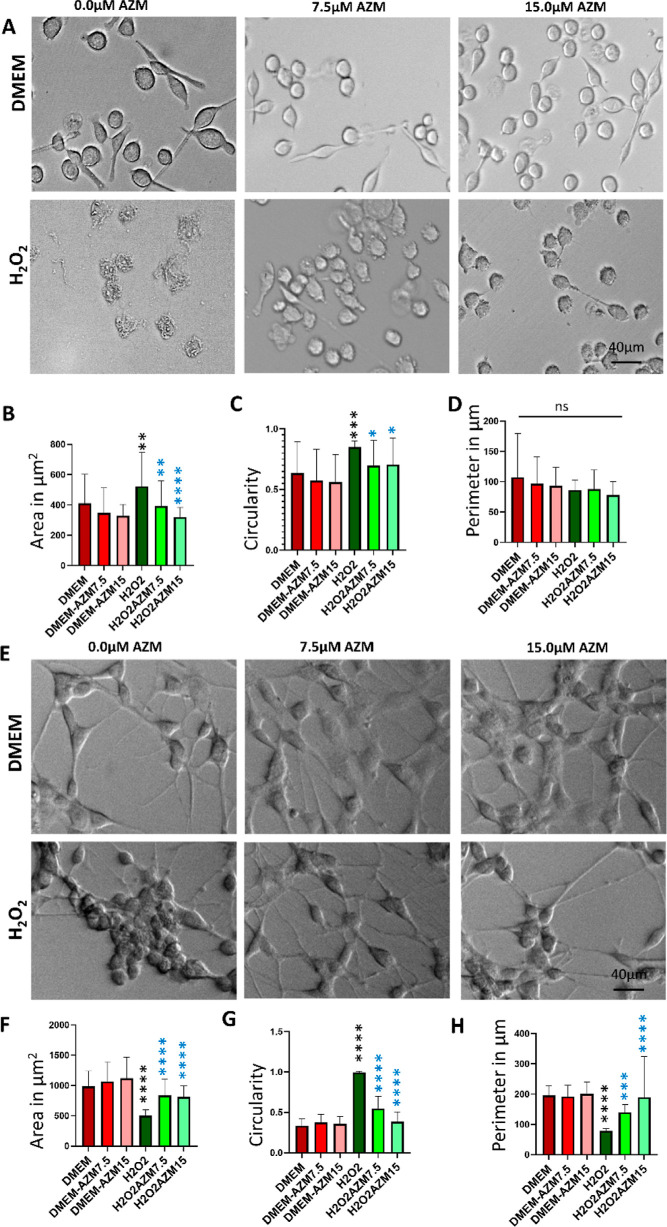
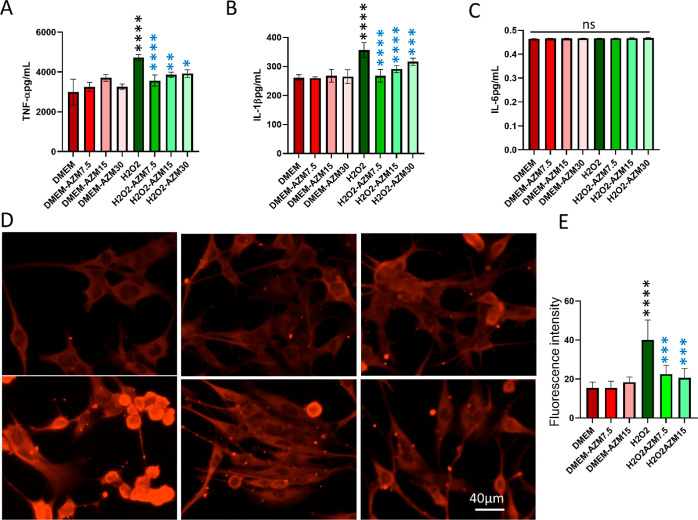
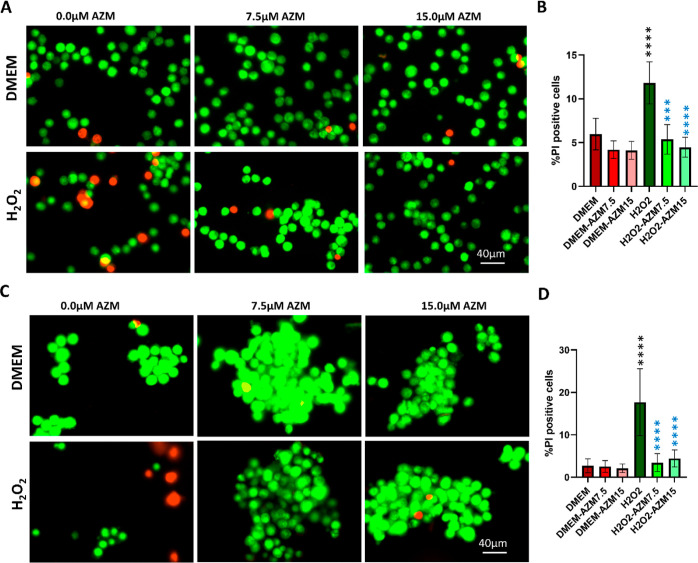
The reactivity of retinal glia in response to oxidative stress has a significant effect on retinal pathobiology. The reactive glia change their morphology and secret cytokines and neurotoxic factors in response to oxidative stress associated with retinal neurovascular degeneration. Therefore, pharmacological intervention to protect glial health against oxidative stress is crucial for maintaining homeostasis and the normal function of the retina. In this study, we explored the effect of azithromycin, a macrolide antibiotic with antioxidant, immunomodulatory, anti-inflammatory, and neuroprotective properties against oxidative stress-induced morphological changes, inflammation, and cell death in retinal microglia and Müller glia. Oxidative stress was induced by HO, and the intracellular oxidative stress was measured by DCFDA and DHE staining. The change in morphological characteristics such as the surface area, perimeter, and circularity was calculated using ImageJ software. Inflammation was measured by enzyme-linked immunosorbent assays for TNF-α, IL-1β, and IL-6. Reactive gliosis was characterized by anti-GFAP immunostaining. Cell death was measured by MTT assay, acridine orange/propidium iodide, and trypan blue staining. Pretreatment of azithromycin inhibits HO-induced oxidative stress in microglial (BV-2) and Müller glial (MIO-M1) cells. We observed that azithromycin inhibits oxidative stress-induced morphological changes, including the cell surface area, circularity, and perimeter in BV-2 and MIO-M1 cells. It also inhibits inflammation and cell death in both the glial cells. Azithromycin could be used as a pharmacological intervention on maintaining retinal glial health during oxidative stress.
视网膜神经胶质细胞对氧化应激的反应性对视网膜病理生物学具有显著影响。反应性神经胶质细胞会改变其形态,并在与视网膜神经血管变性相关的氧化应激反应中分泌细胞因子和神经毒性因子。因此,通过药物干预来保护神经胶质细胞免受氧化应激的影响,对于维持视网膜的稳态和正常功能至关重要。在本研究中,我们探讨了阿奇霉素(一种具有抗氧化、免疫调节、抗炎和神经保护特性的大环内酯类抗生素)对氧化应激诱导的视网膜小胶质细胞和穆勒胶质细胞形态变化、炎症和细胞死亡的影响。通过HO诱导氧化应激,并使用DCFDA和DHE染色测量细胞内氧化应激。使用ImageJ软件计算形态特征(如表面积、周长和圆形度)的变化。通过酶联免疫吸附测定法检测TNF-α、IL-1β和IL-6来测量炎症。通过抗GFAP免疫染色来表征反应性胶质增生。通过MTT法、吖啶橙/碘化丙啶和台盼蓝染色测量细胞死亡。阿奇霉素预处理可抑制HO诱导的小胶质细胞(BV-2)和穆勒胶质细胞(MIO-M1)中的氧化应激。我们观察到,阿奇霉素可抑制氧化应激诱导的形态变化,包括BV-2和MIO-M1细胞的细胞表面积、圆形度和周长。它还可抑制两种胶质细胞中的炎症和细胞死亡。阿奇霉素可作为一种药物干预手段,用于在氧化应激期间维持视网膜神经胶质细胞的健康。