Muñoz-Prieto Alberto, Contreras-Aguilar María Dolores, Cerón José Joaquín, Ayala de la Peña Ignacio, Martín-Cuervo María, Eckersall Peter David, Holm Henriksen Ida-Marie, Tecles Fernando, Hansen Sanni
Interdisciplinary Laboratory of Clinical Analysis (INTERLAB-UMU), Department of Animal Medicine and Surgery, Veterinary School, Regional Campus of International Excellence Mare Nostrum, University of Murcia, 30100 Murcia, Spain.
Animal Medicine, Faculty of Veterinary Medicine of Cáceres, University of Extremadura, Av. de la Universidad S-N, 10005 Cáceres, Spain.
Animals (Basel). 2023 Apr 16;13(8):1367. doi: 10.3390/ani13081367.
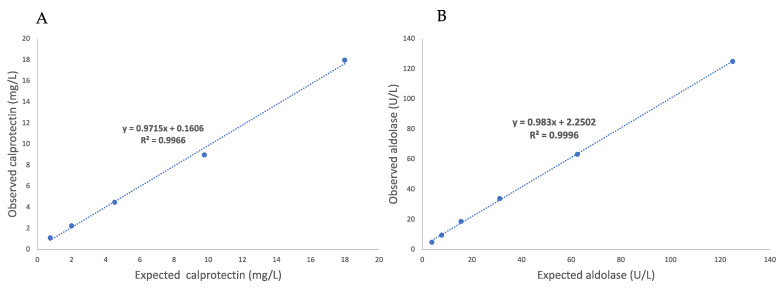
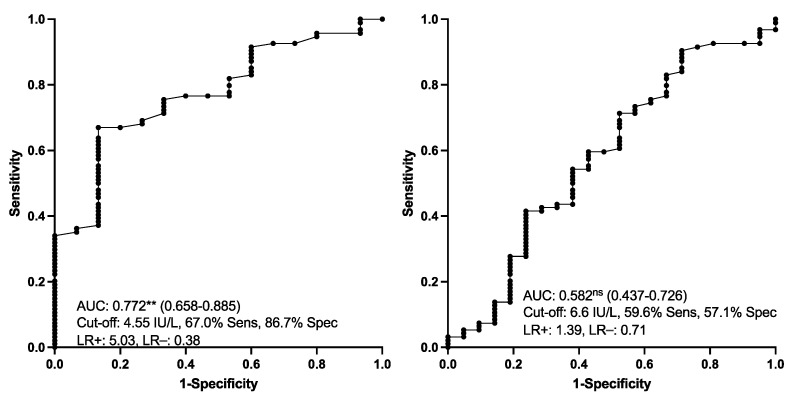
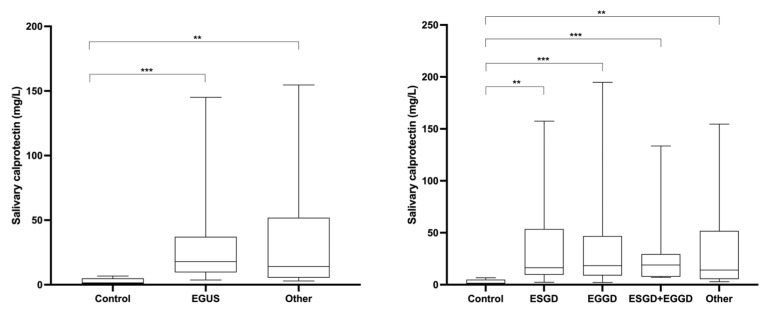
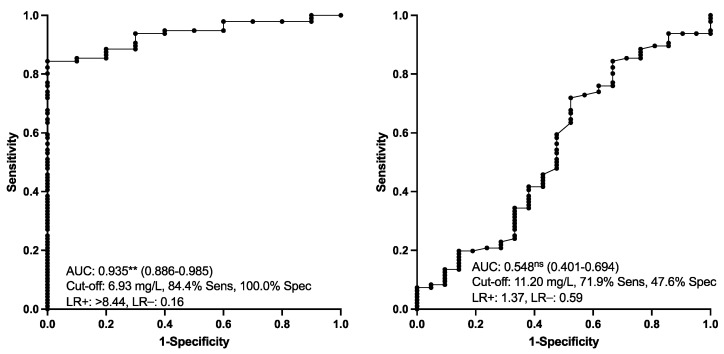
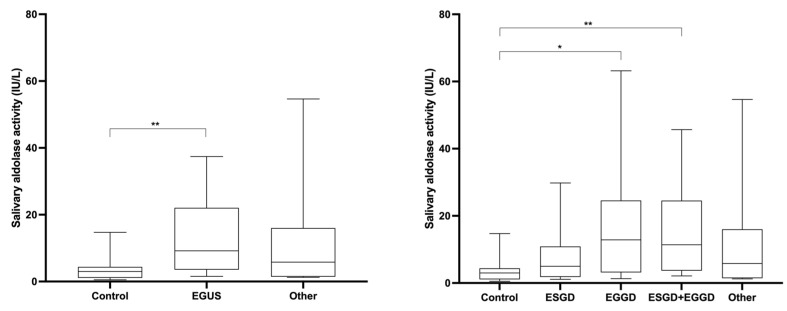
Equine gastric ulcer syndrome (EGUS) is a highly prevalent disease that affects horses worldwide. Within EGUS, two different forms have been described: equine squamous gastric disease (ESGD) and equine glandular gastric disease (EGGD). The associated clinical signs cause detrimental activity performance, reducing the quality of life of animals. Saliva can contain biomarkers for EGUS that could be potentially used as a complementary tool for diagnosis. The objective of this work was to evaluate the measurements of calprotectin (CALP) and aldolase in the saliva of horses as potential biomarkers of EGUS. For this purpose, automated assays for the quantification of these two proteins were analytically validated and applied for detecting EGUS in a total of 131 horses divided into 5 groups: healthy horses, ESGD, EGGD, combined ESGD and EGGD, and horses with other intestinal pathologies. The assays showed good precision and accuracy in analytical validation, and they were able to discriminate between horses with EGUS and healthy horses, especially in the case of CALP, although they did not show significant differences between horses with EGUS and horses with other diseases. In conclusion, salivary CALP and aldolase can be determined in the saliva of horses and further studies are warranted to elucidate the potential of these analytes as biomarkers in EGUS.
马胃溃疡综合征(EGUS)是一种在全球范围内影响马匹的高度流行疾病。在EGUS中,已描述了两种不同形式:马鳞状胃病(ESGD)和马腺胃病(EGGD)。相关的临床症状会导致有害的活动表现,降低动物的生活质量。唾液中可能含有EGUS的生物标志物,可潜在用作诊断的辅助工具。这项工作的目的是评估马唾液中钙卫蛋白(CALP)和醛缩酶的测量值作为EGUS潜在生物标志物的情况。为此,对这两种蛋白质定量的自动化检测方法进行了分析验证,并应用于检测总共131匹马中的EGUS,这些马分为5组:健康马、ESGD、EGGD、ESGD和EGGD合并组以及患有其他肠道疾病的马。这些检测方法在分析验证中显示出良好的精密度和准确性,并且能够区分患有EGUS的马和健康马,尤其是在CALP方面,尽管它们在患有EGUS的马和患有其他疾病的马之间未显示出显著差异。总之,可以在马的唾液中测定唾液CALP和醛缩酶,有必要进一步研究以阐明这些分析物作为EGUS生物标志物的潜力。