Hong Soo Jung, Cho Hichang
Department of Communications and New Media, Faculty of Arts and Social Sciences, National University of Singapore, Singapore.
Digit Health. 2023 Apr 20;9:20552076231169836. doi: 10.1177/20552076231169836. eCollection 2023 Jan-Dec.
This study explores how negative affect, perceived net equity, and uncertainty influence the public's privacy decision-making regarding the adoption of contact-tracing technology based on artificial intelligence (AI) during the COVID-19 pandemic.
Four hundred and eighteen adults in the US participated in the study via Amazon Mechanical Turk in August 2020. Statistical analyses were performed using the PROCESS macro. Indirect effects and their significance were estimated using bias-corrected bootstrap confidence intervals (CIs) with resampling set to = 5000.
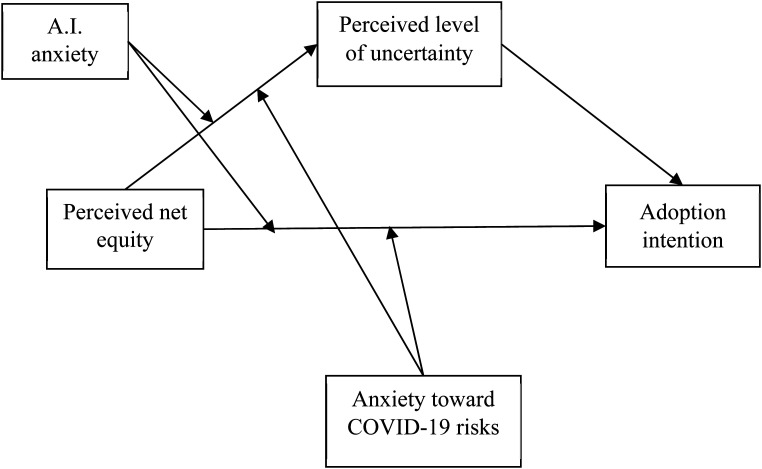
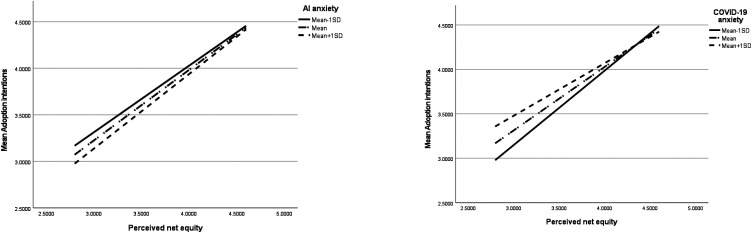
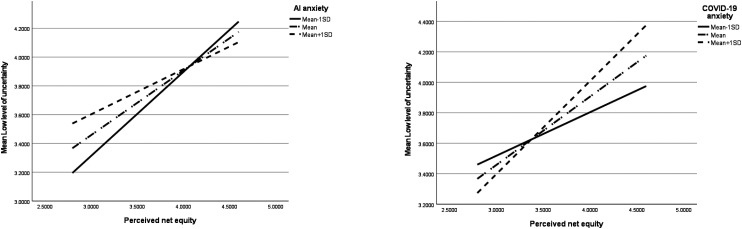
Perceived net equity was positively associated with low levels of perceived uncertainty regarding a COVID-19 contact-tracing application and intention to adopt it. Low levels of perceived uncertainty were positively associated with intentions to adopt such an application, thereby suggesting that a perceived level of uncertainty mediates the association between perceived net equity and adoption intentions. Anxieties regarding AI technology and COVID-19 risks both moderate the associations among perceived net equity, perceived level of uncertainty, and intentions to adopt the contact-tracing technology.
Our findings highlight how the differing sources of emotion influence the associations among rational judgment, perceptions, and decision-making about new contact-tracing technology. Overall, the results suggest that both rational judgments and affective reactions to risks are important influencers of individuals' perceptions and privacy-related decision-making regarding a new health technology during the pandemic.
本研究探讨在新冠疫情期间,负面影响、感知净公平性和不确定性如何影响公众在采用基于人工智能(AI)的接触者追踪技术方面的隐私决策。
2020年8月,418名美国成年人通过亚马逊土耳其机器人参与了该研究。使用PROCESS宏进行统计分析。间接效应及其显著性使用偏差校正的自抽样置信区间(CI)进行估计,重抽样设置为=5000。
感知净公平性与对新冠接触者追踪应用的低水平感知不确定性以及采用该应用的意愿呈正相关。低水平的感知不确定性与采用此类应用的意愿呈正相关,从而表明感知不确定性水平在感知净公平性与采用意愿之间起中介作用。对人工智能技术和新冠风险的焦虑均调节了感知净公平性、感知不确定性水平与采用接触者追踪技术意愿之间的关联。
我们的研究结果突出了不同情感来源如何影响关于新接触者追踪技术的理性判断、认知和决策之间的关联。总体而言,结果表明,在疫情期间,对风险的理性判断和情感反应都是个体对新健康技术的认知以及与隐私相关决策的重要影响因素。