
使用单细胞RNA测序对高级别浆液性卵巢癌与健康卵巢组织进行比较分析。
Comparative analysis between highgrade serous ovarian cancer and healthy ovarian tissues using single-cell RNA sequencing.
作者信息
Zhang Xiao, Hong Shihao, Yu Chengying, Shen Xiaozhong, Sun Fangying, Yang Jianhua
机构信息
Department of Obstetrics and Gynecology, Sir Run Run Shaw Hospital, School of Medicine, Zhejiang University, Key Laboratory of Reproductive Dysfunction Management of Zhejiang Province, Hangzhou, China.
Department of Obstetrics and Gynecology, Longyou People's Hospital, Quzhou, China.
出版信息
Front Oncol. 2023 Apr 14;13:1148628. doi: 10.3389/fonc.2023.1148628. eCollection 2023.
INTRODUCTION
High-grade serous ovarian cancer (HGSOC) is the most common histological subtype of ovarian cancer, and is associated with high mortality rates.
METHODS
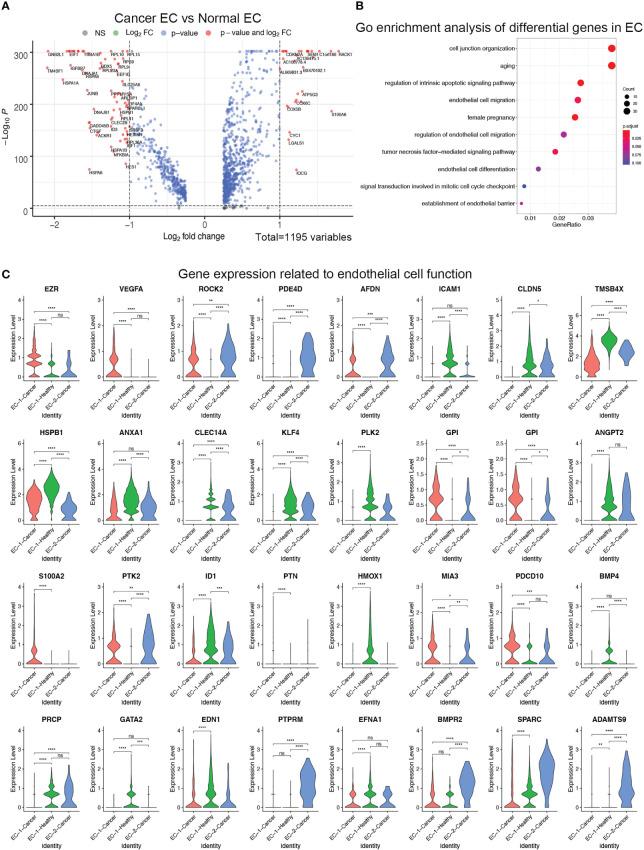
In this study, we analyzed specific cell subpopulations and compared different gene functions between healthy ovarian and ovarian cancer cells using single-cell RNA sequencing (ScRNA-seq). We delved deeper into the differences between healthy ovarian and ovarian cancer cells at different levels, and performed specific analysis on endothelial cells.
RESULTS
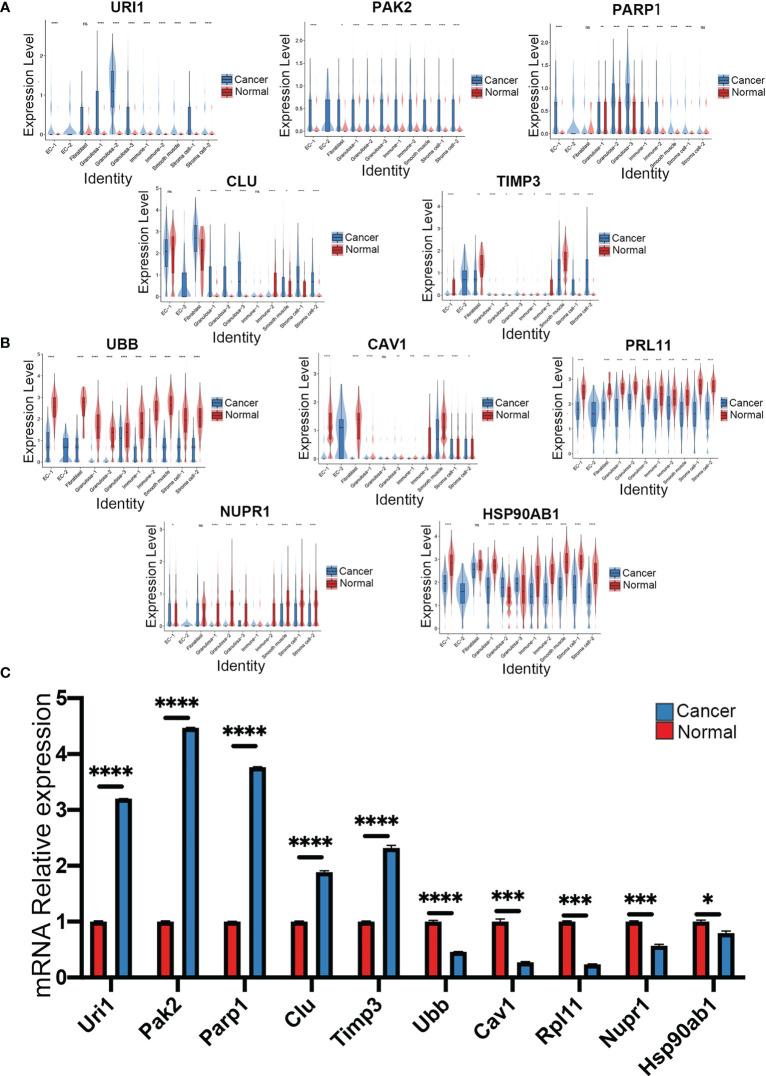
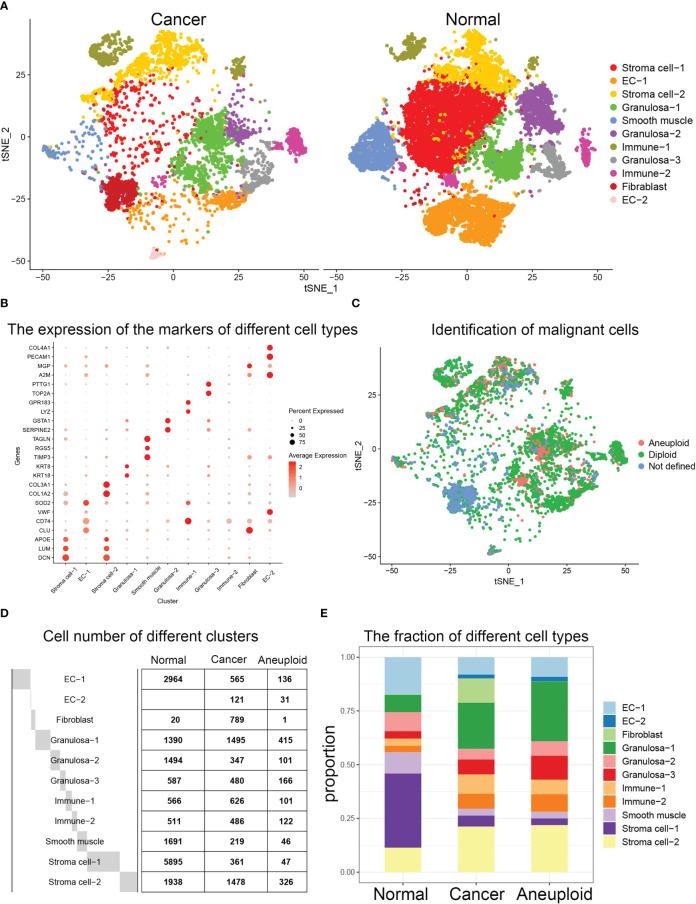
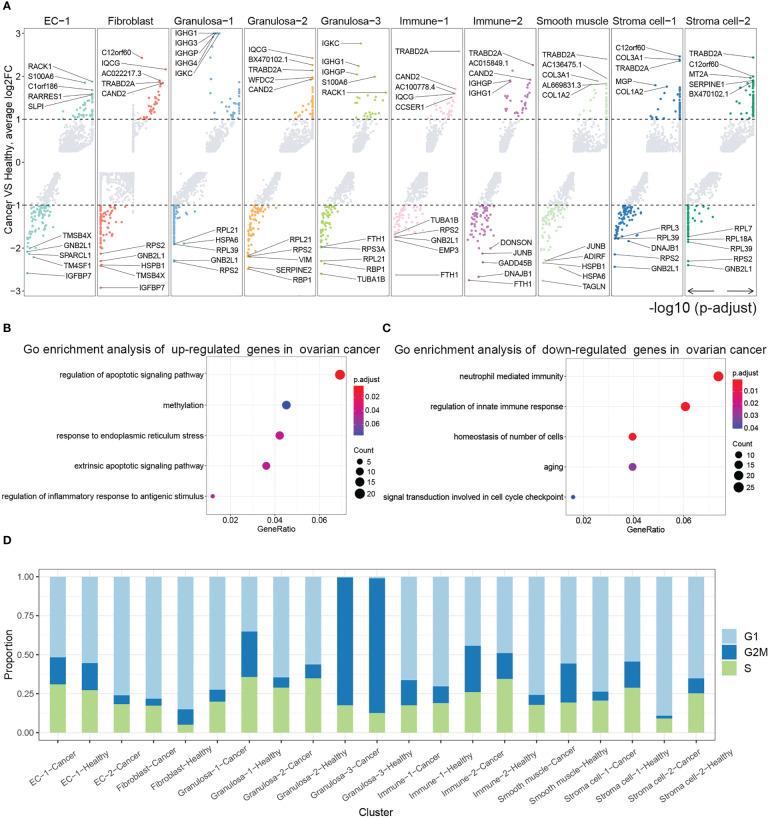
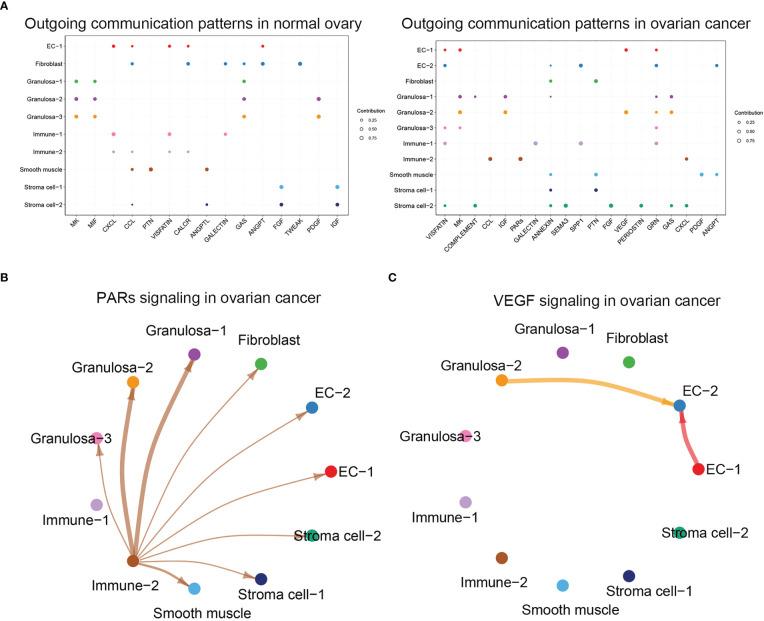
We obtained scRNA-seq data of 6867 and 17056 cells from healthy ovarian samples and ovarian cancer samples, respectively. The transcriptional profiles of the groups differed at various stages of ovarian cell development. A detailed comparison of the cell cycle, and cell communication of different groups, revealed significant differences between healthy ovarian and ovarian cancer cells. We also found that apoptosis-related genes, URI1, PAK2, PARP1, CLU and TIMP3, were highly expressed, while immune-related genes, UBB, RPL11, CAV1, NUPR1 and Hsp90ab1, were lowly expressed in ovarian cancer cells. The results of the ScRNA-seq were verified using qPCR.
DISCUSSION
Our findings revealed differences in function, gene expression and cell interaction patterns between ovarian cancer and healthy ovarian cell populations. These findings provide key insights on further research into the treatment of ovarian cancer.
引言
高级别浆液性卵巢癌(HGSOC)是卵巢癌最常见的组织学亚型,且死亡率高。
方法
在本研究中,我们使用单细胞RNA测序(ScRNA-seq)分析了特定细胞亚群,并比较了健康卵巢细胞和卵巢癌细胞之间不同的基因功能。我们在不同水平上更深入地探究了健康卵巢细胞和卵巢癌细胞之间的差异,并对内皮细胞进行了特异性分析。
结果
我们分别从健康卵巢样本和卵巢癌样本中获得了6867个和17056个细胞的ScRNA-seq数据。这些组的转录谱在卵巢细胞发育的各个阶段有所不同。对不同组的细胞周期和细胞通讯进行详细比较,发现健康卵巢细胞和卵巢癌细胞之间存在显著差异。我们还发现,凋亡相关基因URI1、PAK2、PARP1、CLU和TIMP3在卵巢癌细胞中高表达,而免疫相关基因UBB、RPL11、CAV1、NUPR1和Hsp90ab1在卵巢癌细胞中低表达。ScRNA-seq的结果通过qPCR进行了验证。
讨论
我们的研究结果揭示了卵巢癌与健康卵巢细胞群体在功能、基因表达和细胞相互作用模式上的差异。这些发现为进一步研究卵巢癌的治疗提供了关键见解。
 Zotero 插件