Hasani Hamid, Sun Jipeng, Zhu Shuyu I, Rong Qiangzhou, Willomitzer Florian, Amor Rumelo, McConnell Gail, Cossairt Oliver, Goodhill Geoffrey J
Department of Electrical and Computer Engineering, Northwestern University, Evanston, IL, United States.
Department of Computer Science, Northwestern University, Evanston, IL, United States.
Front Neurosci. 2023 Apr 17;17:1127574. doi: 10.3389/fnins.2023.1127574. eCollection 2023.
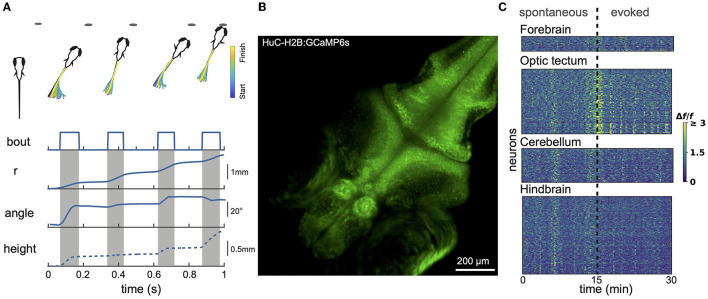
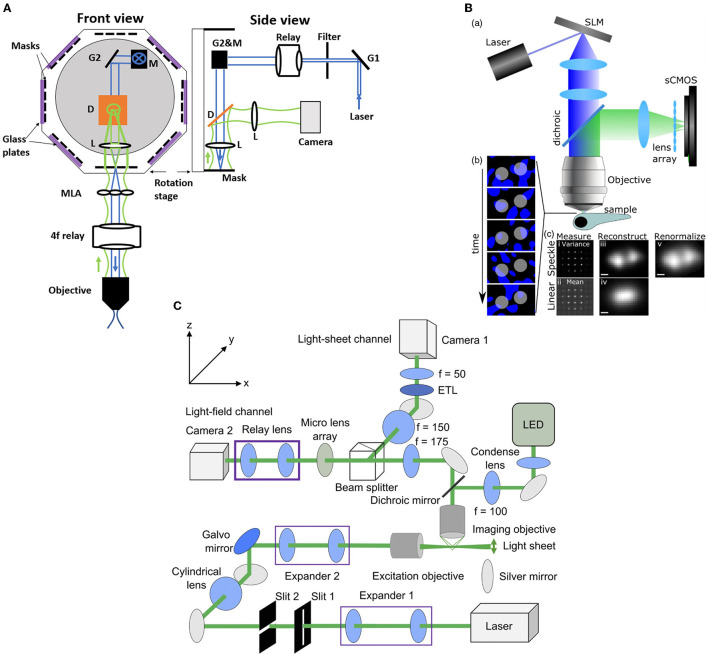
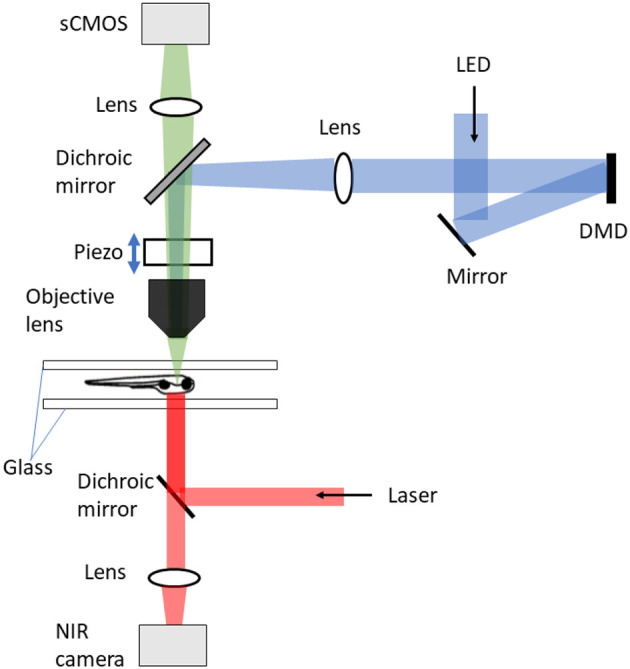
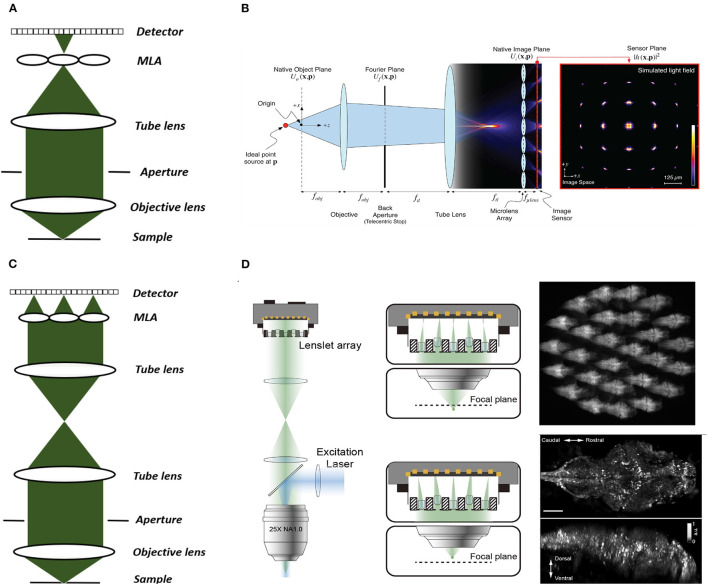
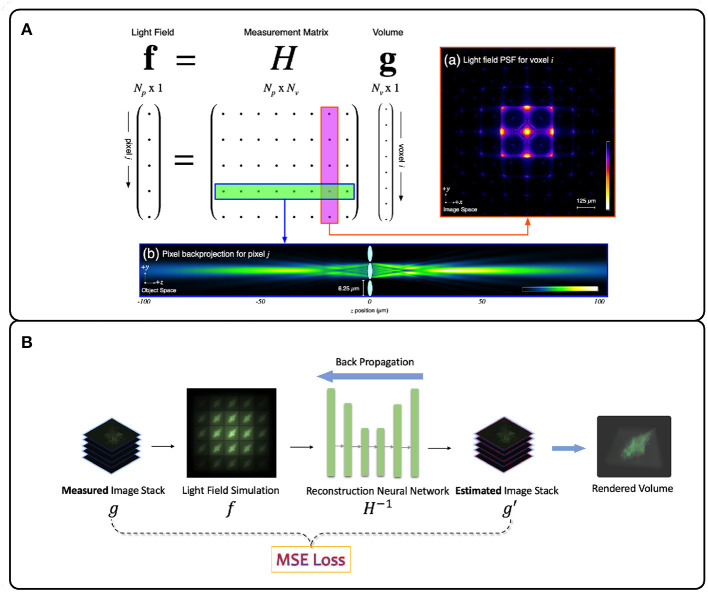
One of the holy grails of neuroscience is to record the activity of every neuron in the brain while an animal moves freely and performs complex behavioral tasks. While important steps forward have been taken recently in large-scale neural recording in rodent models, single neuron resolution across the entire mammalian brain remains elusive. In contrast the larval zebrafish offers great promise in this regard. Zebrafish are a vertebrate model with substantial homology to the mammalian brain, but their transparency allows whole-brain recordings of genetically-encoded fluorescent indicators at single-neuron resolution using optical microscopy techniques. Furthermore zebrafish begin to show a complex repertoire of natural behavior from an early age, including hunting small, fast-moving prey using visual cues. Until recently work to address the neural bases of these behaviors mostly relied on assays where the fish was immobilized under the microscope objective, and stimuli such as prey were presented virtually. However significant progress has recently been made in developing brain imaging techniques for zebrafish which are not immobilized. Here we discuss recent advances, focusing particularly on techniques based on light-field microscopy. We also draw attention to several important outstanding issues which remain to be addressed to increase the ecological validity of the results obtained.
神经科学的一大目标是在动物自由移动并执行复杂行为任务时,记录其大脑中每个神经元的活动。尽管最近在啮齿动物模型的大规模神经记录方面取得了重要进展,但在整个哺乳动物大脑中实现单神经元分辨率仍然难以捉摸。相比之下,斑马鱼幼体在这方面展现出了巨大的潜力。斑马鱼是一种与哺乳动物大脑具有高度同源性的脊椎动物模型,而且它们的透明性使得使用光学显微镜技术能够以单神经元分辨率对基因编码的荧光指示剂进行全脑记录。此外,斑马鱼从幼年起就开始展现出一系列复杂的自然行为,包括利用视觉线索捕食小型、快速移动的猎物。直到最近,研究这些行为神经基础的工作大多依赖于将鱼固定在显微镜物镜下,并虚拟呈现猎物等刺激的实验方法。然而,最近在开发用于非固定斑马鱼的脑成像技术方面取得了重大进展。在此,我们将讨论最近的进展,尤其关注基于光场显微镜的技术。我们还将提请注意几个重要的未解决问题,要提高所获结果的生态效度,这些问题仍有待解决。