Programs in Metabolism and Medical & Population Genetics, Broad Institute of Harvard and MIT, Cambridge, MA, USA.
Center for Genomic Medicine, Massachusetts General Hospital, Boston, MA, USA.
Diabetologia. 2023 Jul;66(7):1273-1288. doi: 10.1007/s00125-023-05912-9. Epub 2023 May 6.
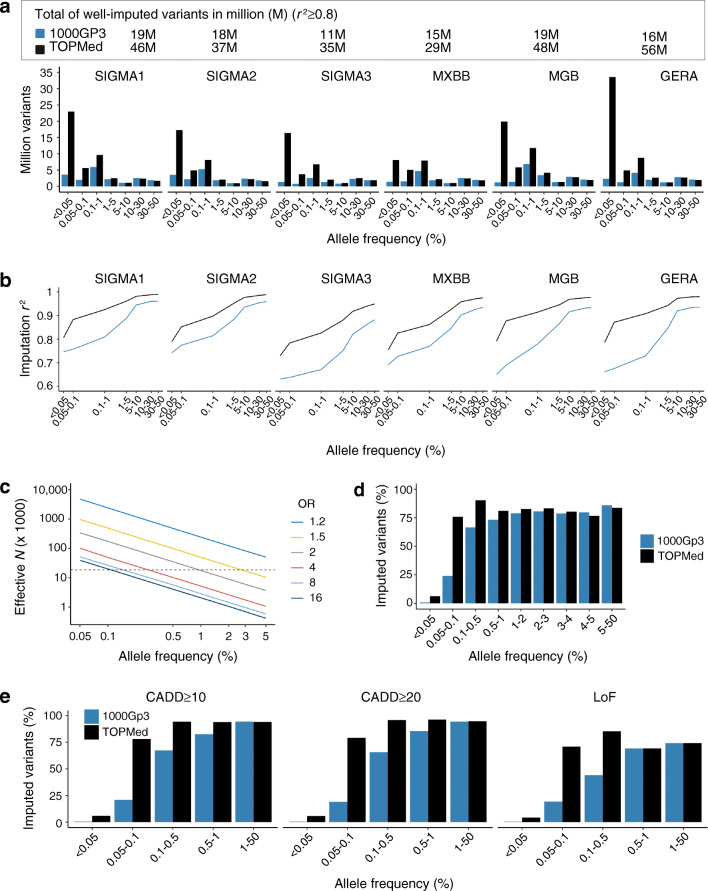
AIMS/HYPOTHESIS: The Latino population has been systematically underrepresented in large-scale genetic analyses, and previous studies have relied on the imputation of ungenotyped variants based on the 1000 Genomes (1000G) imputation panel, which results in suboptimal capture of low-frequency or Latino-enriched variants. The National Heart, Lung, and Blood Institute (NHLBI) Trans-Omics for Precision Medicine (TOPMed) released the largest multi-ancestry genotype reference panel representing a unique opportunity to analyse rare genetic variations in the Latino population. We hypothesise that a more comprehensive analysis of low/rare variation using the TOPMed panel would improve our knowledge of the genetics of type 2 diabetes in the Latino population.
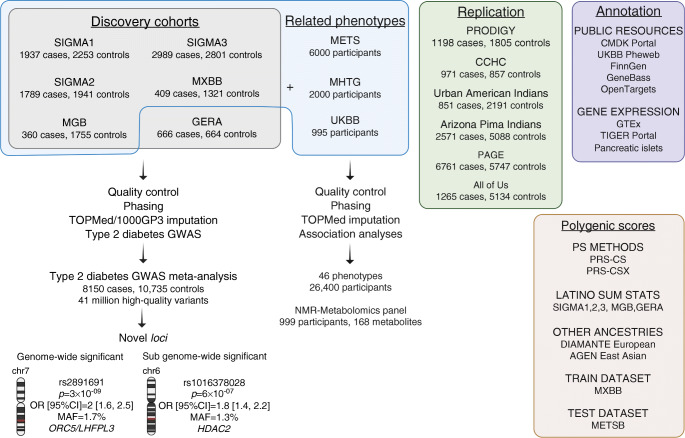
We evaluated the TOPMed imputation performance using genotyping array and whole-exome sequence data in six Latino cohorts. To evaluate the ability of TOPMed imputation to increase the number of identified loci, we performed a Latino type 2 diabetes genome-wide association study (GWAS) meta-analysis in 8150 individuals with type 2 diabetes and 10,735 control individuals and replicated the results in six additional cohorts including whole-genome sequence data from the All of Us cohort.
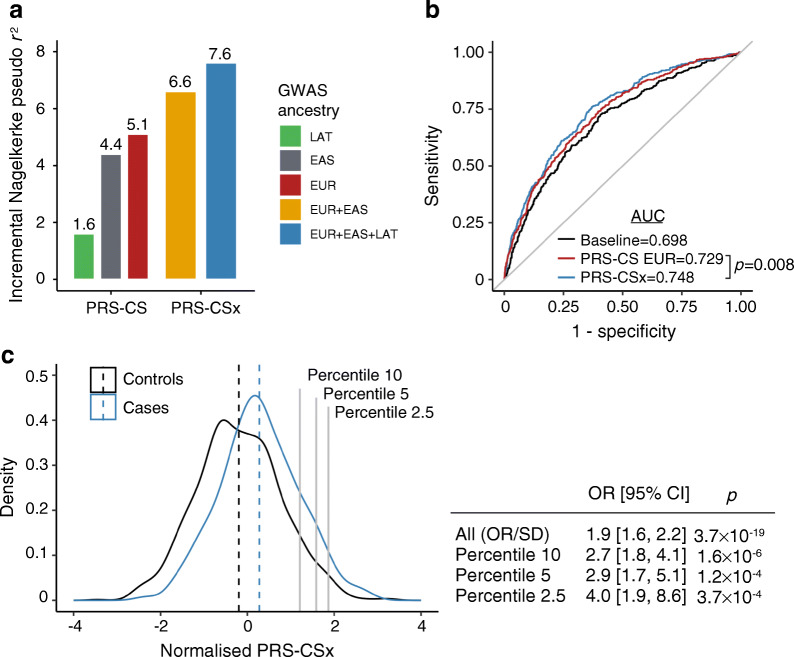
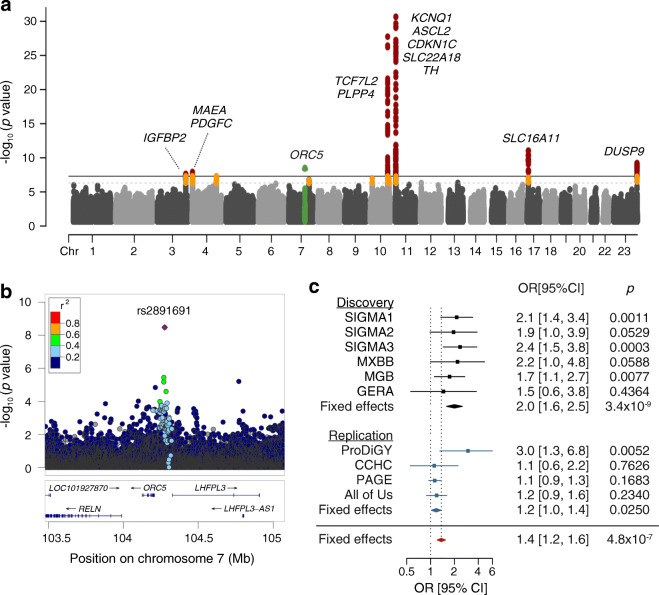
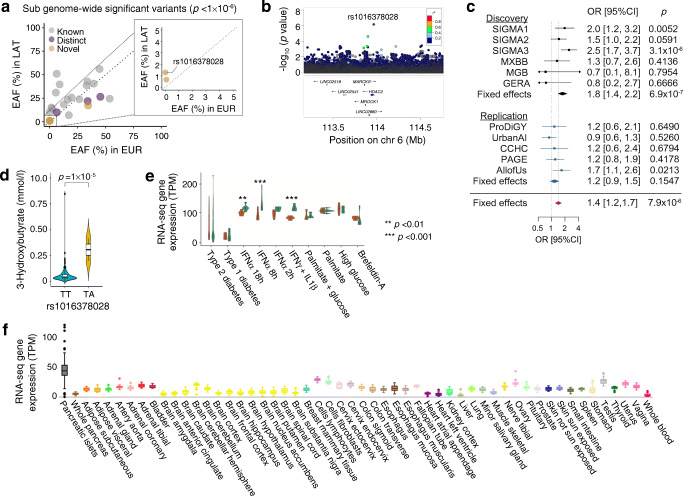
Compared with imputation with 1000G, the TOPMed panel improved the identification of rare and low-frequency variants. We identified 26 genome-wide significant signals including a novel variant (minor allele frequency 1.7%; OR 1.37, p=3.4 × 10). A Latino-tailored polygenic score constructed from our data and GWAS data from East Asian and European populations improved the prediction accuracy in a Latino target dataset, explaining up to 7.6% of the type 2 diabetes risk variance.
CONCLUSIONS/INTERPRETATION: Our results demonstrate the utility of TOPMed imputation for identifying low-frequency variants in understudied populations, leading to the discovery of novel disease associations and the improvement of polygenic scores.
Full summary statistics are available through the Common Metabolic Diseases Knowledge Portal ( https://t2d.hugeamp.org/downloads.html ) and through the GWAS catalog ( https://www.ebi.ac.uk/gwas/ , accession ID: GCST90255648). Polygenic score (PS) weights for each ancestry are available via the PGS catalog ( https://www.pgscatalog.org , publication ID: PGP000445, scores IDs: PGS003443, PGS003444 and PGS003445).
目的/假设:大规模遗传分析中一直系统性地缺乏拉丁裔人群的数据,而之前的研究依赖于基于 1000 基因组(1000G)的未分型变体的推断,这导致低频或富含拉丁裔的变体的捕获效果不佳。美国国立心肺血液研究所(NHLBI)转化医学精准医学(TOPMed)发布了最大的多祖先基因型参考面板,这是分析拉丁裔人群中罕见遗传变异的独特机会。我们假设,使用 TOPMed 面板更全面地分析低频/罕见变异,将提高我们对拉丁裔人群 2 型糖尿病遗传的认识。
我们使用 6 个拉丁裔队列的基因分型阵列和全外显子组序列数据评估了 TOPMed 的推断性能。为了评估 TOPMed 推断增加鉴定基因座数量的能力,我们在 8150 名 2 型糖尿病患者和 10735 名对照个体中进行了拉丁裔 2 型糖尿病全基因组关联研究(GWAS)荟萃分析,并在另外 6 个队列中进行了复制,包括来自全美队列的全基因组序列数据。
与使用 1000G 的推断相比,TOPMed 面板提高了罕见和低频变体的鉴定能力。我们鉴定了 26 个全基因组显著信号,包括一个新的变异(次要等位基因频率 1.7%;OR 1.37,p=3.4×10)。从我们的数据和东亚和欧洲人群的 GWAS 数据构建的拉丁裔定制多基因评分提高了在拉丁裔目标数据集的预测准确性,解释了高达 7.6%的 2 型糖尿病风险变异。
结论/解释:我们的结果表明,TOPMed 推断在研究不足的人群中识别低频变异是有用的,导致发现新的疾病关联,并提高多基因评分。
完整的汇总统计数据可通过常见代谢疾病知识门户(https://t2d.hugeamp.org/downloads.html)和 GWAS 目录(https://www.ebi.ac.uk/gwas/,访问 ID:GCST90255648)获得。每个祖先的多基因评分(PS)权重可通过 PGS 目录(https://www.pgscatalog.org,出版物 ID:PGP000445,评分 ID:PGS003443、PGS003444 和 PGS003445)获得。