Department of Neurology, Focus Program Translational Neuroscience (FTN) and Immunotherapy (FZI), Rhine-Main Neuroscience Network (rmn2), University Medical Center of the Johannes Gutenberg University Mainz, Langenbeckstr. 1, 55131 Mainz, Germany.
Department of Neurology, Focus Program Translational Neuroscience (FTN) and Immunotherapy (FZI), Rhine-Main Neuroscience Network (rmn2), University Medical Center of the Johannes Gutenberg University Mainz, Langenbeckstr. 1, 55131 Mainz, Germany.
Immunity. 2023 May 9;56(5):914-925. doi: 10.1016/j.immuni.2023.04.011.
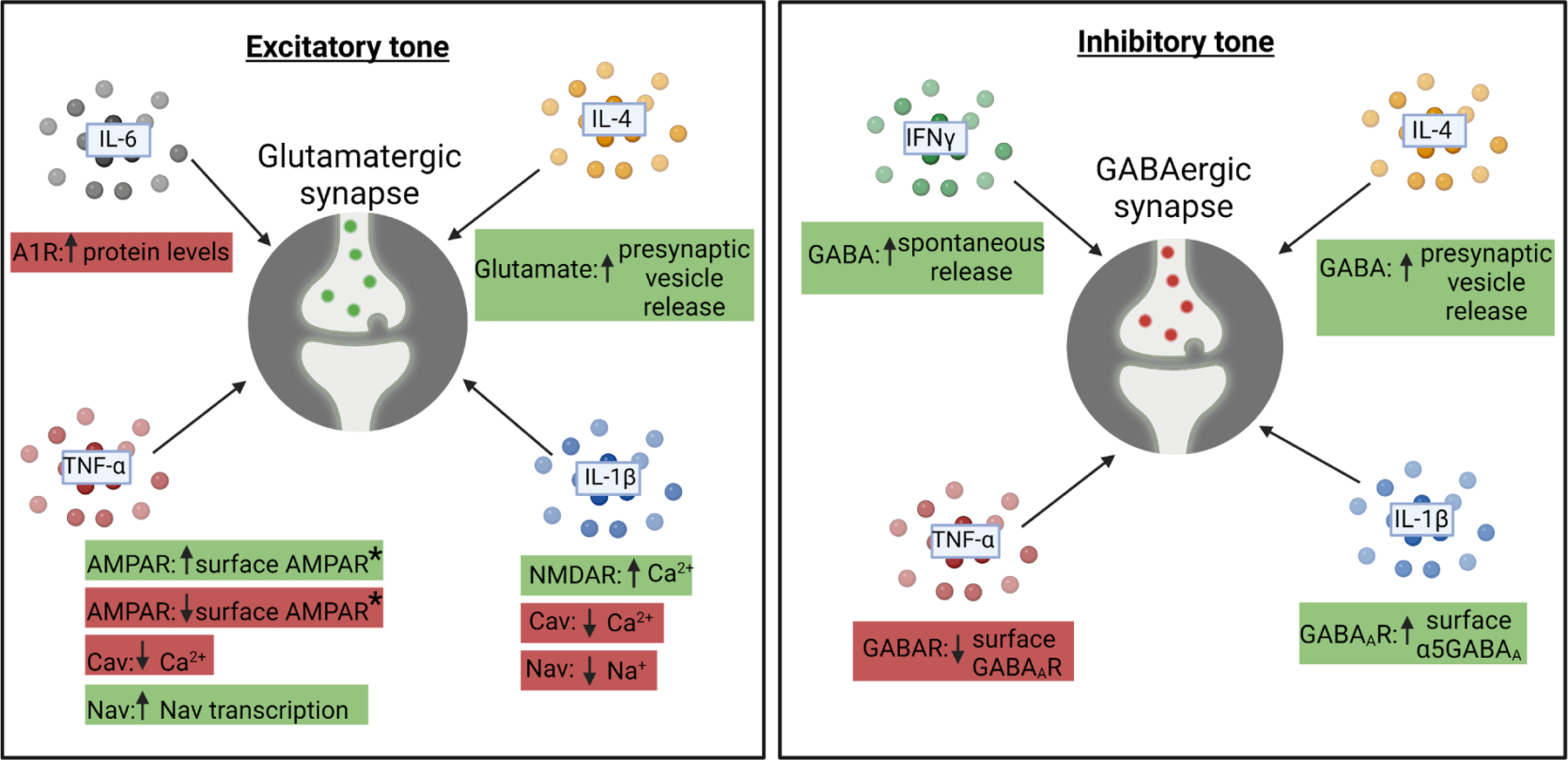
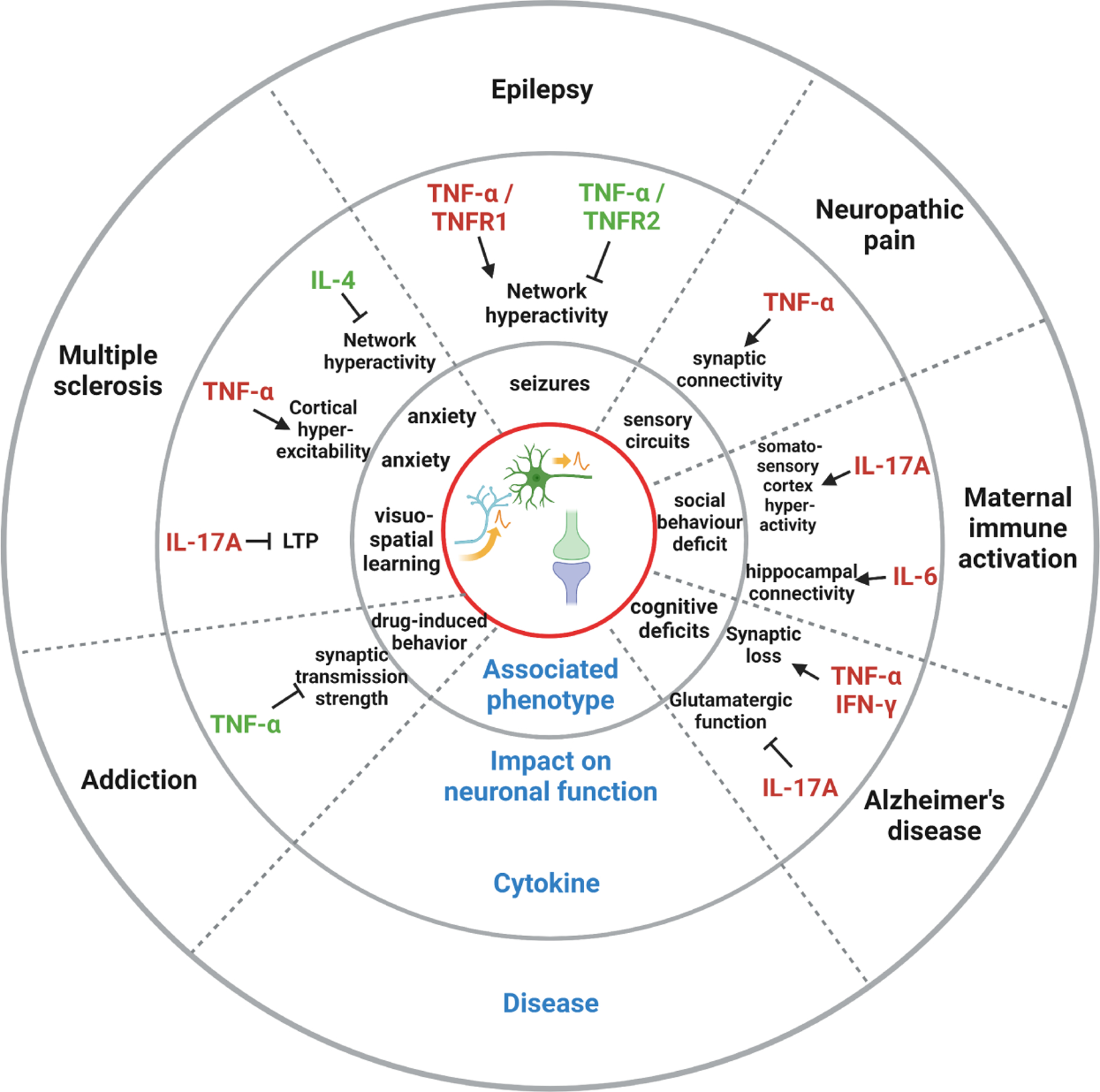
Cytokines are key messengers by which immune cells communicate, and they drive many physiological processes, including immune and inflammatory responses. Early discoveries demonstrated that cytokines, such as the interleukin family members and TNF-α, regulate synaptic scaling and plasticity. Still, we continue to learn more about how these traditional immune system cytokines affect neuronal structure and function. Different cytokines shape synaptic function on multiple levels ranging from fine-tuning neurotransmission, to regulating synapse number, to impacting global neuronal networks and complex behavior. These recent findings have cultivated an exciting and growing field centered on the importance of immune system cytokines for regulating synapse and neural network structure and function. Here, we highlight the latest findings related to cytokines in the central nervous system and their regulation of synapse structure and function. Moreover, we explore how these mechanisms are becoming increasingly important to consider in diseases-especially those with a large neuroinflammatory component.
细胞因子是免疫细胞间通讯的关键介质,它们驱动着许多生理过程,包括免疫和炎症反应。早期的发现表明,细胞因子,如白细胞介素家族成员和 TNF-α,调节突触的缩放和可塑性。尽管如此,我们仍在不断了解这些传统的免疫系统细胞因子如何影响神经元的结构和功能。不同的细胞因子在多个层面上塑造突触功能,从微调神经传递,到调节突触数量,到影响全局神经元网络和复杂行为。这些最新的发现催生了一个令人兴奋且不断发展的领域,其中心是免疫系统细胞因子对于调节突触和神经网络结构和功能的重要性。在这里,我们重点介绍与中枢神经系统中的细胞因子及其对突触结构和功能的调节相关的最新发现。此外,我们还探讨了这些机制在疾病中的重要性日益增加,尤其是那些具有大量神经炎症成分的疾病。