NewDrug PC, Patras Science Park, 26504 Patras, Greece.
Department of Chemistry, Laboratory of Organic Chemistry, National Kapodistrian University of Athens, 15772 Athens, Greece.
Int J Mol Sci. 2023 May 8;24(9):8454. doi: 10.3390/ijms24098454.
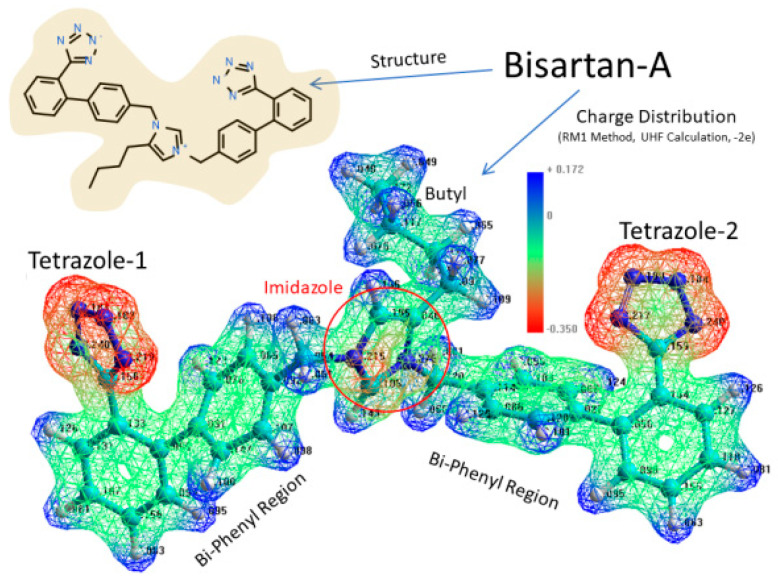
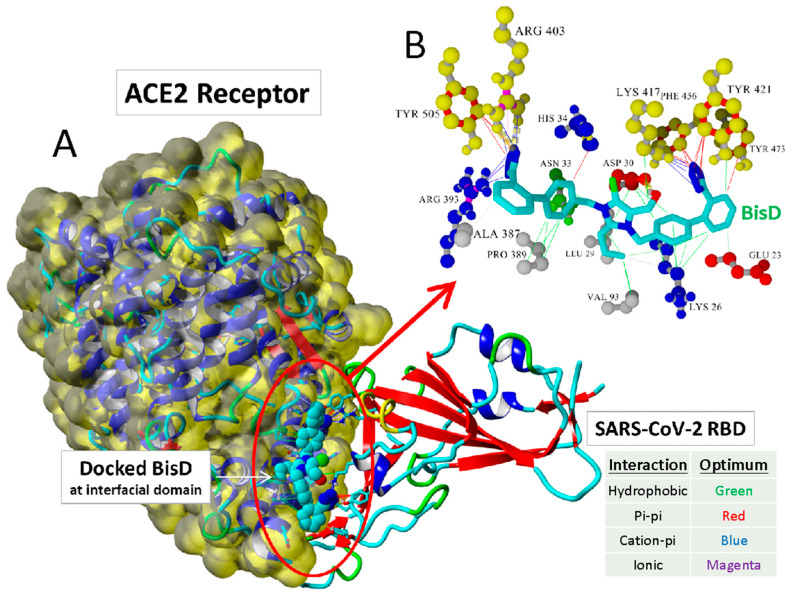
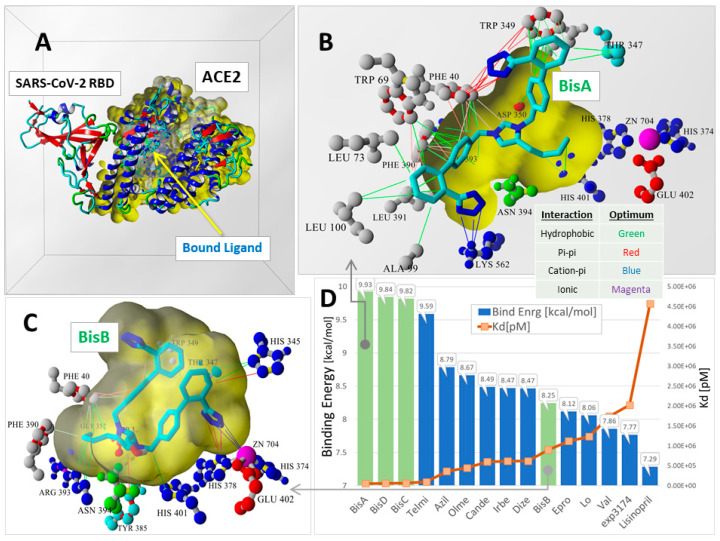
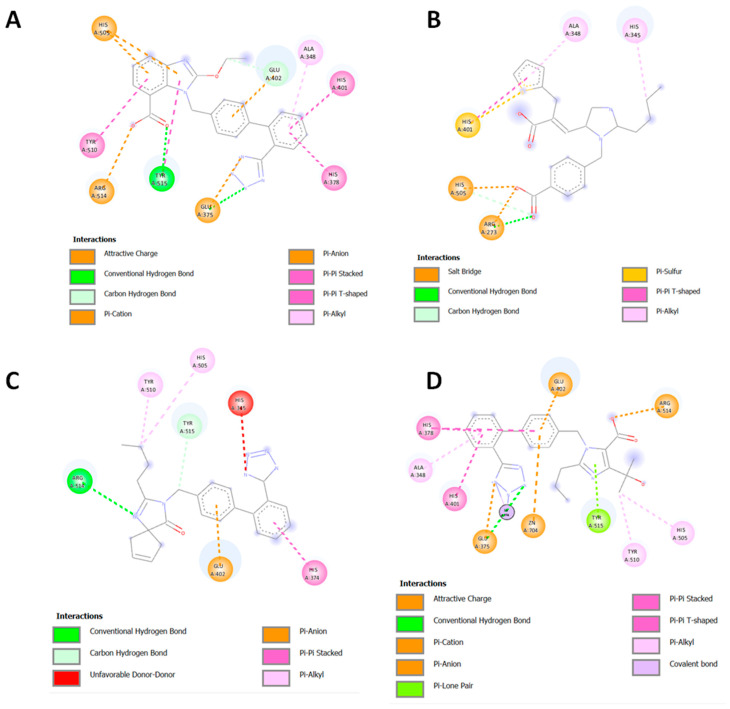
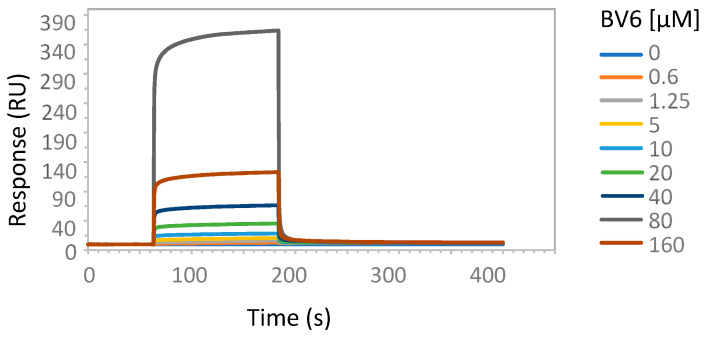
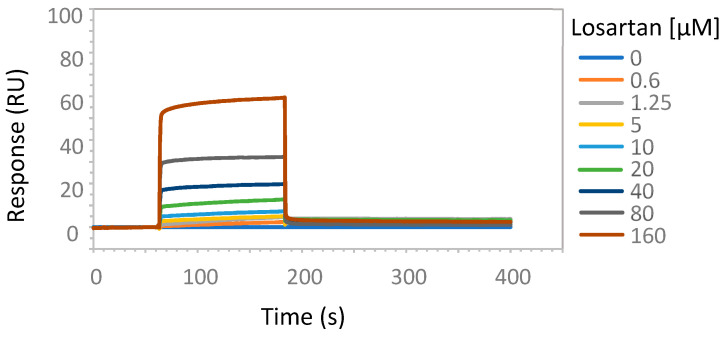
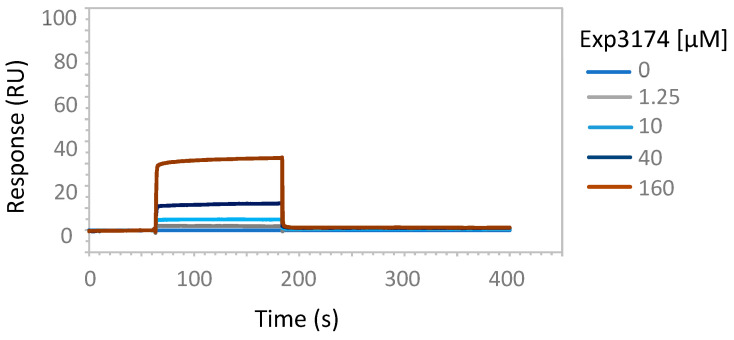
This study is an extension of current research into a novel class of synthetic antihypertensive drugs referred to as "bisartans", which are bis-alkylated imidazole derivatives bearing two symmetric anionic biphenyltetrazoles. Research to date indicates that bisartans are superior to commercially available hypertension drugs, since the former undergo stronger docking to angiotensin-converting enzyme 2 (ACE2). ACE2 is the key receptor involved in SARS-CoV-2 entry, thus initiating COVID-19 infection and in regulating levels of vasoactive peptides such as angiotensin II and beneficial heptapeptides A(1-7) and Alamandine in the renin-angiotensin system (RAS). In previous studies using in vivo rabbit-iliac arterial models, we showed that Na or K salts of selected Bisartans initiate a potent dose-response inhibition of vasoconstriction. Furthermore, computational studies revealed that bisartans undergo stable binding to the vital interfacial region between ACE2 and the SARS-CoV-2 "receptor binding domain" (i.e., the viral RBD). Thus, bisartan homologs are expected to interfere with SARS-CoV-2 infection and/or suppress disease expression in humans. The primary goal of this study was to investigate the role of tetrazole in binding and the network of amino acids of SARS-CoV-2 Spike RBD-ACE2 complex involved in interactions with sartans. This study would, furthermore, allow the expansion of the synthetic space to create a diverse suite of new bisartans in conjunction with detailed computational and in vitro antiviral studies. A critical role for tetrazole was uncovered in this study, shedding light on the vital importance of this group in the binding of sartans and bisartans to the ACE2/Spike complex. The in silico data predicting an interaction of tetrazole-containing sartans with ACE2 were experimentally validated by the results of surface plasmon resonance (SPR) analyses performed with a recombinant human ACE2 protein.
这项研究是对一类新型合成抗高血压药物的延伸,这些药物被称为“比沙坦”,它们是带有两个对称阴离子联苯四唑的双烷基咪唑衍生物。迄今为止的研究表明,比沙坦优于市售的高血压药物,因为前者与血管紧张素转换酶 2(ACE2)更强地结合。ACE2 是 SARS-CoV-2 进入的关键受体,因此引发 COVID-19 感染,并调节肾素-血管紧张素系统(RAS)中的血管活性肽,如血管紧张素 II 和有益的七肽 A(1-7)和 Alamandine 的水平。在以前使用体内兔髂动脉模型的研究中,我们表明,选定的比沙坦的 Na 或 K 盐起始强烈的剂量反应抑制血管收缩。此外,计算研究表明,比沙坦与 ACE2 和 SARS-CoV-2“受体结合域”(即病毒 RBD)之间的重要界面区域稳定结合。因此,比沙坦类似物有望干扰 SARS-CoV-2 感染和/或抑制人类疾病的表达。本研究的主要目的是研究四唑在结合中的作用,以及 SARS-CoV-2 Spike RBD-ACE2 复合物中涉及与沙坦相互作用的氨基酸网络。此外,这项研究将允许扩展合成空间,以创建一系列新的不同的比沙坦,并结合详细的计算和体外抗病毒研究。本研究揭示了四唑的关键作用,阐明了该基团在沙坦和比沙坦与 ACE2/Spike 复合物结合中的重要性。预测含四唑的沙坦与 ACE2 相互作用的计算数据通过使用重组人 ACE2 蛋白进行表面等离子体共振(SPR)分析的实验结果得到了验证。