Department of Energy, Environmental and Chemical Engineering, Washington University in St. Louis, St. Louis, MO 63130, USA.
Division of Biology & Biomedical Sciences, Washington University in St. Louis, St. Louis, MO 63130, USA.
Biosensors (Basel). 2023 Mar 28;13(4):428. doi: 10.3390/bios13040428.
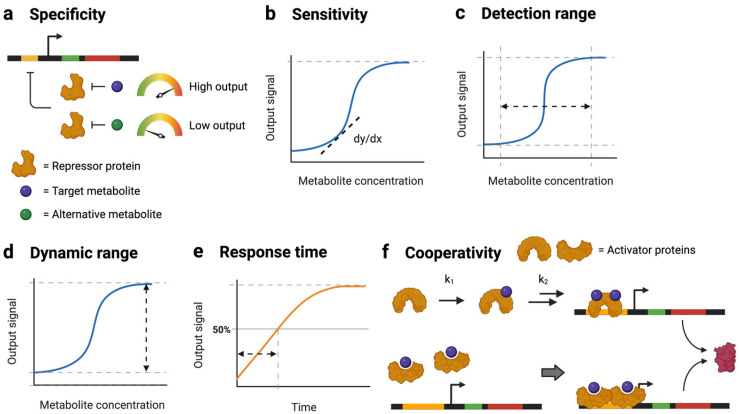
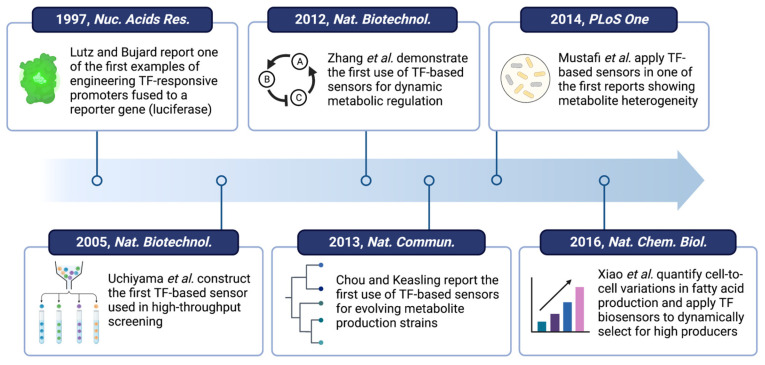
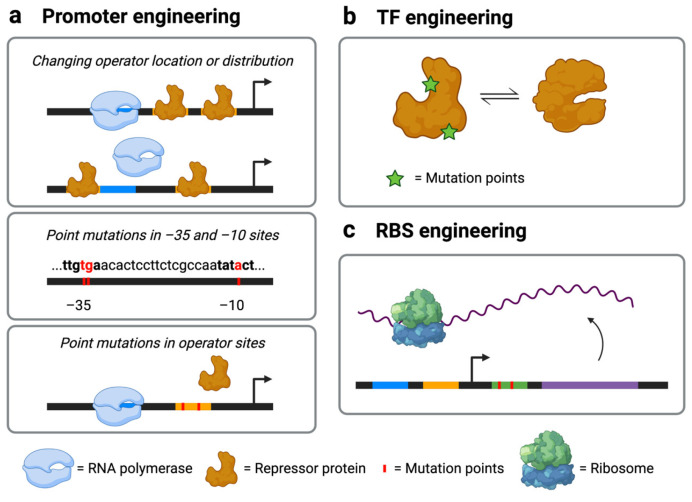
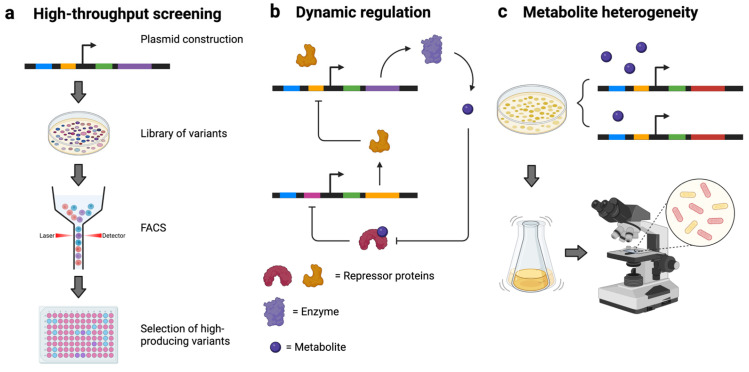
Transcription factor (TF)-based biosensors are widely used for the detection of metabolites and the regulation of cellular pathways in response to metabolites. Several challenges hinder the direct application of TF-based sensors to new hosts or metabolic pathways, which often requires extensive tuning to achieve the optimal performance. These tuning strategies can involve transcriptional or translational control depending on the parameter of interest. In this review, we highlight recent strategies for engineering TF-based biosensors to obtain the desired performance and discuss additional design considerations that may influence a biosensor's performance. We also examine applications of these sensors and suggest important areas for further work to continue the advancement of small-molecule biosensors.
基于转录因子 (TF) 的生物传感器广泛用于检测代谢物,并根据代谢物调节细胞途径。有几个挑战阻碍了基于 TF 的传感器在新宿主或代谢途径中的直接应用,这通常需要广泛的调整才能达到最佳性能。这些调整策略可以涉及转录或翻译控制,具体取决于感兴趣的参数。在这篇综述中,我们强调了最近用于工程化基于 TF 的生物传感器以获得所需性能的策略,并讨论了可能影响生物传感器性能的其他设计注意事项。我们还研究了这些传感器的应用,并提出了进一步工作的重要领域,以继续推进小分子生物传感器的发展。