Department of Intensive Care Unit, The Affiliated Hospital of Guizhou Medical University, Guiyang, 550001, China.
Inflamm Res. 2023 Jun;72(6):1237-1255. doi: 10.1007/s00011-023-01746-8. Epub 2023 May 22.
Evidence indicated that the early stage transition of macrophages' polarization stages yielded a superior prognosis for acute lung injury (ALI) or acute respiratory distress syndrome (ARDS). Rhein (cassic acid) is one major component of many traditional Chinese medicines, and has been reported to perform with strong anti-inflammation capabilities. However, the role rhein played and the mechanism via which it did so in LPS-induced ALI/ARDS remain unclear.
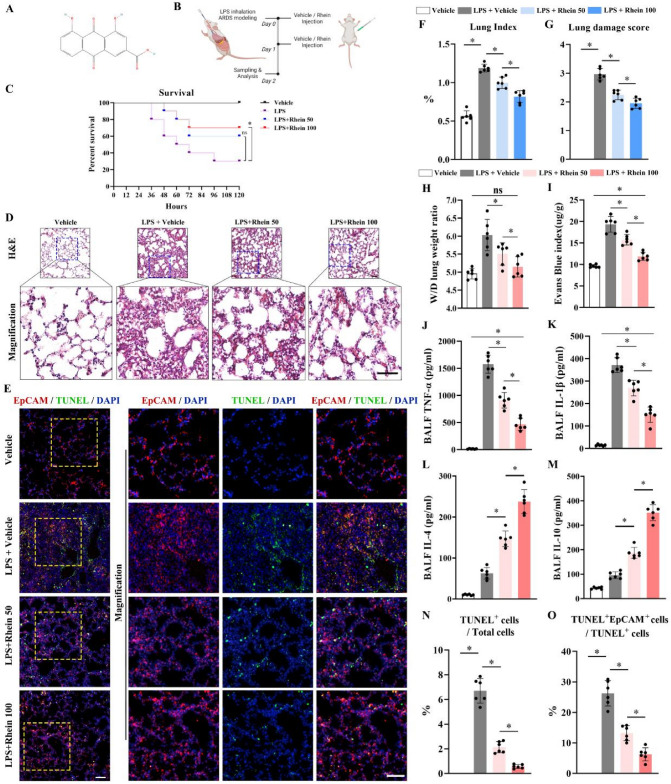
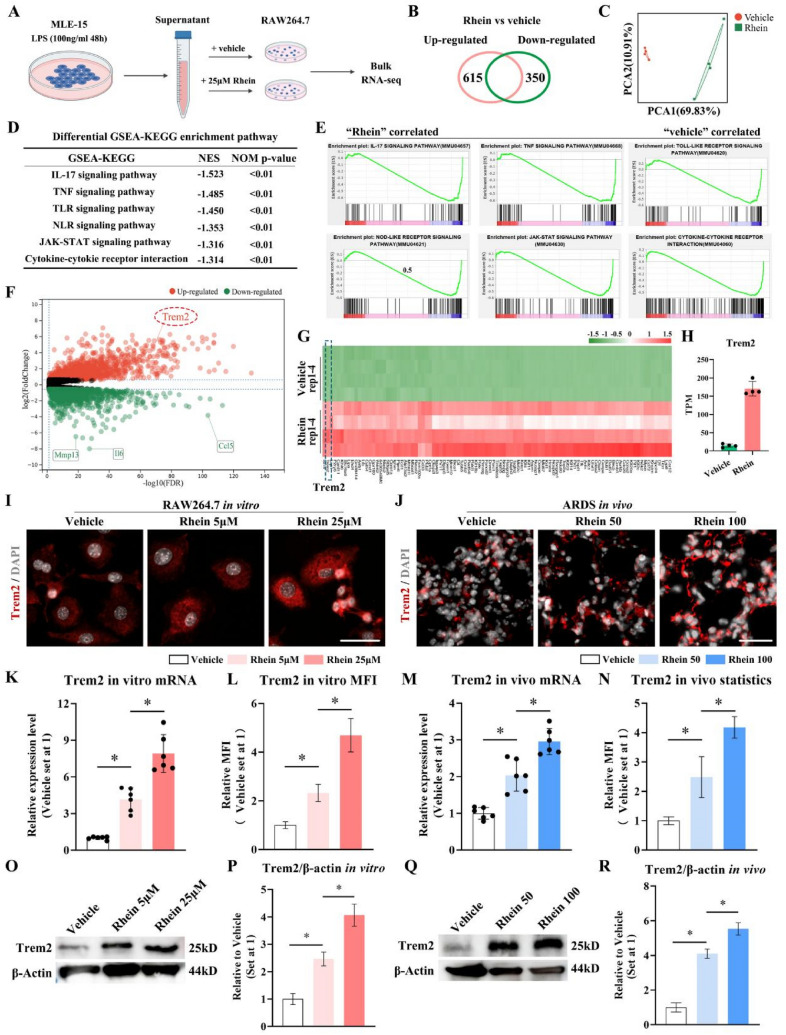
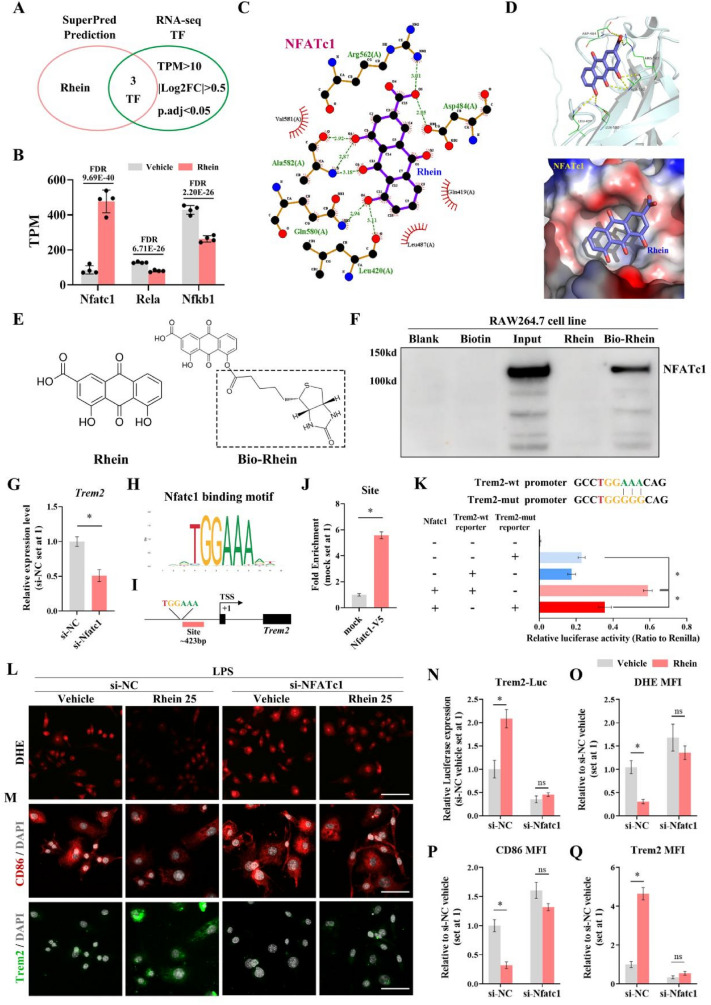
ALI/ARDS was induced by LPS (3 mg/kg, i.n, st), accompanied by the applications of rhein (50 and 100 mg/kg, i.p, qd), and a vehicle or NFATc1 inhibitor (10 mg/kg, i.p, qd) in vivo. Mice were sacrificed 48 h after modeling. Lung injury parameters, epithelial cell apoptosis, macrophage polarization, and oxidative stress were examined. In vitro, conditioned medium from alveolar epithelial cells stimulated by LPS was used for culturing a RAW264.7 cell line, along with rhein administrations (5 and 25 μM). RNA sequencing, molecule docking, biotin pull-down, ChIP-qPCR, and dual luciferase assay were performed to clarify the mechanisms of rhein in this pathological process.
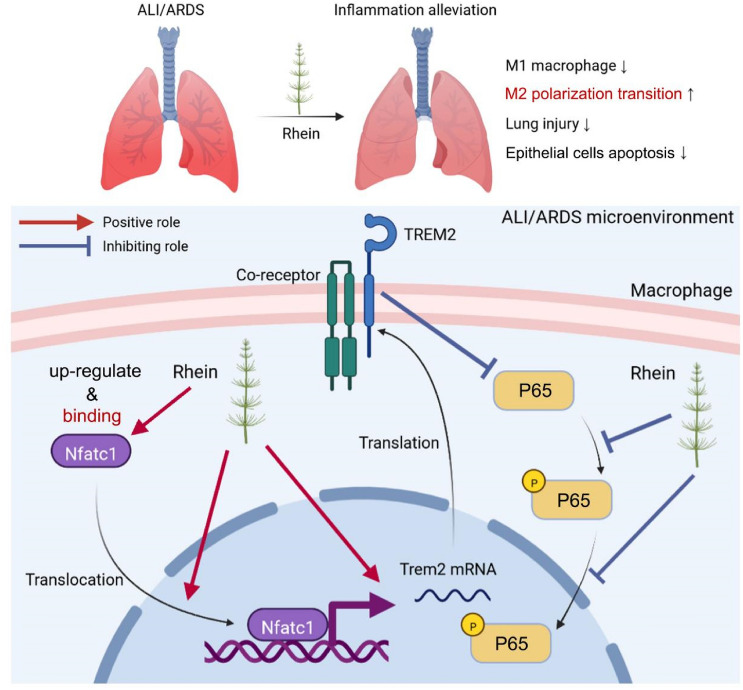
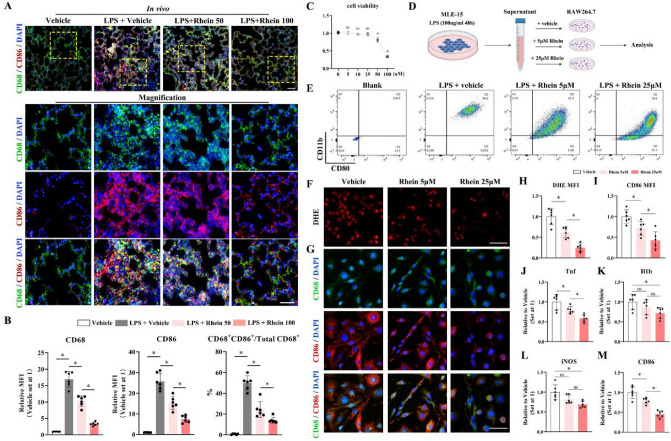
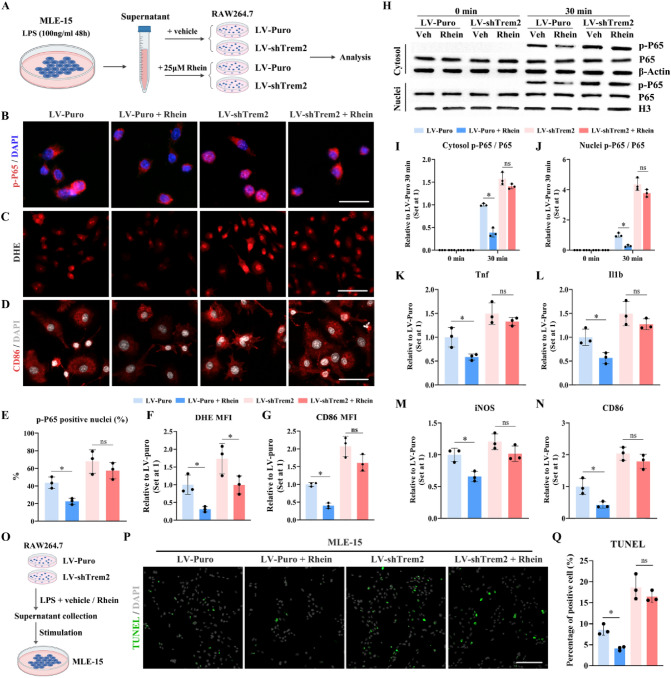
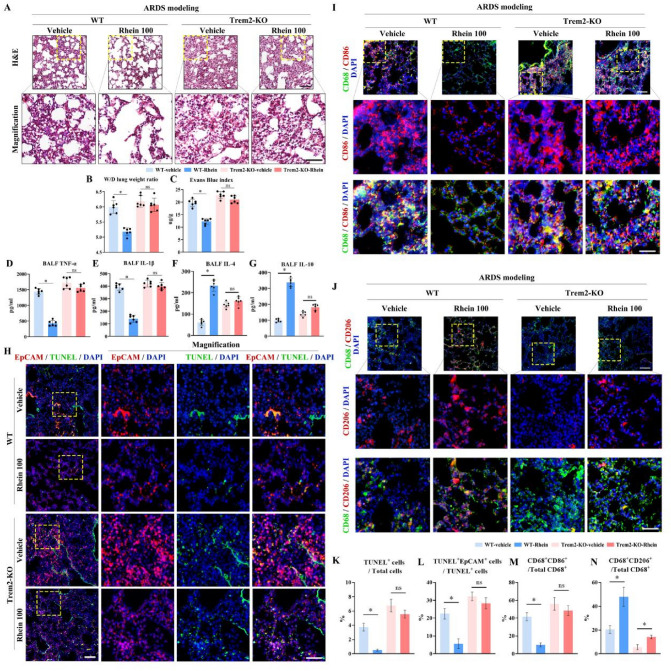
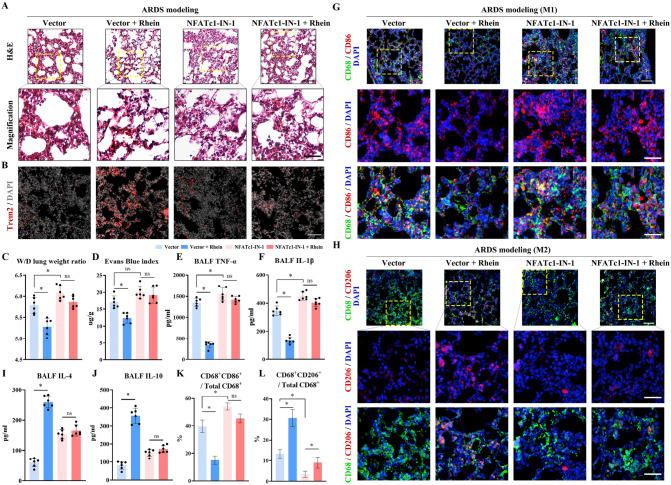
Rhein significantly attenuated tissue inflammation and promoted macrophage M2 polarization transition in LPS-induced ALI/ARDS. In vitro, rhein alleviated the intracellular ROS level, the activation of P65, and thus the M1 polarization of macrophages. In terms of mechanism, rhein played its protective roles via targeting the NFATc1/Trem2 axis, whose function was significantly mitigated in both Trem2 and NFATc1 blocking experiments.
Rhein promoted macrophage M2 polarization transition by targeting the NFATc1/Trem2 axis to regulate inflammation response and prognosis after ALI/ARDS, which shed more light on possibilities for the clinical treatments of this pathological process.
有证据表明,巨噬细胞极化阶段的早期转变为急性肺损伤(ALI)或急性呼吸窘迫综合征(ARDS)带来了更好的预后。大黄酸(经典酸)是许多中药的主要成分之一,据报道具有很强的抗炎能力。然而,大黄酸在 LPS 诱导的 ALI/ARDS 中的作用及其作用机制尚不清楚。
用 LPS(3mg/kg,经鼻内)诱导 ALI/ARDS,同时给予大黄酸(50 和 100mg/kg,腹腔注射,qd)和载体或 NFATc1 抑制剂(10mg/kg,腹腔注射,qd)。建模后 48 小时处死小鼠。检测肺损伤参数、上皮细胞凋亡、巨噬细胞极化和氧化应激。体外,用 LPS 刺激肺泡上皮细胞产生的条件培养基培养 RAW264.7 细胞系,并给予大黄酸(5 和 25μM)。进行 RNA 测序、分子对接、生物素下拉、ChIP-qPCR 和双荧光素酶测定,以阐明大黄酸在这一病理过程中的作用机制。
大黄酸显著减轻了 LPS 诱导的 ALI/ARDS 中的组织炎症,并促进了巨噬细胞 M2 极化的转变。在体外,大黄酸减轻了细胞内 ROS 水平、P65 的激活,从而减轻了巨噬细胞的 M1 极化。在机制方面,大黄酸通过靶向 NFATc1/Trem2 轴发挥其保护作用,在 Trem2 和 NFATc1 阻断实验中,该轴的功能明显减弱。
大黄酸通过靶向 NFATc1/Trem2 轴,调节炎症反应和 ALI/ARDS 后的预后,促进巨噬细胞 M2 极化的转变,为该病理过程的临床治疗提供了更多的可能性。