
儿童在违反规范背景下对中性任意行为的易受暗示性。
Children's suggestibility for neutral arbitrary actions in the context of norm violations.
机构信息
Educational Sciences and Psychology, Institute of Psychology, TU Dortmund University, Dortmund, Germany.
出版信息
PLoS One. 2023 May 25;18(5):e0286241. doi: 10.1371/journal.pone.0286241. eCollection 2023.
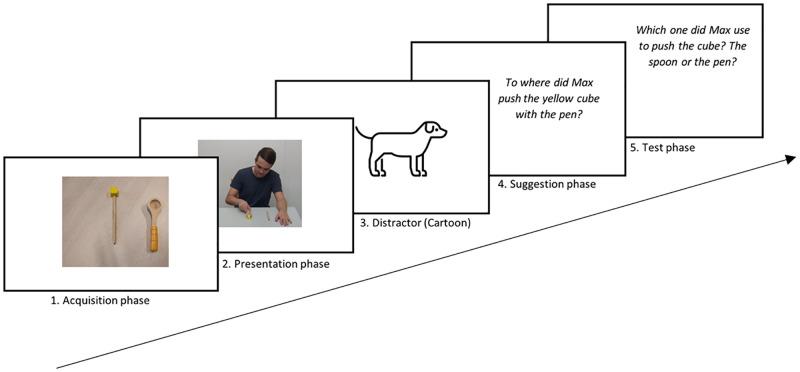
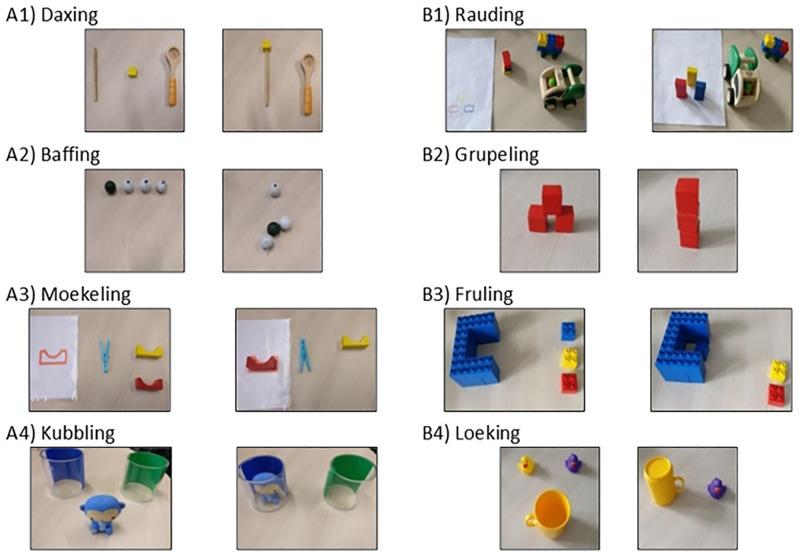
This study investigated children's false memories for neutral arbitrary actions. Five- to six-year-olds (N = 32) were taught four arbitrary actions, each following specific rules. The children then watched a televised adult performing eight actions: the four familiar actions while violating one aspect of each rule script and four unfamiliar actions. Suggestive and non-suggestive questions about all witnessed actions were asked, followed by forced-choice test questions to measure the false memory effect. The likelihood of forming false memories was higher in the suggestive condition than in the non-suggestive condition. There was no effect of previously acquired knowledge about the rules of the actions and no interaction between rule knowledge and suggestion. The results are discussed in light of previous findings in related fields of false memory research.
本研究调查了儿童对中性任意动作的错误记忆。5 至 6 岁的儿童(N=32)学习了四个任意动作,每个动作都遵循特定的规则。然后,孩子们观看了一个电视上的成年人表演八个动作:四个熟悉的动作,同时违反每个规则脚本的一个方面,还有四个不熟悉的动作。对所有目击的动作进行了暗示性和非暗示性的问题询问,然后进行了强制性选择测试问题,以衡量错误记忆的效果。在暗示性条件下形成错误记忆的可能性高于非暗示性条件。先前获得的关于动作规则的知识没有影响,规则知识与暗示之间也没有相互作用。研究结果在错误记忆研究的相关领域的先前发现的基础上进行了讨论。
 Zotero 插件