The State Key Laboratory of Oral Diseases & National Clinical Research Center for Oral Diseases, West China Hospital of Stomatology, Sichuan University, Chengdu, Sichuan, China.
Department of Cariology and Endodontics, West China Hospital of Stomatology, Sichuan University, Chengdu, Sichuan, China.
Clin Oral Investig. 2023 Aug;27(8):4567-4577. doi: 10.1007/s00784-023-05081-4. Epub 2023 May 25.
The effects of water flossing on dental plaque removal have been suggested, but its ecological impact on dental plaque microbiota needs further investigation. In addition, whether this plaque control measure by water flossing promotes the control of halitosis still needs clinical validation. The aim of this study was to evaluate the effects of water flossing on gingival inflammation and supragingival plaque microbiota.
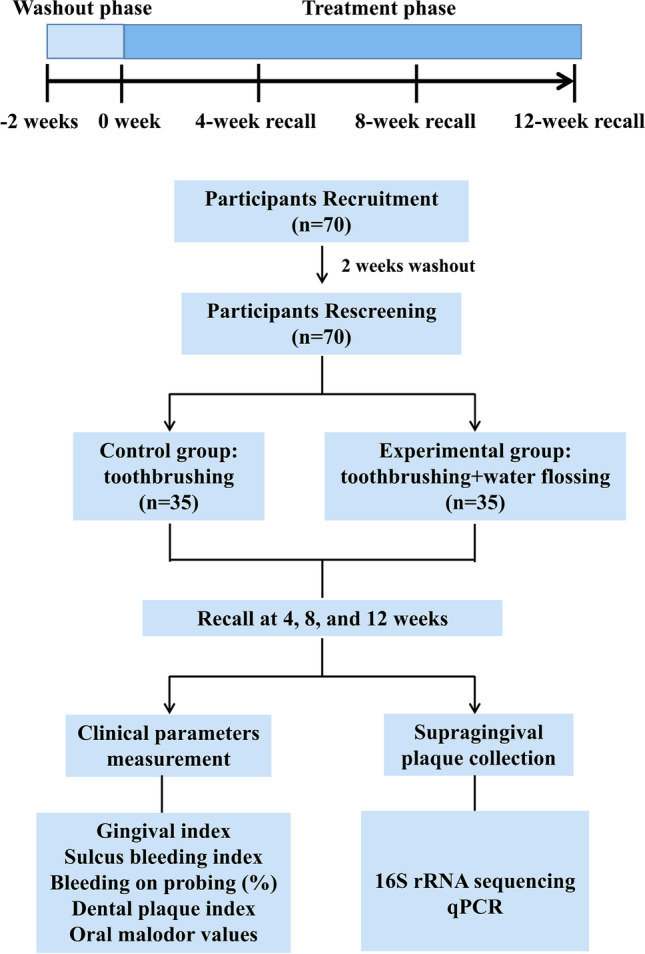
Seventy participants with gingivitis were randomly assigned to control (toothbrushing) and experimental (toothbrushing + water flossing) groups (n = 35). Participants were recalled at 4, 8, and 12 weeks, and their gingival index, sulcus bleeding index, bleeding on probing, dental plaque index, and oral malodor values were measured. The microbiota of supragingival plaque was further investigated using 16S rRNA sequencing and qPCR.
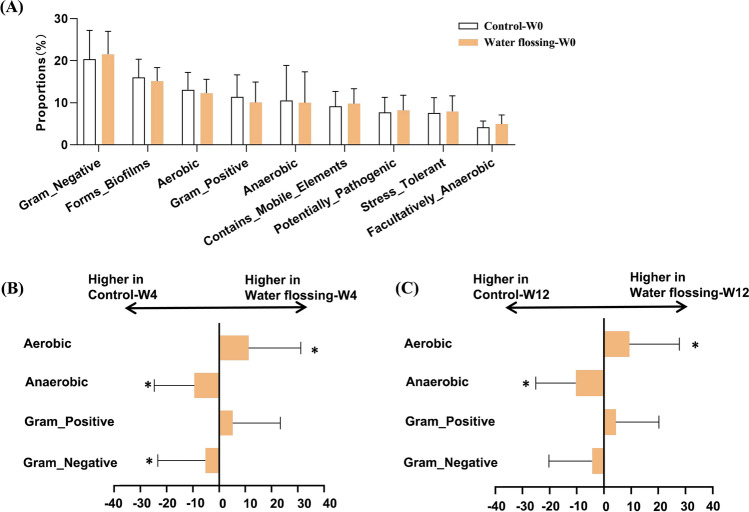
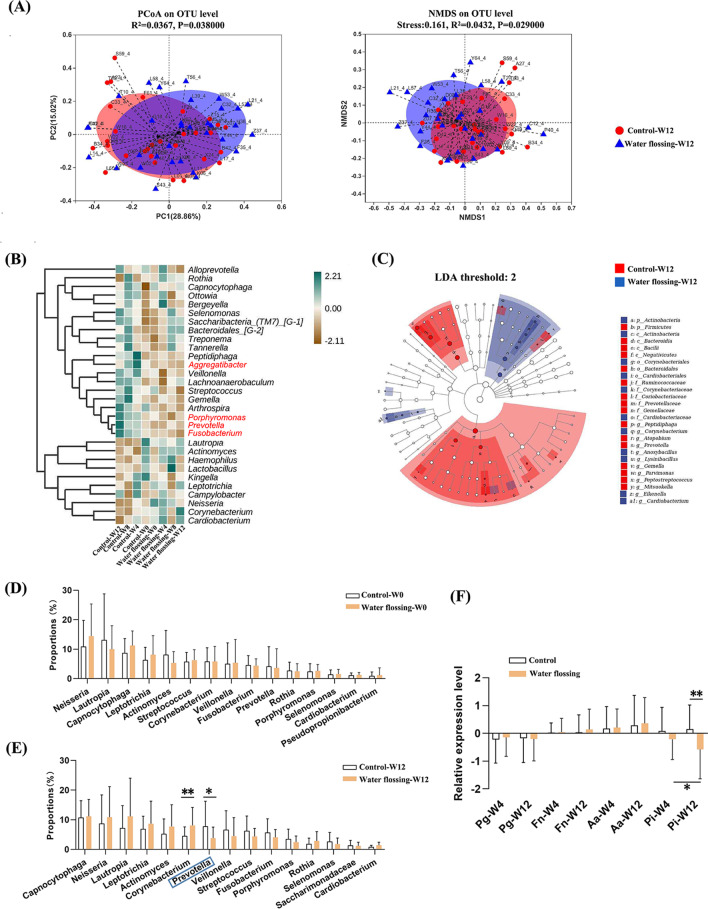
Sixty-three participants completed all revisits (control: n = 33; experimental: n = 30). The experimental and control groups exhibited similar clinical characteristics and dental plaque microbiota at baseline. Adjunctive water flossing effectively reduced the gingival index and sulcus bleeding index as compared to the toothbrushing control group. The water-flossing group showed reduced oral malodor at week 12 as compared to the baseline. Consistently, the water-flossing group exhibited altered dental plaque microbiota at week 12, characterized by a depletion of Prevotella at genus level and Prevotella intermedia at species level as compared to the toothbrushing control. In addition, the plaque microbiota of water-flossing group exhibited a more aerobic phenotype, while the control group was more anaerobic.
Daily water flossing can effectively alleviate gingival inflammation and reduce oral malodor, possibly by depleting oral anaerobes and altering the oral microbiota to a more aerobic phenotype.
Water flossing adjunctive to toothbrushing effectively alleviated gingival inflammation, representing a promising oral hygiene practice to promote oral health.
The trial was registered in the Chinese Clinical Trial Registry ( http://www.chictr.org.cn/showprojen.aspx?proj=61797 , #ChiCTR2000038508) on September 23, 2020.
水牙线对牙菌斑去除的效果已被提出,但它对牙菌斑微生物群的生态影响仍需进一步研究。此外,水牙线这种控制牙菌斑的措施是否能促进口臭的控制仍需要临床验证。本研究旨在评估水牙线对牙龈炎症和龈上菌斑微生物群的影响。
70 名患有牙龈炎的参与者被随机分配到对照组(刷牙)和实验组(刷牙+水牙线)(n=35)。参与者在第 4、8 和 12 周时被召回,并测量其牙龈指数、龈沟出血指数、探诊出血、牙菌斑指数和口腔异味值。进一步使用 16S rRNA 测序和 qPCR 研究龈上菌斑的微生物群。
63 名参与者完成了所有复诊(对照组:n=33;实验组:n=30)。实验组和对照组在基线时具有相似的临床特征和牙菌斑微生物群。与单独刷牙的对照组相比,辅助水牙线能更有效地降低牙龈指数和龈沟出血指数。与基线相比,水牙线组在第 12 周时口腔异味明显减少。同样,与单独刷牙的对照组相比,水牙线组在第 12 周时牙菌斑微生物群发生了变化,表现在属水平上普雷沃氏菌减少和种水平上中间普雷沃氏菌减少。此外,水牙线组的菌斑微生物群表现出更需氧的表型,而对照组则更具厌氧性。
每天使用水牙线可以有效缓解牙龈炎症,减少口腔异味,可能是通过消耗口腔厌氧菌并改变口腔微生物群以产生更需氧的表型。
水牙线作为牙刷的辅助工具,能有效缓解牙龈炎症,代表了一种有前途的口腔卫生实践,可促进口腔健康。
该试验于 2020 年 9 月 23 日在中国临床试验注册中心(http://www.chictr.org.cn/showprojen.aspx?proj=61797,#ChiCTR2000038508)注册。