Department of Microbiology, Faculty of Science, Assam Down Town University, Guwahati, Assam, India.
Regional Medical Research Centre-Indian Council of Medical Research, Dibrugarh, Assam, India.
PLoS One. 2023 May 26;18(5):e0285753. doi: 10.1371/journal.pone.0285753. eCollection 2023.
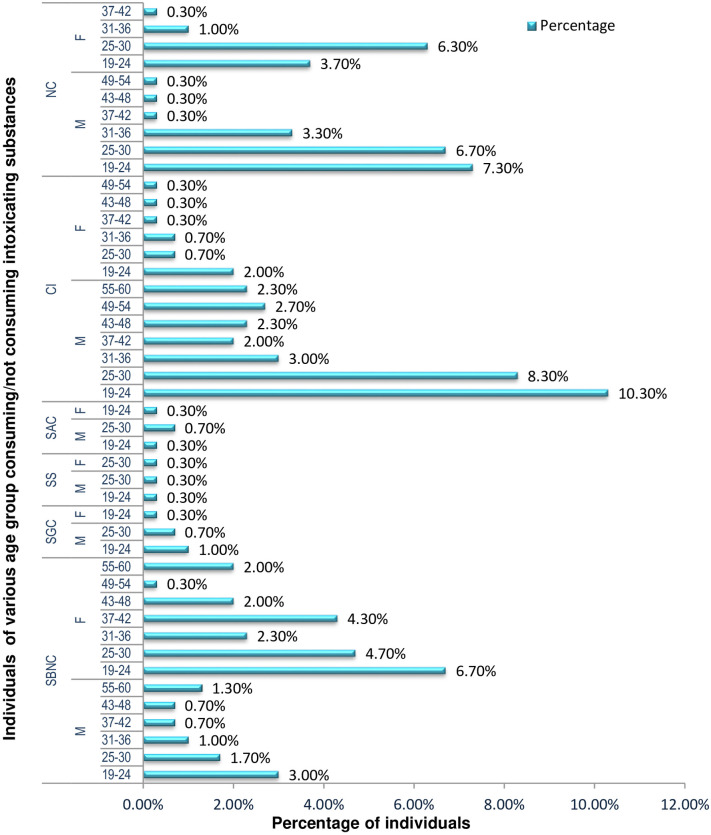
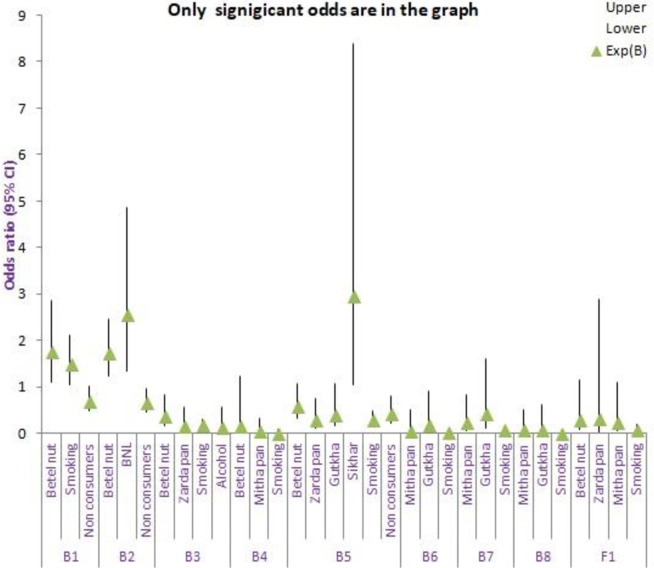
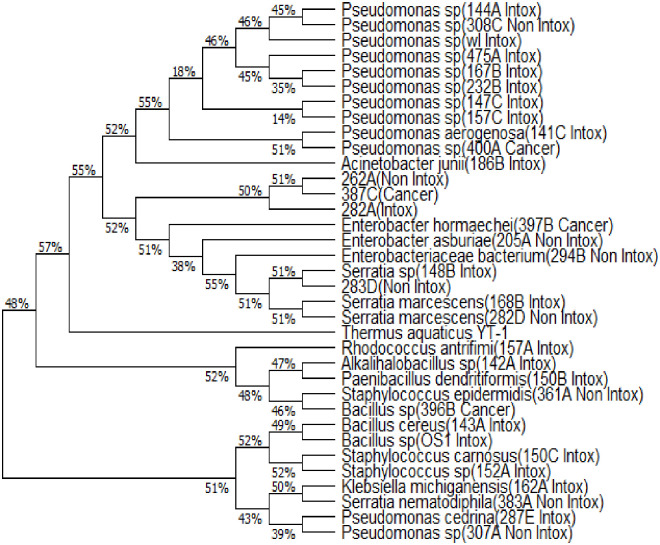
Food habits and oral hygiene are critical attributes for physiochemical environment of the oral cavity. Consumption of intoxicating substances such as betel nut ('Tamul'), alcohol, smoking and chewing tobacco may strongly influence the oral ecosystem including commensal microbes. Therefore, a comparative assessment of microbes in the oral cavity between individuals consuming intoxicating substances and non-consumers may indicate the influence of these substances. Oral swabs were collected from consumers of intoxicating substances and non- consumers of Assam, India, microbes were isolated by culturing on Nutrient agar and identified by phylogenetic analysis of their 16S rRNA gene sequences. The risks of consumption of intoxicating substance on occurrence of microbes and health conditions were estimated using binary logistic regression. Mostly pathogens and opportunistic pathogens were found in the oral cavity of consumers and oral cancer patients which included Pseudomonas aeruginosa, Serratia marcescens, Rhodococcus antrifimi, Paenibacillus dendritiformis, Bacillus cereus, Staphylococcus carnosus, Klebsiella michiganensis and Pseudomonas cedrina. Enterobacter hormaechei was found in the oral cavity of cancer patients but not in other cases. Pseudomonas sp. were found to be widely distributed. The risk of occurrence of these organisms were found in between 0.01 and 2.963 odds and health conditions between 0.088 and 10.148 odds on exposure to different intoxicating substances. When exposed to microbes, the risk of varying health conditions ranged between 0.108 and 2.306 odds. Chewing tobacco showed a higher risk for oral cancer (10.148 odds). Prolonged exposure to intoxicating substances conduce a favorable environment for the pathogens and opportunistic pathogens to colonize in the oral cavity of individuals consuming intoxicating substances.
饮食习惯和口腔卫生是口腔理化环境的关键属性。摄入槟榔(“塔木”)、酒精、吸烟和嚼烟等刺激性物质可能会强烈影响口腔生态系统,包括共生微生物。因此,比较摄入刺激性物质和非摄入者个体口腔中的微生物,可以表明这些物质的影响。从印度阿萨姆邦摄入刺激性物质和非摄入者的个体中采集口腔拭子,通过在营养琼脂上培养分离微生物,并通过其 16S rRNA 基因序列的系统发育分析进行鉴定。使用二元逻辑回归估计摄入刺激性物质对微生物和健康状况发生的风险。在消费者和口腔癌患者的口腔中发现了主要的病原体和机会性病原体,包括铜绿假单胞菌、粘质沙雷氏菌、红球菌、类芽孢杆菌、蜡样芽孢杆菌、肉葡萄球菌、密歇根克雷伯菌和假单胞菌。肠杆菌在口腔癌患者的口腔中发现,但在其他病例中未发现。假单胞菌被广泛发现。这些生物体的发生风险在 0.01 到 2.963 之间,而在接触不同刺激性物质时,健康状况在 0.088 到 10.148 之间。当暴露于微生物时,健康状况的变化风险在 0.108 到 2.306 之间。嚼烟显示出更高的口腔癌风险(10.148 倍)。长期接触刺激性物质会导致有利于病原体和机会性病原体在摄入刺激性物质的个体口腔中定植的环境。