Centre for Regenerative Medicine ''Stefano Ferrari'', University of Modena and Reggio Emilia, 41125 Modena, Italy.
Int J Mol Sci. 2023 May 10;24(10):8544. doi: 10.3390/ijms24108544.
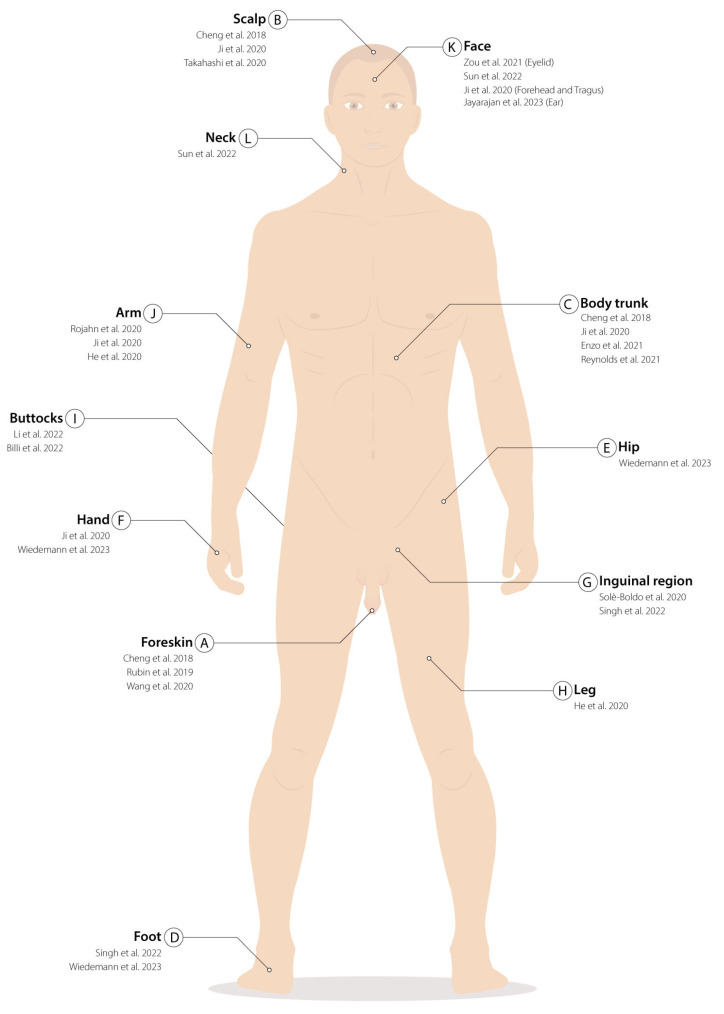
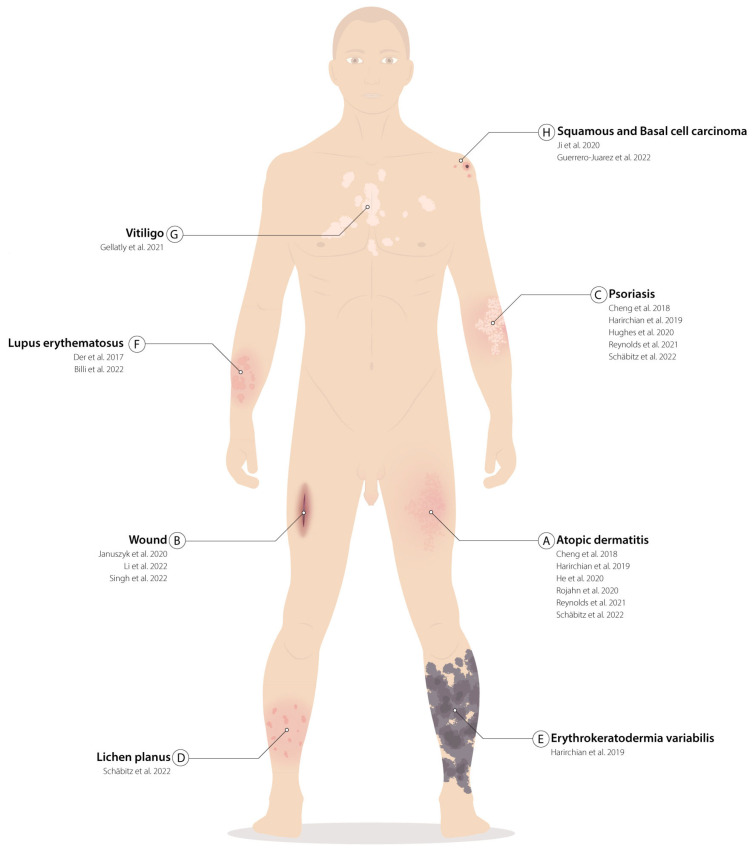
The epidermis is one of the largest tissues in the human body, serving as a protective barrier. The basal layer of the epidermis, which consists of epithelial stem cells and transient amplifying progenitors, represents its proliferative compartment. As keratinocytes migrate from the basal layer to the skin surface, they exit the cell cycle and initiate terminal differentiation, ultimately generating the suprabasal epidermal layers. A deeper understanding of the molecular mechanisms and pathways driving keratinocytes' organization and regeneration is essential for successful therapeutic approaches. Single-cell techniques are valuable tools for studying molecular heterogeneity. The high-resolution characterization obtained with these technologies has identified disease-specific drivers and new therapeutic targets, further promoting the advancement of personalized therapies. This review summarizes the latest findings on the transcriptomic and epigenetic profiling of human epidermal cells, analyzed from human biopsy or after in vitro cultivation, focusing on physiological, wound healing, and inflammatory skin conditions.
表皮是人体最大的组织之一,起着保护屏障的作用。表皮的基底层由上皮干细胞和短暂扩增祖细胞组成,代表其增殖区室。随着角质形成细胞从基底层迁移到皮肤表面,它们退出细胞周期并开始终末分化,最终产生表皮的上层。深入了解驱动角质形成细胞组织和再生的分子机制和途径对于成功的治疗方法至关重要。单细胞技术是研究分子异质性的有用工具。这些技术获得的高分辨率特征确定了疾病特异性的驱动因素和新的治疗靶点,进一步推动了个性化治疗的发展。本综述总结了人类表皮细胞转录组和表观遗传特征的最新发现,这些发现是基于人类活检或体外培养进行分析的,重点关注生理、伤口愈合和炎症性皮肤状况。