Li Jinxin, Yu Jiangfan
School of Science and Engineering, The Chinese University of Hong Kong, Shenzhen 518172, China.
Shenzhen Institute of Artificial Intelligence and Robotics for Society, Shenzhen 518172, China.
Nanomaterials (Basel). 2023 May 9;13(10):1590. doi: 10.3390/nano13101590.
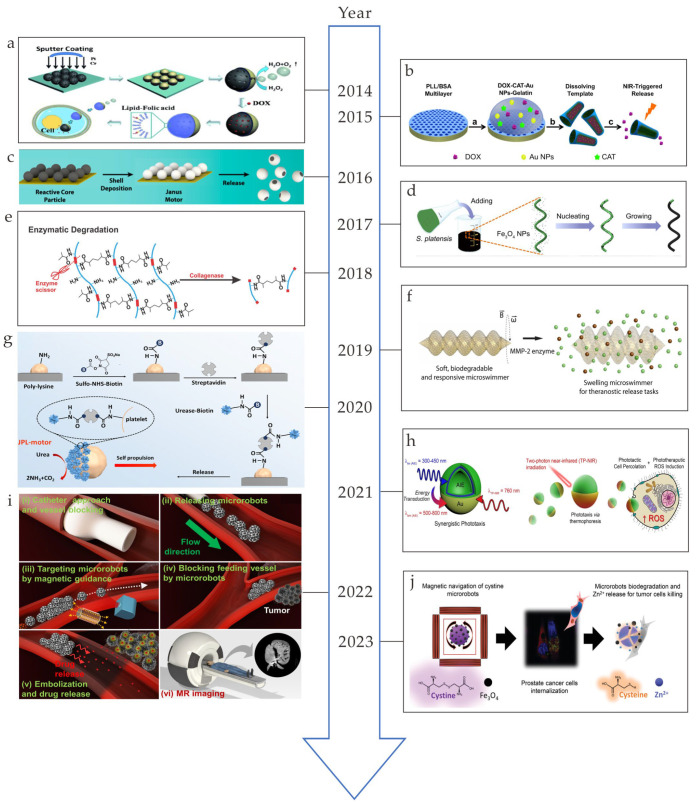
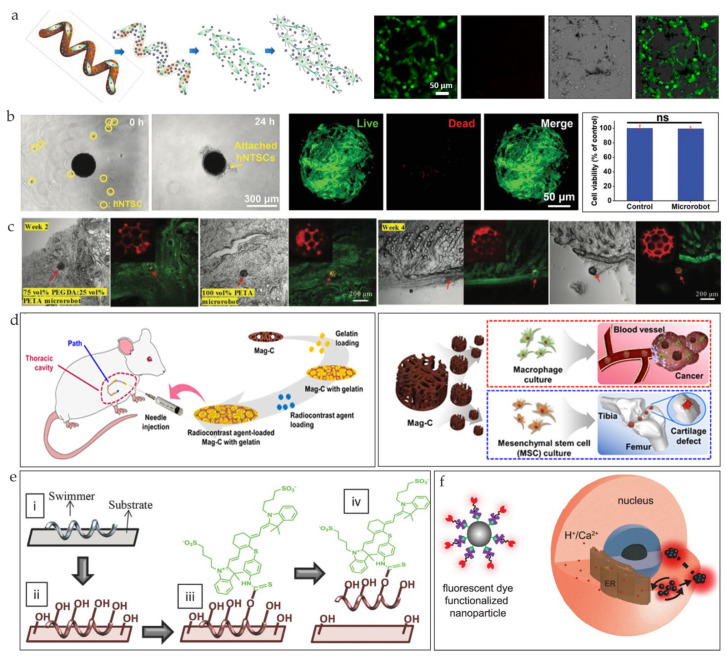
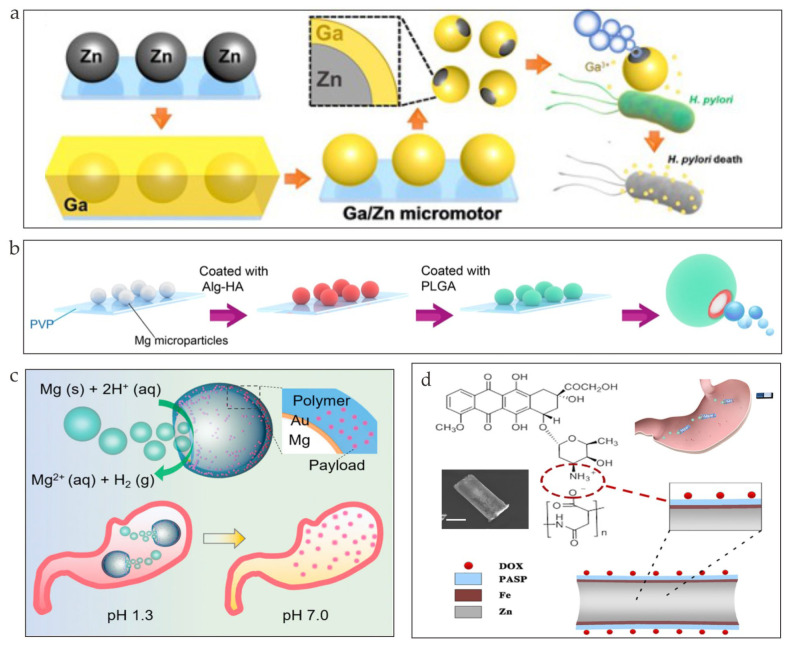
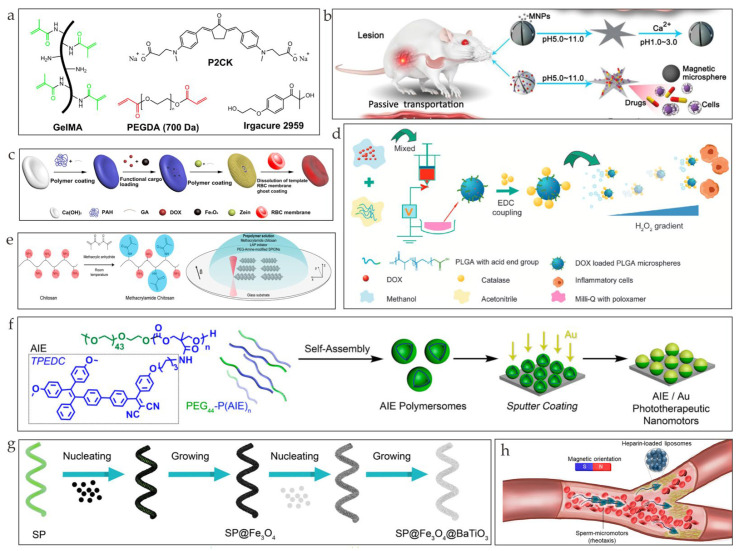
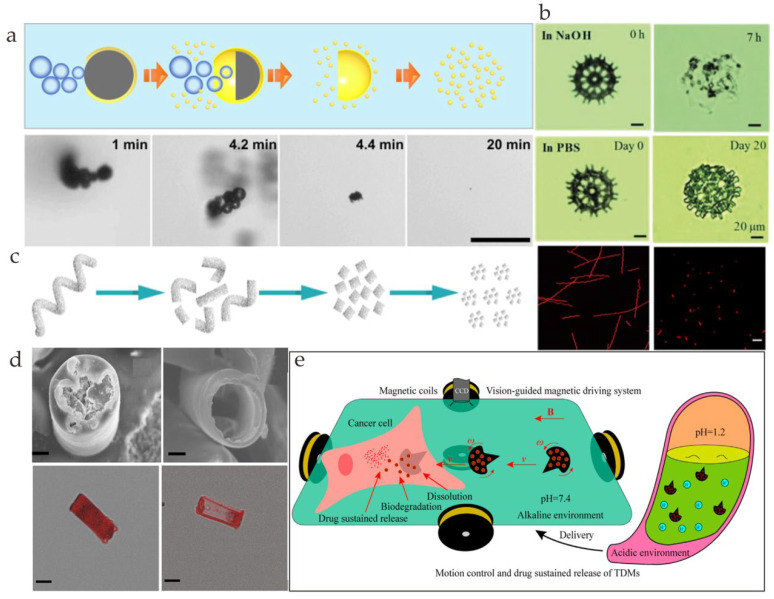
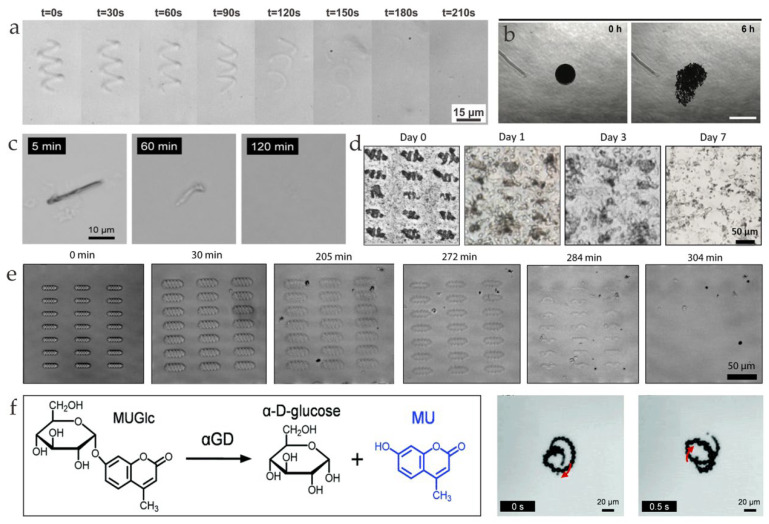
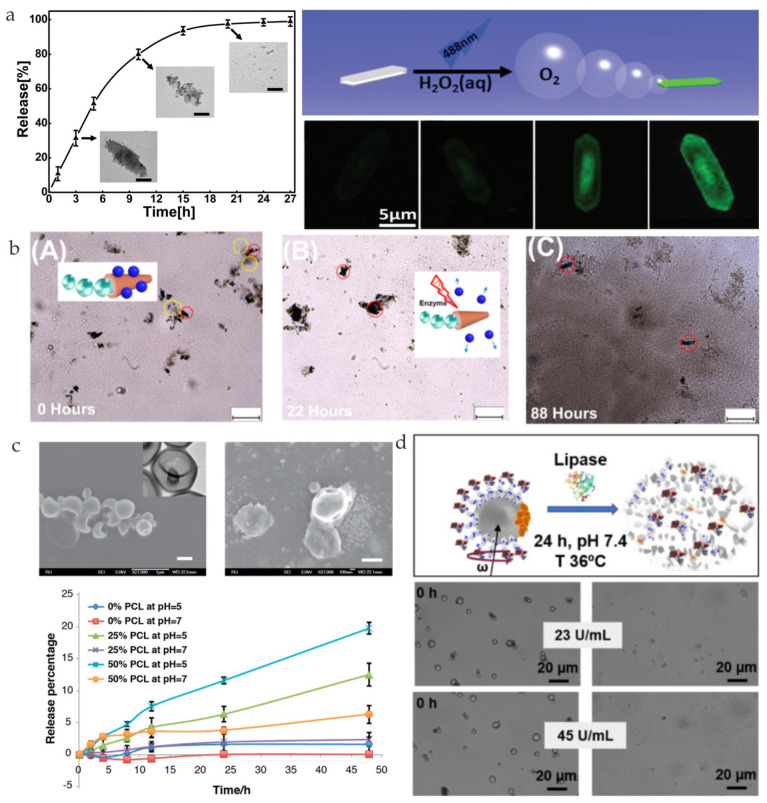
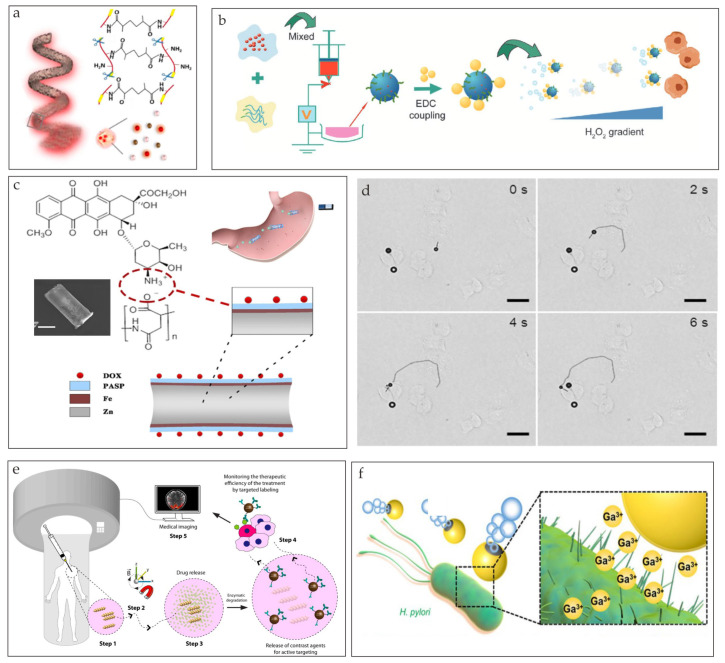
During recent years, microrobots have drawn extensive attention owing to their good controllability and great potential in biomedicine. Powered by external physical fields or chemical reactions, these untethered microdevices are promising candidates for in vivo complex tasks, such as targeted delivery, imaging and sensing, tissue engineering, hyperthermia, and assisted fertilization, among others. However, in clinical use, the biodegradability of microrobots is significant for avoiding toxic residue in the human body. The selection of biodegradable materials and the corresponding in vivo environment needed for degradation are increasingly receiving attention in this regard. This review aims at analyzing different types of biodegradable microrobots by critically discussing their advantages and limitations. The chemical degradation mechanisms behind biodegradable microrobots and their typical applications are also thoroughly investigated. Furthermore, we examine their feasibility and deal with the in vivo suitability of different biodegradable microrobots in terms of their degradation mechanisms; pathological environments; and corresponding biomedical applications, especially targeted delivery. Ultimately, we highlight the prevailing obstacles and perspective solutions, ranging from their manufacturing methods, control of movement, and degradation rate to insufficient and limited in vivo tests, that could be of benefit to forthcoming clinical applications.
近年来,微型机器人因其良好的可控性以及在生物医学领域的巨大潜力而备受关注。这些无需线缆连接的微型设备由外部物理场或化学反应驱动,是体内复杂任务的理想选择,如靶向递送、成像与传感、组织工程、热疗以及辅助受精等。然而,在临床应用中,微型机器人的生物可降解性对于避免人体产生有毒残留物至关重要。在这方面,可生物降解材料的选择以及降解所需的相应体内环境越来越受到关注。本综述旨在通过批判性地讨论不同类型的可生物降解微型机器人的优缺点来进行分析。同时,还将深入研究可生物降解微型机器人背后的化学降解机制及其典型应用。此外,我们将根据其降解机制、病理环境以及相应的生物医学应用,特别是靶向递送,来考察它们的可行性并探讨不同可生物降解微型机器人在体内的适用性。最后,我们将突出从制造方法、运动控制、降解速率到体内试验不足和有限等方面存在的主要障碍及潜在解决方案,这些可能对未来的临床应用有益。