T Ashwini, Prabhu Ashlesh, Baliga Vishal, Bhat Shreesha, Thenkondar Siddarth T, Nayak Yogendra, Nayak Usha Y
Department of Pharmaceutics, Manipal College of Pharmaceutical Sciences, Manipal Academy of Higher Education, Manipal 576104, Karnataka, India.
Department of Pharmacology, Manipal College of Pharmaceutical Sciences, Manipal Academy of Higher Education, Manipal 576104, Karnataka, India.
Pharmaceutics. 2023 May 22;15(5):1560. doi: 10.3390/pharmaceutics15051560.
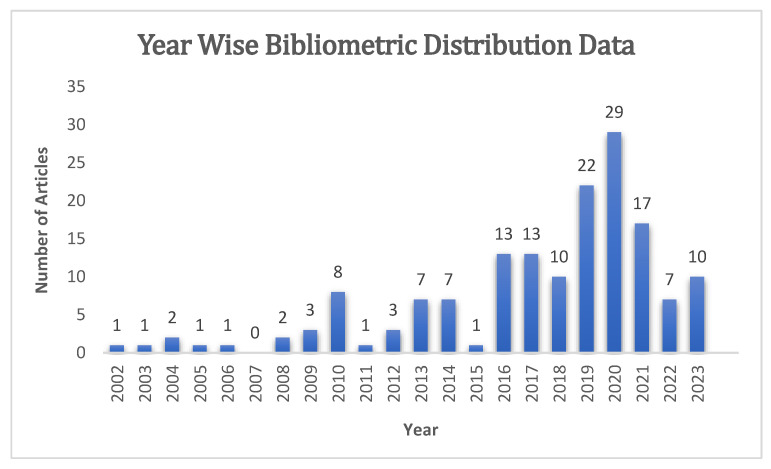
Wound healing is a complex process that can be further complicated in chronic wounds, leading to prolonged healing times, high healthcare costs, and potential patient morbidity. Nanotechnology has shown great promise in developing advanced wound dressings that promote wound healing and prevent infection. The review article presents a comprehensive search strategy that was applied to four databases, namely Scopus, Web of Science, PubMed, and Google Scholar, using specific keywords and inclusion/exclusion criteria to select a representative sample of 164 research articles published between 2001 and 2023. This review article provides an updated overview of the different types of nanomaterials used in wound dressings, including nanofibers, nanocomposites, silver-based nanoparticles, lipid nanoparticles, and polymeric nanoparticles. Several recent studies have shown the potential benefits of using nanomaterials in wound care, including the use of hydrogel/nano silver-based dressings in treating diabetic foot wounds, the use of copper oxide-infused dressings in difficult-to-treat wounds, and the use of chitosan nanofiber mats in burn dressings. Overall, developing nanomaterials in wound care has complemented nanotechnology in drug delivery systems, providing biocompatible and biodegradable nanomaterials that enhance wound healing and provide sustained drug release. Wound dressings are an effective and convenient method of wound care that can prevent wound contamination, support the injured area, control hemorrhaging, and reduce pain and inflammation. This review article provides valuable insights into the potential role of individual nanoformulations used in wound dressings in promoting wound healing and preventing infections, and serves as an excellent resource for clinicians, researchers, and patients seeking improved healing outcomes.
伤口愈合是一个复杂的过程,在慢性伤口中可能会进一步复杂化,导致愈合时间延长、医疗成本高昂以及患者潜在的发病率。纳米技术在开发促进伤口愈合和预防感染的先进伤口敷料方面显示出巨大的潜力。这篇综述文章介绍了一种全面的搜索策略,该策略应用于四个数据库,即Scopus、科学网、PubMed和谷歌学术,使用特定的关键词和纳入/排除标准,从2001年至2023年发表的164篇研究文章中选取了具有代表性的样本。这篇综述文章提供了用于伤口敷料的不同类型纳米材料的最新概述,包括纳米纤维、纳米复合材料、银基纳米颗粒、脂质纳米颗粒和聚合物纳米颗粒。最近的几项研究表明了在伤口护理中使用纳米材料的潜在益处,包括使用水凝胶/纳米银基敷料治疗糖尿病足伤口、使用含氧化铜的敷料治疗难愈合伤口以及使用壳聚糖纳米纤维垫作为烧伤敷料。总体而言,在伤口护理中开发纳米材料补充了药物递送系统中的纳米技术,提供了生物相容性和可生物降解的纳米材料,可促进伤口愈合并实现药物的持续释放。伤口敷料是一种有效且方便的伤口护理方法,可防止伤口污染、支撑受伤部位、控制出血并减轻疼痛和炎症。这篇综述文章为用于伤口敷料的各种纳米制剂在促进伤口愈合和预防感染方面的潜在作用提供了有价值的见解,是临床医生、研究人员以及寻求改善愈合效果的患者的优秀参考资源。