Department of Laboratory Animal Science, School of Basic Medical Sciences, Xi'an Jiaotong University, Xi'an, 710061, Shaanxi, China.
Laboratory Animal Center, Xi'an Jiaotong University, Xi'an, 710061, Shaanxi, China.
BMC Genomics. 2023 Jun 2;24(1):298. doi: 10.1186/s12864-023-09405-2.
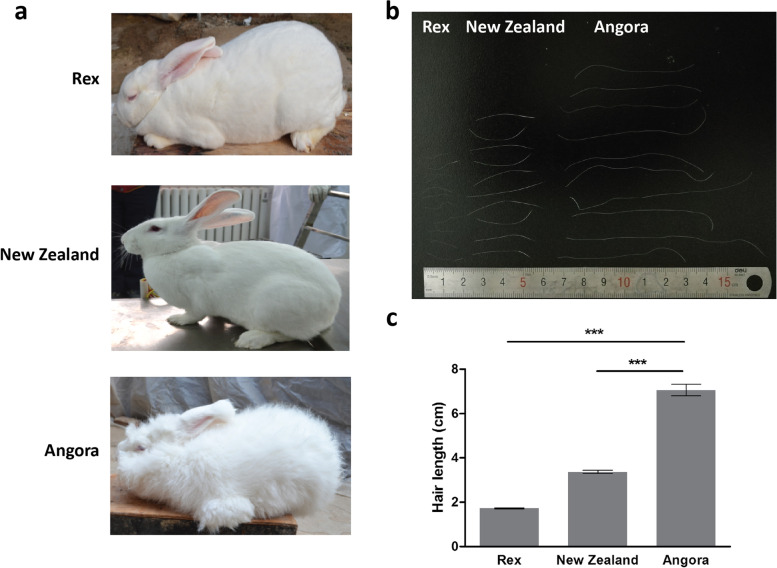
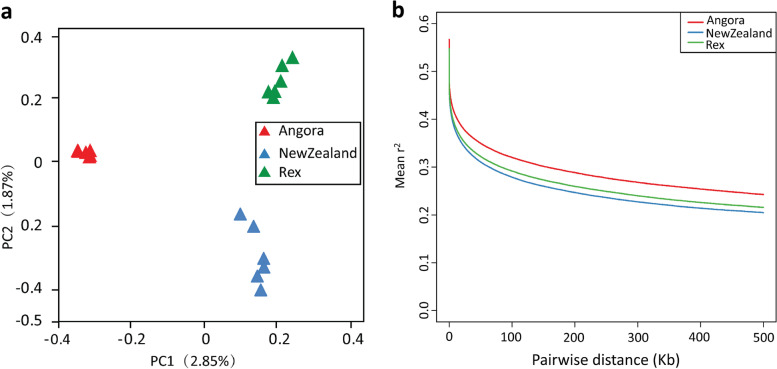
Rabbits are well-domesticated animals. As a crucial economic animal, rabbit has been successfully bred into wool-use, meat-use and fur-use breeds. Hair length is one of the most economically important traits affecting profitability in wool rabbits. In this study, to identify selection signatures with the long-hair trait, whole-genomic resequencing of long-haired rabbits (Angora rabbits) and short-haired rabbits (Rex and New Zealand rabbits) was performed.
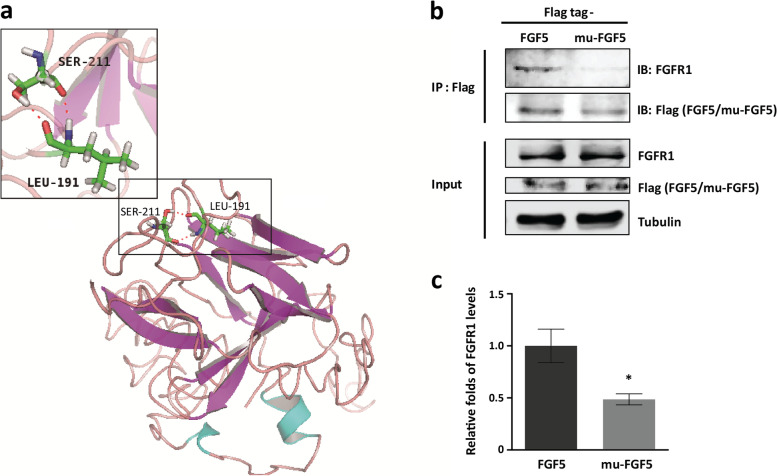
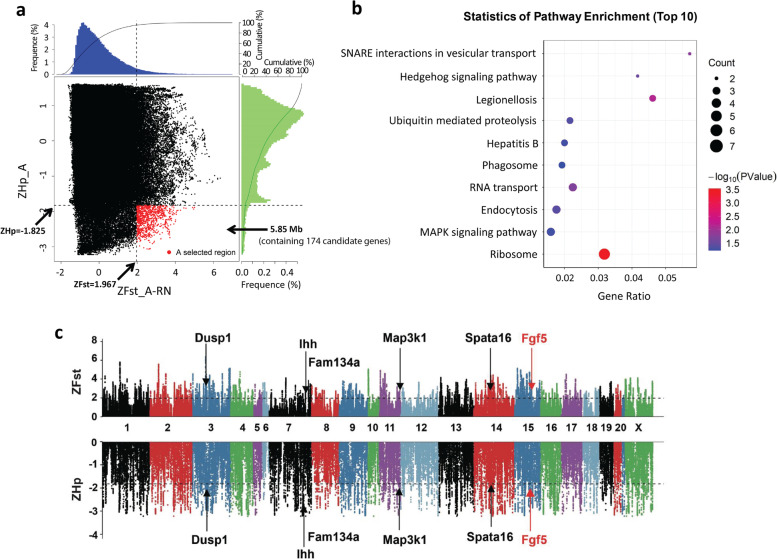
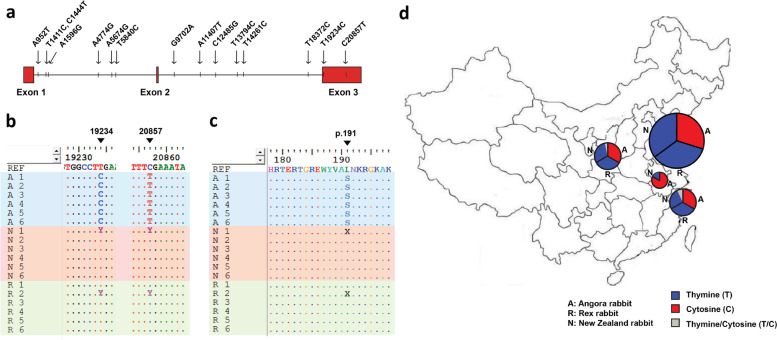
By genome-wide selective sweeping analysis based on population comparison, we identified a total of 5.85 Mb regions (containing 174 candidate genes) with strong selection signals. Six of these genes (Dusp1, Ihh, Fam134a, Map3k1, Spata16, and Fgf5) were enriched in the MAPK signalling and Hedgehog signalling pathways, both of which are closely associated with hair growth regulation. Among these genes, Fgf5 encodes the FGF5 protein, which is a well-established regulator of hair growth. There was a nonsynonymous nucleotide substitution (T19234C) in the Fgf5 gene. At this locus, the C allele was present in all of the tested Angora rabbits, while the T allele was dominant in New Zealand and Rex rabbits. We further confirmed that the C allele was conserved in Angora rabbits by screening an additional 135 rabbits. Moreover, the results of functional predictions and co-immunoprecipitation revealed that the T19234C mutation impaired the binding capacity of FGF5 to its receptor FGFR1.
We discovered that the homozygous missense mutation T19234C within Fgf5 might contribute to the long-hair trait of Angora rabbits by reducing its receptor binding capacity. This finding will provide new insights into the genetic basis underlying the genetic improvement of Angora rabbits and benefit the improvement of rabbit breeding in the future.
兔子是一种经过良好驯化的动物。作为一种重要的经济动物,兔子已经成功地培育出毛用、肉用和皮用品种。毛长是影响毛兔经济效益的最重要特征之一。在这项研究中,为了鉴定长毛性状的选择特征,对长毛兔(安哥拉兔)和短毛兔(雷克斯兔和新西兰兔)进行了全基因组重测序。
通过基于群体比较的全基因组选择扫描分析,我们总共鉴定出了 5.85Mb 区域(包含 174 个候选基因)具有强烈的选择信号。这 6 个基因(Dusp1、Ihh、Fam134a、Map3k1、Spata16 和 Fgf5)富集在 MAPK 信号通路和 Hedgehog 信号通路中,这两个通路都与毛发生长调控密切相关。在这些基因中,Fgf5 编码 FGF5 蛋白,该蛋白是公认的毛发生长调节剂。在 Fgf5 基因中存在一个非同义核苷酸替换(T19234C)。在这个基因座上,C 等位基因存在于所有测试的安哥拉兔中,而 T 等位基因在新西兰兔和雷克斯兔中占优势。我们进一步通过筛选另外 135 只兔子证实了 C 等位基因在安哥拉兔中是保守的。此外,功能预测和共免疫沉淀的结果表明,T19234C 突变降低了 FGF5 与其受体 FGFR1 的结合能力。
我们发现 Fgf5 内的纯合错义突变 T19234C 可能通过降低其受体结合能力导致安哥拉兔的长毛性状。这一发现将为安哥拉兔遗传改良的遗传基础提供新的见解,并有助于未来兔种的改良。