Mir Tanveer Ahmad, Nakamura Makoto, Sakai Shinji, Iwanaga Shintaroh, Wani Shadil Ibrahim, Alzhrani Alaa, Arai Kenichi, Mir Bilal Ahmed, Kazmi Shadab, Assiri Abdullah M, Broering Dieter C
Transplant Research and Innovation Department, Tissue/Organ Bioengineering & BioMEMS Laboratory, Organ Transplant Centre of Excellence, King Faisal Specialist Hospital and Research Centre, Riyadh 11211, KSA.
Division of Biomedical System Engineering, Graduate School of Science and Engineering, University of Toyama, Toyama 930-8555, Japan.
Int J Bioprint. 2023 Mar 20;9(3):714. doi: 10.18063/ijb.714. eCollection 2023.
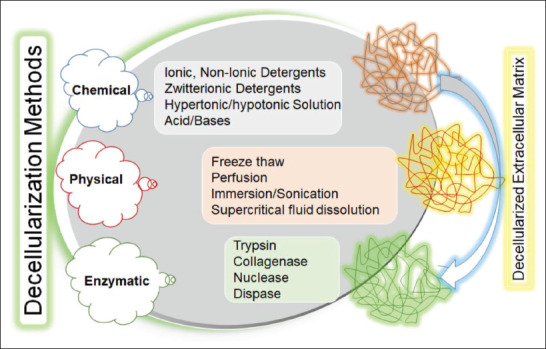
The absolute shortage of compatible liver donors and the growing number of potential recipients have led scientists to explore alternative approaches to providing tissue/ organ substitutes from bioengineered sources. Bioartificial regeneration of a fully functional tissue/organ replacement is highly dependent on the right combination of engineering tools, biological principles, and materiobiology horizons. Over the past two decades, remarkable achievements have been made in hepatic tissue engineering by converging various advanced interdisciplinary research approaches. Three-dimensional (3D) bioprinting has arisen as a promising state-of-the-art tool with strong potential to fabricate volumetric liver tissue/organ equivalents using viscosity- and degradation-controlled printable bioinks composed of hydrous microenvironments, and formulations containing living cells and associated supplements. Source of origin, biophysiochemical, or thermomechanical properties and crosslinking reaction kinetics are prerequisites for ideal bioink formulation and realizing the bioprinting process. In this review, we delve into the forecast of the potential future utility of bioprinting technology and the promise of tissue/organ- specific decellularized biomaterials as bioink substrates. Afterward, we outline various methods of decellularization, and the most relevant studies applying decellularized bioinks toward the bioengineering of liver models. Finally, the challenges and future prospects of decellularized material-based bioprinting in the direction of clinical regenerative medicine are presented to motivate further developments.
可兼容肝脏供体的绝对短缺以及潜在受体数量的不断增加,促使科学家探索从生物工程来源提供组织/器官替代物的替代方法。完全功能性组织/器官替代物的生物人工再生高度依赖于工程工具、生物学原理和材料生物学视野的正确组合。在过去二十年中,通过融合各种先进的跨学科研究方法,肝脏组织工程取得了显著成就。三维(3D)生物打印已成为一种有前途的先进工具,具有很强的潜力,可使用由含水微环境、含有活细胞和相关补充剂的配方组成的、粘度和降解可控的可打印生物墨水来制造肝脏组织/器官等效物。来源、生物物理化学或热机械性能以及交联反应动力学是理想生物墨水配方和实现生物打印过程的先决条件。在本综述中,我们深入探讨了生物打印技术未来潜在用途的预测以及组织/器官特异性脱细胞生物材料作为生物墨水底物的前景。之后,我们概述了各种脱细胞方法,以及将脱细胞生物墨水应用于肝脏模型生物工程的最相关研究。最后,提出了基于脱细胞材料的生物打印在临床再生医学方向上的挑战和未来前景,以推动进一步发展。