Center for Media Engagement, University of Texas at Austin, Austin, USA.
Department of Communication, Mississippi State University, P.O. Box PF, Mississippi State, MS, 39762, USA.
Cogn Res Princ Implic. 2023 Jun 6;8(1):37. doi: 10.1186/s41235-023-00488-9.
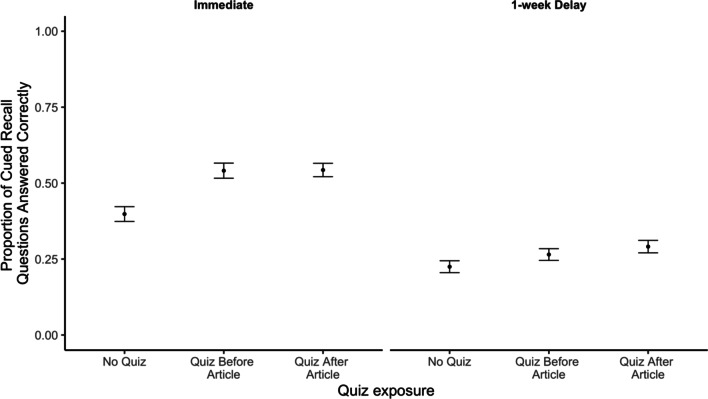
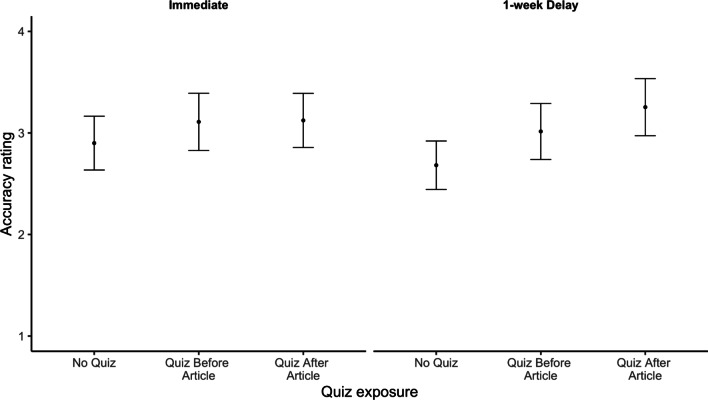
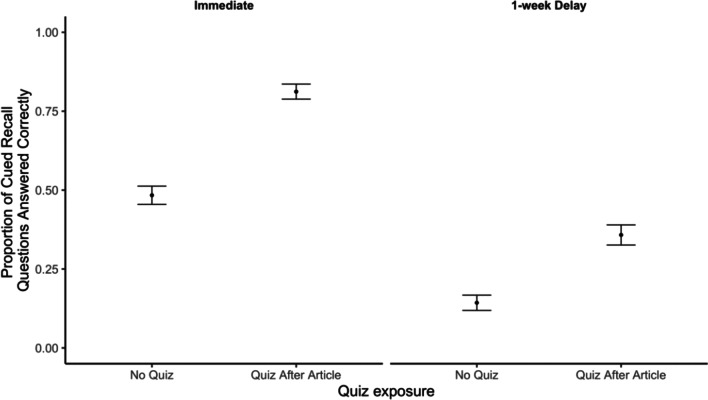
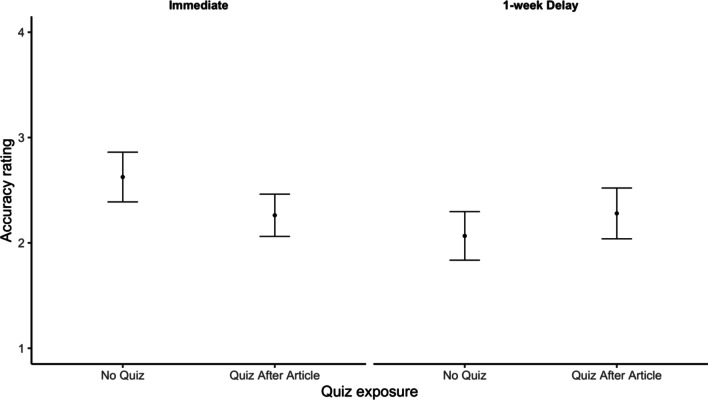
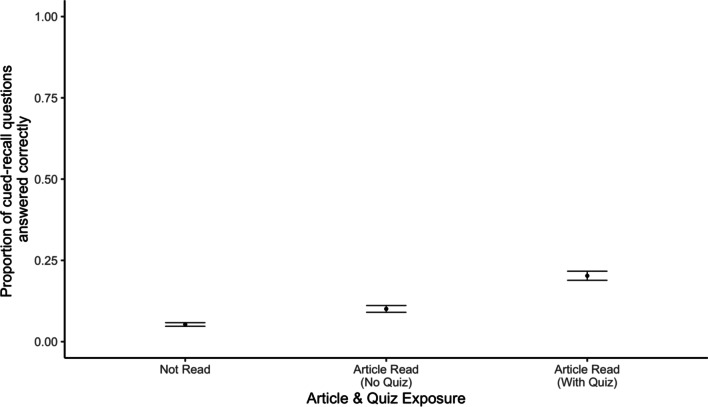
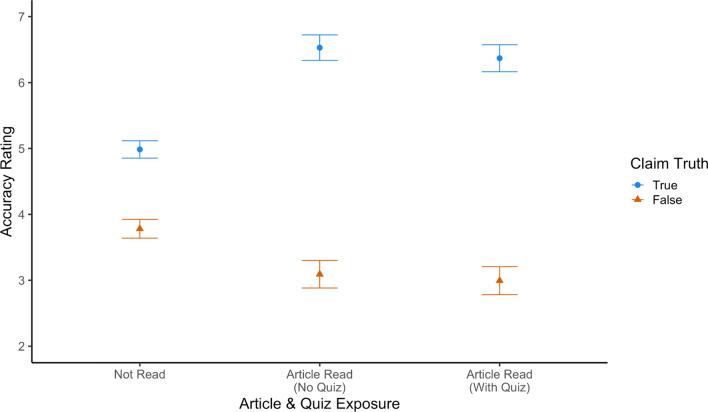
Fact-checkers want people to both read and remember their misinformation debunks. Retrieval practice is one way to increase memory, thus multiple-choice quizzes may be a useful tool for fact-checkers. We tested whether exposure to quizzes improved people's accuracy ratings for fact-checked claims and their memory for specific information within a fact check. Across three experiments, 1551 US-based online participants viewed fact checks (either health- or politics-related) with or without a quiz. Overall, the fact checks were effective, and participants were more accurate in rating the claims after exposure. In addition, quizzes improved participants' memory for the details of the fact checks, even 1 week later. However, that increased memory did not lead to more accurate beliefs. Participants' accuracy ratings were similar in the quiz and no-quiz conditions. Multiple-choice quizzes can be a useful tool for increasing memory, but there is a disconnect between memory and belief.
事实核查员希望人们既能阅读又能记住他们辟谣的错误信息。检索练习是增强记忆力的一种方法,因此多项选择题测验可能是事实核查员的有用工具。我们测试了暴露于测验是否会提高人们对经过核查的主张的准确性评级,以及他们对事实核查中特定信息的记忆。在三个实验中,1551 名美国在线参与者观看了带有或不带有测验的事实核查(与健康或政治有关)。总的来说,事实核查是有效的,并且参与者在暴露后对主张的评分更准确。此外,测验提高了参与者对事实核查细节的记忆,甚至在 1 周后也是如此。然而,增加的记忆并没有导致更准确的信念。在测验和无测验条件下,参与者的准确性评分相似。多项选择题测验可以是增强记忆力的有用工具,但记忆和信念之间存在脱节。