Department of Psychology, Harvard University, Cambridge, MA 02138;
Paul J. Hill School of Business, University of Regina, Regina, SK S4S 0A2, Canada.
Proc Natl Acad Sci U S A. 2021 Feb 2;118(5). doi: 10.1073/pnas.2020043118.
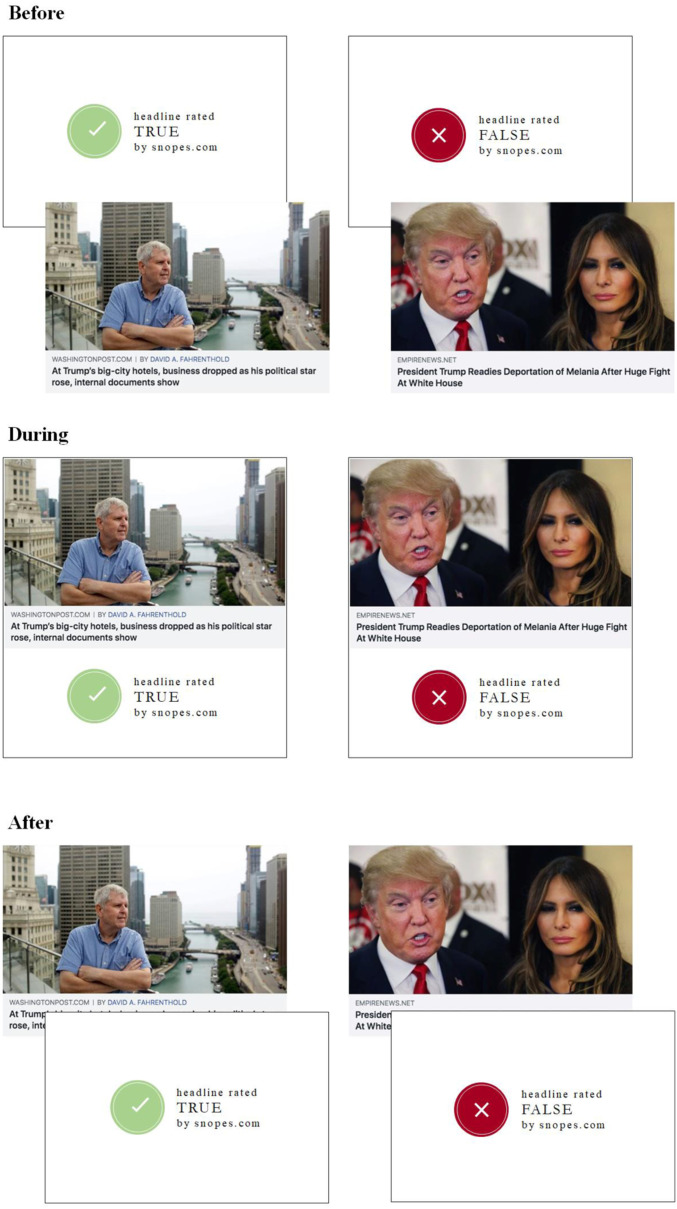
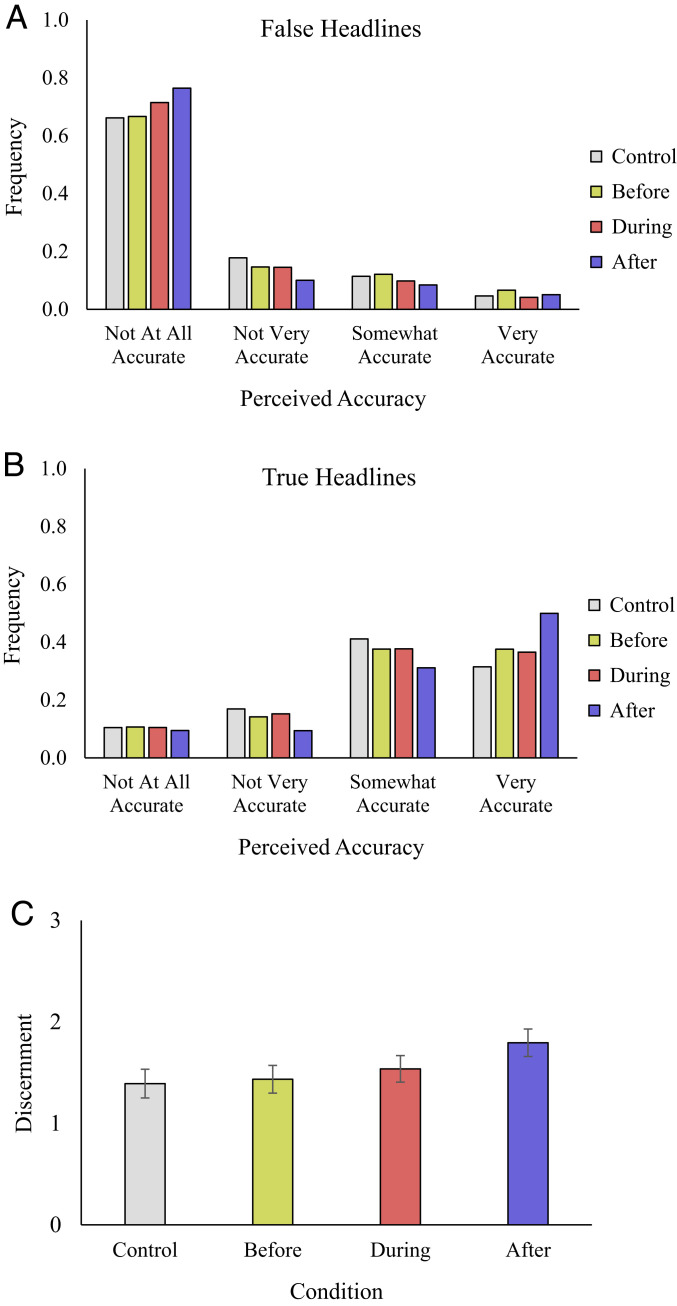
Countering misinformation can reduce belief in the moment, but corrective messages quickly fade from memory. We tested whether the longer-term impact of fact-checks depends on when people receive them. In two experiments (total 2,683), participants read true and false headlines taken from social media. In the treatment conditions, "true" and "false" tags appeared before, during, or after participants read each headline. Participants in a control condition received no information about veracity. One week later, participants in all conditions rated the same headlines' accuracy. Providing fact-checks after headlines () improved subsequent truth discernment more than providing the same information during () or before () exposure. This finding informs the cognitive science of belief revision and has practical implications for social media platform designers.
对抗错误信息可以减少人们当下对其的信任,但纠正信息很快就会从记忆中消失。我们测试了事实核查的长期影响是否取决于人们何时收到它们。在两个实验(总计 2683 人)中,参与者阅读了从社交媒体中提取的真实和虚假标题。在处理条件下,“真实”和“虚假”标签出现在参与者阅读每个标题之前、期间或之后。在控制条件下,参与者没有收到关于真实性的任何信息。一周后,所有条件下的参与者都对相同标题的准确性进行了评级。在标题之后提供事实核查()比在()或之前()曝光时提供相同信息()更能提高后续的真相识别能力。这一发现为信念修正的认知科学提供了信息,并对社交媒体平台设计者具有实际意义。