Department of Neurology, The First Affiliated Hospital of Chongqing Medical University, Chongqing, China.
National Health Commission Key Laboratory of Diagnosis and Treatment on Brain Functional Diseases, The First Affiliated Hospital of Chongqing Medical University, Chongqing, China.
Transl Psychiatry. 2023 Jun 6;13(1):188. doi: 10.1038/s41398-023-02490-7.
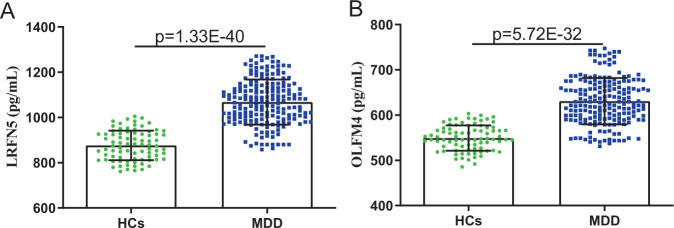
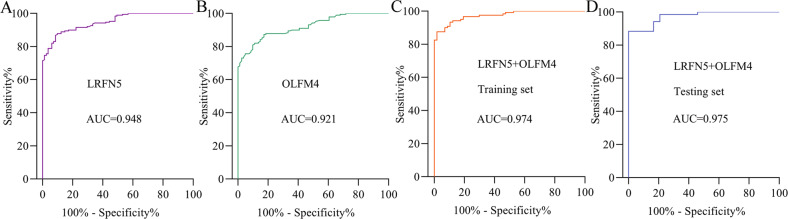
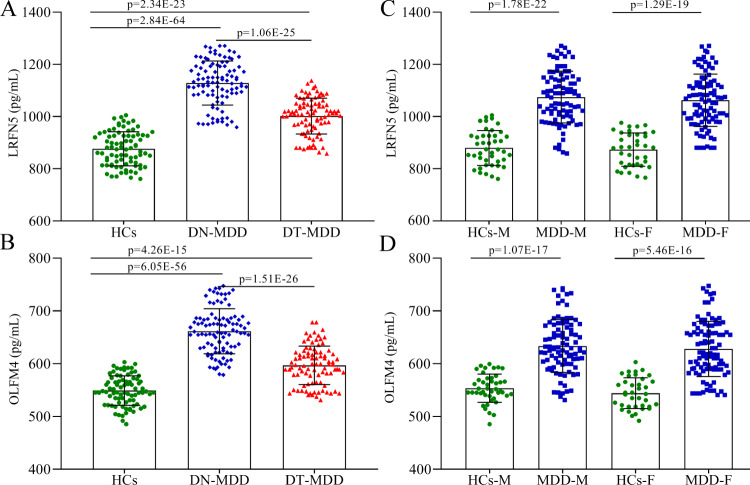
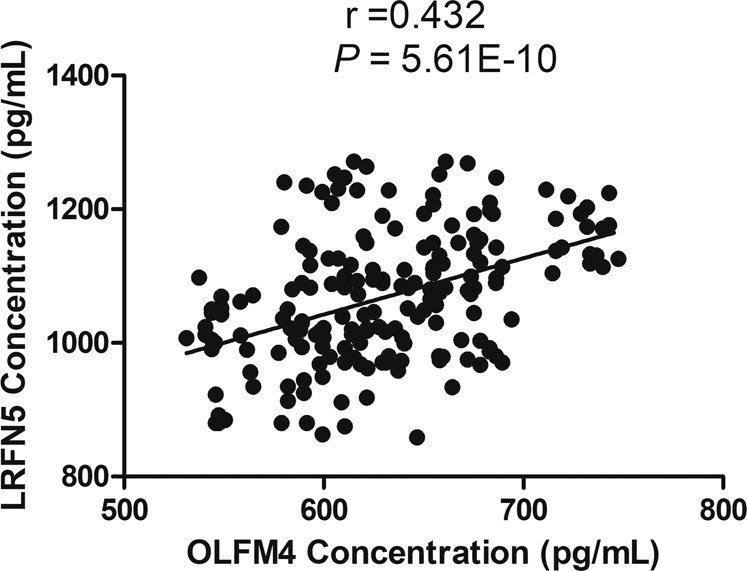
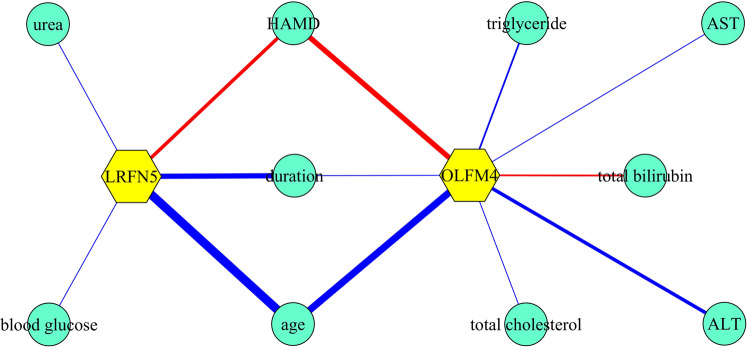
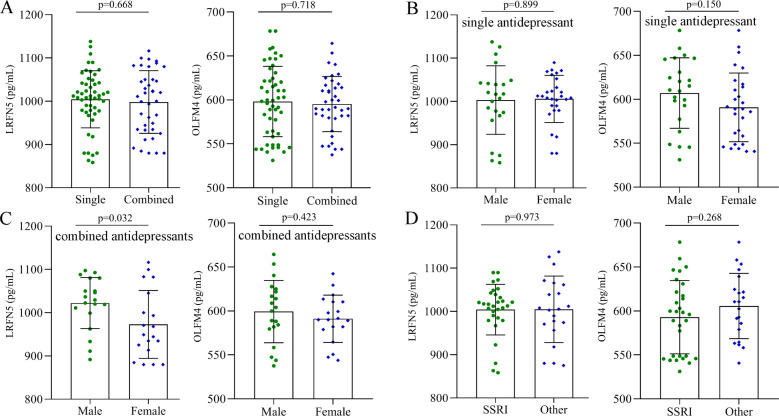
Evidences have shown that both LRFN5 and OLFM4 can regulate neural development and synaptic function. Recent genome-wide association studies on major depressive disorder (MDD) have implicated LRFN5 and OLFM4, but their expressions and roles in MDD are still completely unclear. Here, we examined serum concentrations of LRFN5 and OLFM4 in 99 drug-naive MDD patients, 90 drug-treatment MDD patients, and 81 healthy controls (HCs) using ELISA methods. The results showed that both LRFN5 and OLFM4 levels were considerably higher in MDD patients compared to HCs, and were significantly lower in drug-treatment MDD patients than in drug-naive MDD patients. However, there were no significant differences between MDD patients who received a single antidepressant and a combination of antidepressants. Pearson correlation analysis showed that they were associated with the clinical data, including Hamilton Depression Scale score, age, duration of illness, fasting blood glucose, serum lipids, and hepatic, renal, or thyroid function. Moreover, these two molecules both yielded fairly excellent diagnostic performance in diagnosing MDD. In addition, a combination of LRFN5 and OLFM4 demonstrated a better diagnostic effectiveness, with an area under curve of 0.974 in the training set and 0.975 in the testing set. Taken together, our data suggest that LRFN5 and OLFM4 may be implicated in the pathophysiology of MDD and the combination of LRFN5 and OLFM4 may offer a diagnostic biomarker panel for MDD.
证据表明,LRFN5 和 OLFM4 均可调节神经发育和突触功能。最近对重度抑郁症(MDD)的全基因组关联研究表明 LRFN5 和 OLFM4 与 MDD 有关,但它们在 MDD 中的表达和作用仍完全不清楚。在这里,我们使用 ELISA 方法检测了 99 例未经药物治疗的 MDD 患者、90 例药物治疗的 MDD 患者和 81 例健康对照者(HCs)的血清 LRFN5 和 OLFM4 浓度。结果表明,与 HCs 相比,MDD 患者的 LRFN5 和 OLFM4 水平明显升高,而与未经药物治疗的 MDD 患者相比,药物治疗的 MDD 患者的水平明显降低。然而,接受单一抗抑郁药和联合抗抑郁药治疗的 MDD 患者之间没有显著差异。Pearson 相关分析表明,它们与临床数据(包括汉密尔顿抑郁量表评分、年龄、病程、空腹血糖、血清脂质以及肝、肾或甲状腺功能)相关。此外,这两种分子在诊断 MDD 方面均具有相当出色的诊断性能。此外,LRFN5 和 OLFM4 的组合显示出更好的诊断效果,在训练集中的曲线下面积为 0.974,在测试集中为 0.975。综上所述,我们的数据表明 LRFN5 和 OLFM4 可能与 MDD 的病理生理学有关,LRFN5 和 OLFM4 的组合可能为 MDD 提供一个诊断生物标志物面板。