Max Planck Institute for Evolutionary Biology, Department of Theoretical Biology, 24306 Plön, Germany.
Department of Ecology and Evolutionary Biology, Princeton University, Princeton, NJ 08544.
Proc Natl Acad Sci U S A. 2023 Jun 13;120(24):e2303546120. doi: 10.1073/pnas.2303546120. Epub 2023 Jun 7.
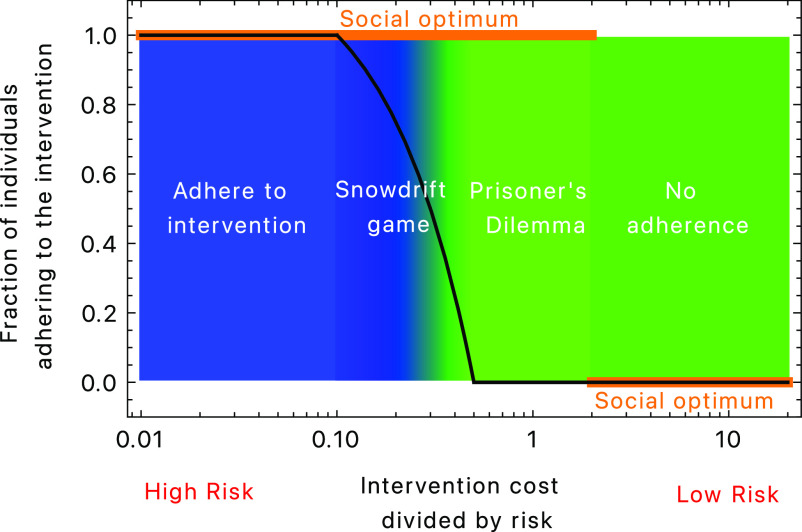
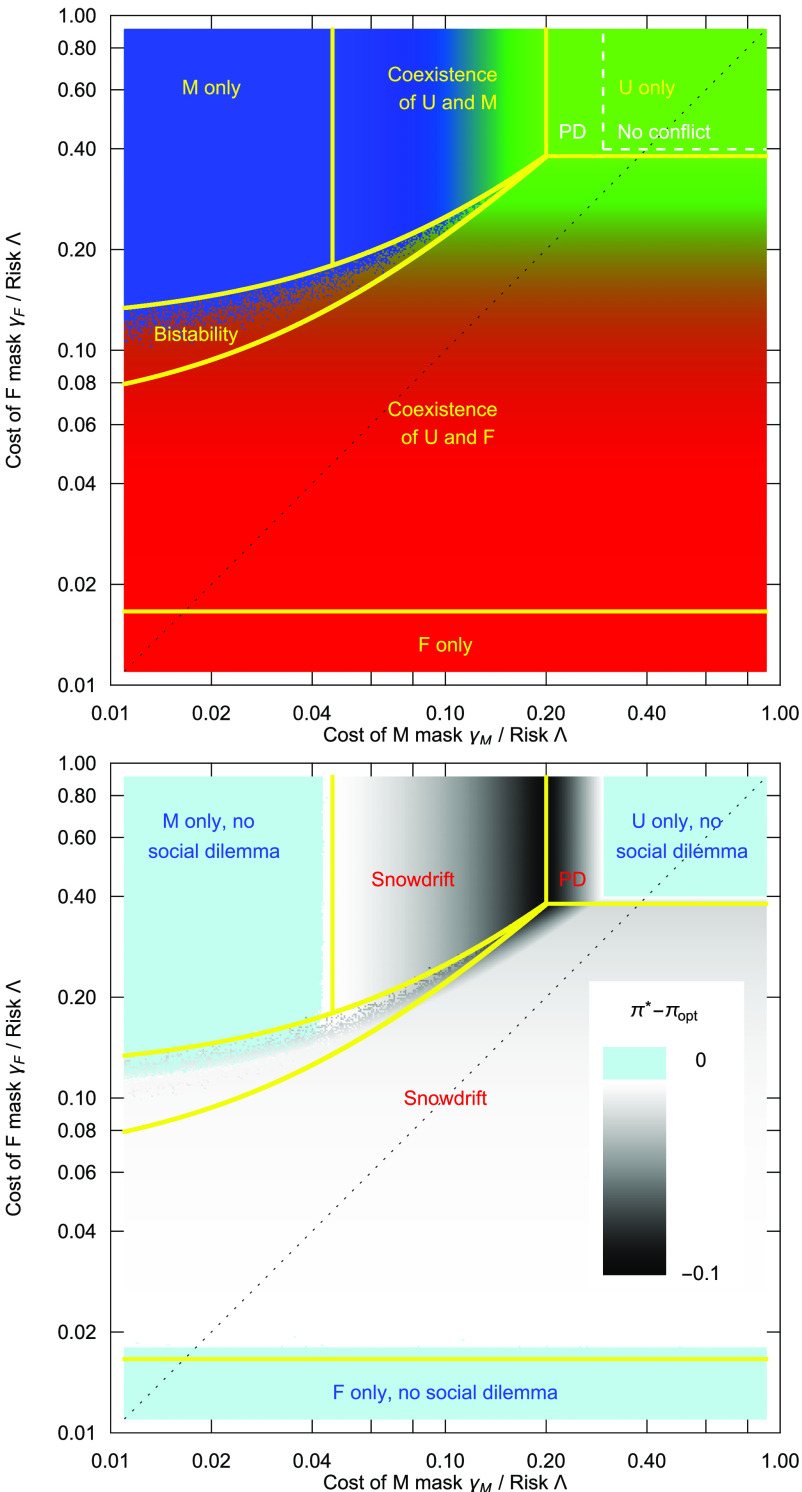
Individual and societal reactions to an ongoing pandemic can lead to social dilemmas: In some cases, each individual is tempted to not follow an intervention, but for the whole society, it would be best if they did. Now that in most countries, the extent of regulations to reduce SARS-CoV-2 transmission is very small, interventions are driven by individual decision-making. Assuming that individuals act in their best own interest, we propose a framework in which this situation can be quantified, depending on the protection the intervention provides to a user and to others, the risk of getting infected, and the costs of the intervention. We discuss when a tension between individual and societal benefits arises and which parameter comparisons are important to distinguish between different regimes of intervention use.
在某些情况下,每个人都倾向于不遵守干预措施,但对整个社会而言,最好还是遵守。现在,在大多数国家,减少 SARS-CoV-2 传播的规定程度非常小,干预措施取决于个人决策。假设个体按照自身最佳利益行事,我们提出了一个框架,可以根据干预措施为用户和他人提供的保护、感染风险以及干预措施的成本来量化这种情况。我们讨论了个体利益和社会利益之间何时会出现紧张,并讨论了哪些参数比较对于区分不同干预措施使用的情况很重要。