Oxford Centre for Diabetes Endocrinology and Metabolism, NIHR Oxford Biomedical Research Centre, Churchill Hospital, University of Oxford, Oxford, UK
Oxford Liver Unit, John Radcliffe Hospital, Oxford University Hospitals NHS Foundation Trust, Oxford, UK.
Gut. 2023 Aug;72(8):1607-1619. doi: 10.1136/gutjnl-2023-329998. Epub 2023 Jun 7.
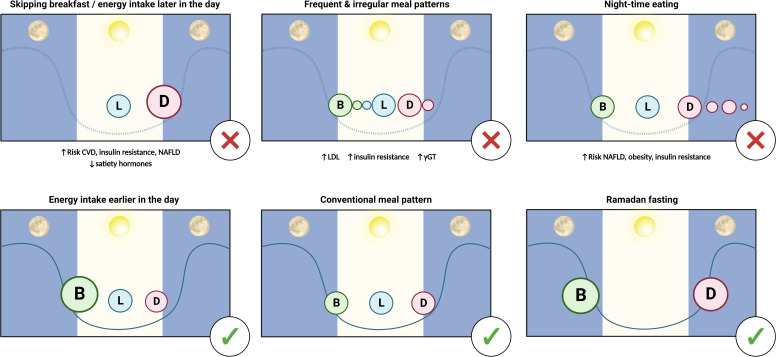
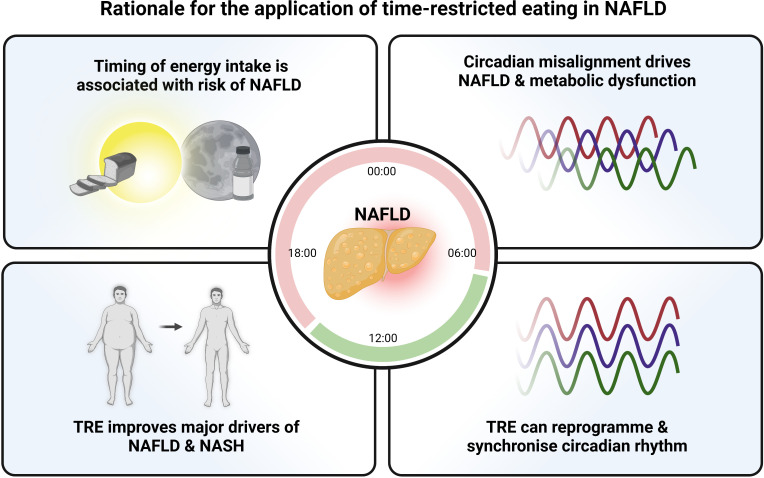
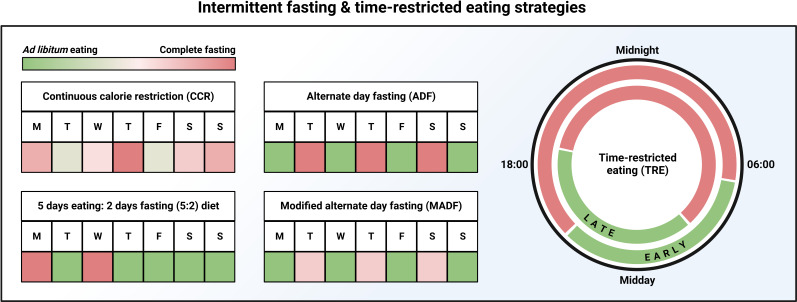
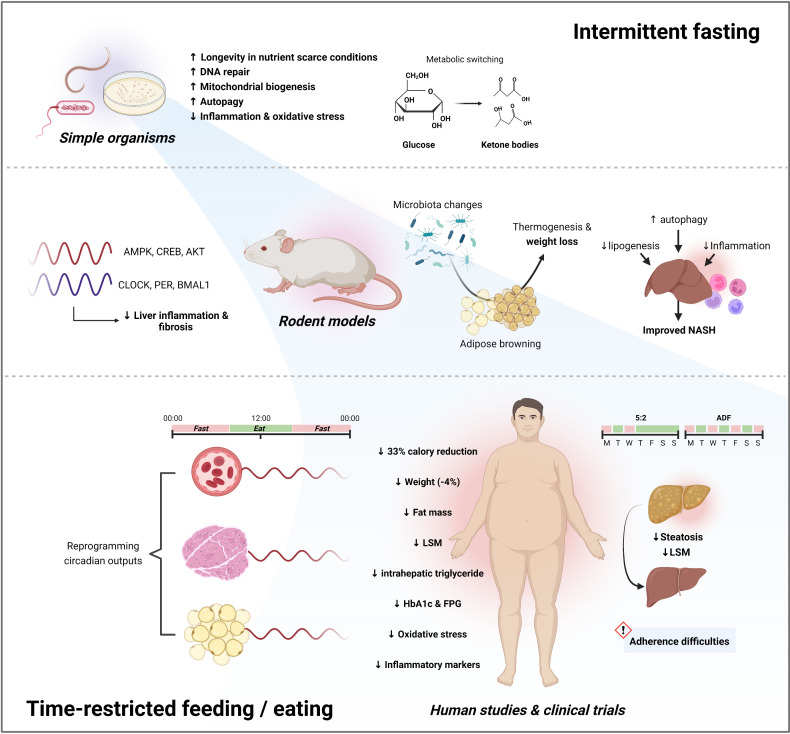
Non-alcoholic fatty liver disease (NAFLD) represents a major public health concern and is associated with a substantial global burden of liver-related and cardiovascular-related morbidity and mortality. High total energy intake coupled with unhealthy consumption of ultra-processed foods and saturated fats have long been regarded as major dietary drivers of NAFLD. However, there is an accumulating body of evidence demonstrating that the timing of energy intake across a the day is also an important determinant of individual risk for NAFLD and associated metabolic conditions. This review summarises the available observational and epidemiological data describing associations between eating patterns and metabolic disease, including the negative effects of irregular meal patterns, skipping breakfast and night-time eating on liver health. We suggest that that these harmful behaviours deserve greater consideration in the risk stratification and management of patients with NAFLD particularly in a 24-hour society with continuous availability of food and with up to 20% of the population now engaged in shiftwork with mistimed eating patterns. We also draw on studies reporting the liver-specific impact of Ramadan, which represents a unique real-world opportunity to explore the physiological impact of fasting. By highlighting data from preclinical and pilot human studies, we present a further biological rationale for manipulating timing of energy intake to improve metabolic health and discuss how this may be mediated through restoration of natural circadian rhythms. Lastly, we comprehensively review the landscape of human trials of intermittent fasting and time-restricted eating in metabolic disease and offer a look to the future about how these dietary strategies may benefit patients with NAFLD and non-alcoholic steatohepatitis.
非酒精性脂肪性肝病(NAFLD)是一个主要的公共卫生关注点,与肝脏相关和心血管相关发病率和死亡率的全球重大负担有关。高总能量摄入加上不健康地消费超加工食品和饱和脂肪,长期以来一直被认为是 NAFLD 的主要饮食驱动因素。然而,越来越多的证据表明,一天中能量摄入的时间也是个体患 NAFLD 和相关代谢疾病风险的重要决定因素。这篇综述总结了现有的观察性和流行病学数据,描述了饮食模式与代谢疾病之间的关联,包括不规律的进餐模式、不吃早餐和夜间进食对肝脏健康的负面影响。我们认为,这些有害行为在 NAFLD 患者的风险分层和管理中应得到更多考虑,特别是在 24 小时社会中,食物持续供应,现在有多达 20%的人口从事昼夜节律紊乱的轮班工作,饮食习惯不规律。我们还借鉴了报告斋月对肝脏特异性影响的研究,这为探索禁食的生理影响提供了一个独特的真实世界机会。通过强调来自临床前和人体初步研究的数据,我们提出了另一个通过控制能量摄入时间来改善代谢健康的生物学依据,并讨论了如何通过恢复自然昼夜节律来实现这一点。最后,我们全面回顾了代谢疾病中间歇性禁食和限时进食的人体试验现状,并展望了这些饮食策略如何使 NAFLD 和非酒精性脂肪性肝炎患者受益。