Olayah Fekry, Senan Ebrahim Mohammed, Ahmed Ibrahim Abdulrab, Awaji Bakri
Department of Information System, Faculty Computer Science and information System, Najran University, Najran 66462, Saudi Arabia.
Department of Artificial Intelligence, Faculty of Computer Science and Information Technology, Alrazi University, Sana'a, Yemen.
Diagnostics (Basel). 2023 May 29;13(11):1899. doi: 10.3390/diagnostics13111899.
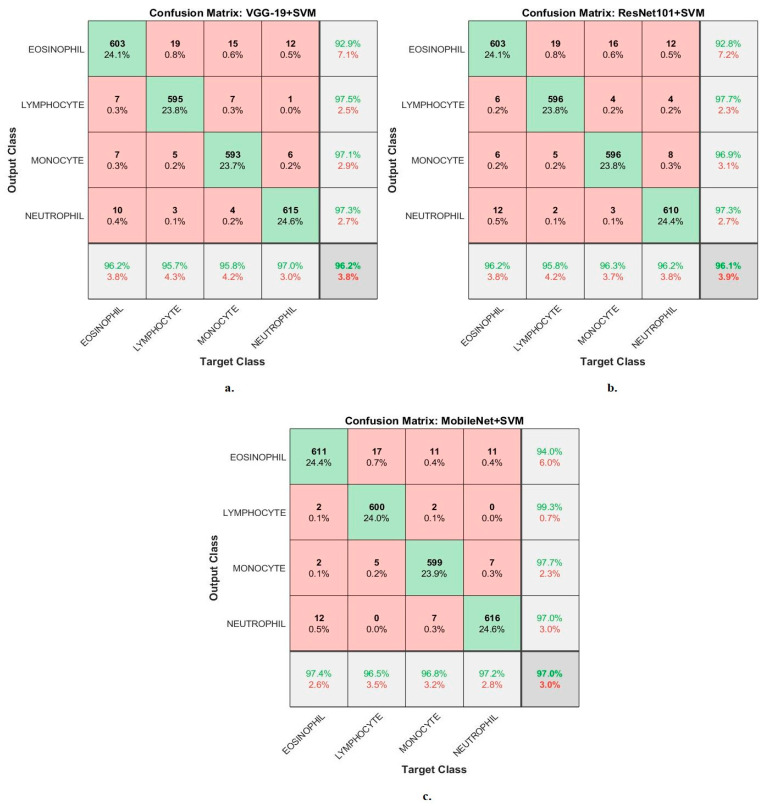
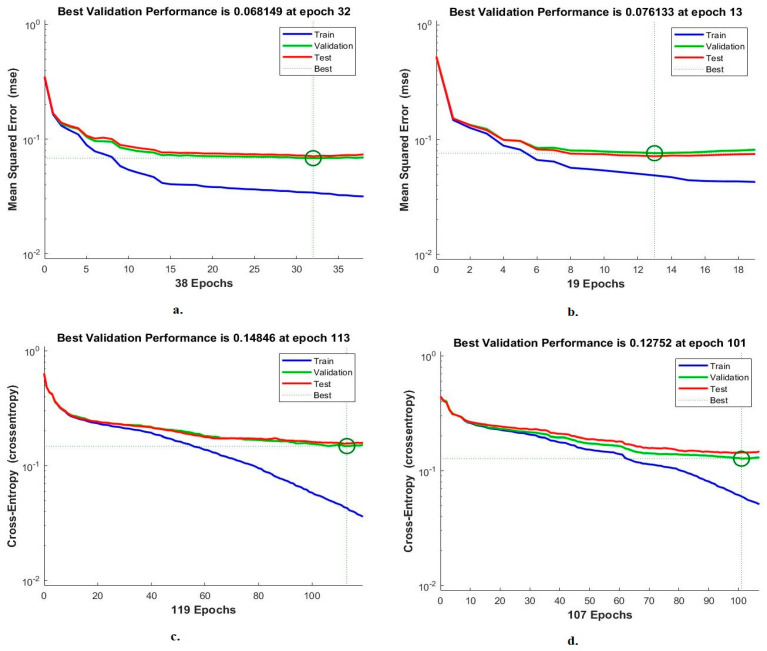
White blood cells (WBCs) are one of the main components of blood produced by the bone marrow. WBCs are part of the immune system that protects the body from infectious diseases and an increase or decrease in the amount of any type that causes a particular disease. Thus, recognizing the WBC types is essential for diagnosing the patient's health and identifying the disease. Analyzing blood samples to determine the amount and WBC types requires experienced doctors. Artificial intelligence techniques were applied to analyze blood samples and classify their types to help doctors distinguish between types of infectious diseases due to increased or decreased WBC amounts. This study developed strategies for analyzing blood slide images to classify WBC types. The first strategy is to classify WBC types by the SVM-CNN technique. The second strategy for classifying WBC types is by SVM based on hybrid CNN features, which are called VGG19-ResNet101-SVM, ResNet101-MobileNet-SVM, and VGG19-ResNet101-MobileNet-SVM techniques. The third strategy for classifying WBC types by FFNN is based on a hybrid model of CNN and handcrafted features. With MobileNet and handcrafted features, FFNN achieved an AUC of 99.43%, accuracy of 99.80%, precision of 99.75%, specificity of 99.75%, and sensitivity of 99.68%.
白细胞(WBCs)是骨髓产生的血液主要成分之一。白细胞是免疫系统的一部分,可保护身体免受传染病侵害,且任何一种特定疾病相关白细胞数量的增减都会引发该疾病。因此,识别白细胞类型对于诊断患者健康状况和确定疾病至关重要。分析血样以确定白细胞数量和类型需要经验丰富的医生。人工智能技术被应用于分析血样并对其类型进行分类,以帮助医生因白细胞数量增减区分传染病类型。本研究开发了分析血涂片图像以对白细胞类型进行分类的策略。第一种策略是通过支持向量机-卷积神经网络(SVM-CNN)技术对白细胞类型进行分类。第二种对白细胞类型进行分类的策略是基于混合卷积神经网络特征的支持向量机,即VGG19-ResNet101-SVM、ResNet101-MobileNet-SVM和VGG19-ResNet101-MobileNet-SVM技术。第三种通过前馈神经网络(FFNN)对白细胞类型进行分类的策略基于卷积神经网络和手工特征的混合模型。借助MobileNet和手工特征,前馈神经网络实现了99.43%的曲线下面积(AUC)、99.80%的准确率、99.75%的精确率、99.75%的特异性和99.68%的灵敏度。