Wang Jiae, Lee Jieun, Kwon Eilhann E, Jeong Sanghyun
Department of Environmental Engineering, Pusan National University, Busan, 46241, South Korea.
Institute for Environmental and Energy, Pusan National University, Busan, 46241, South Korea.
Heliyon. 2023 Apr 25;9(5):e15787. doi: 10.1016/j.heliyon.2023.e15787. eCollection 2023 May.
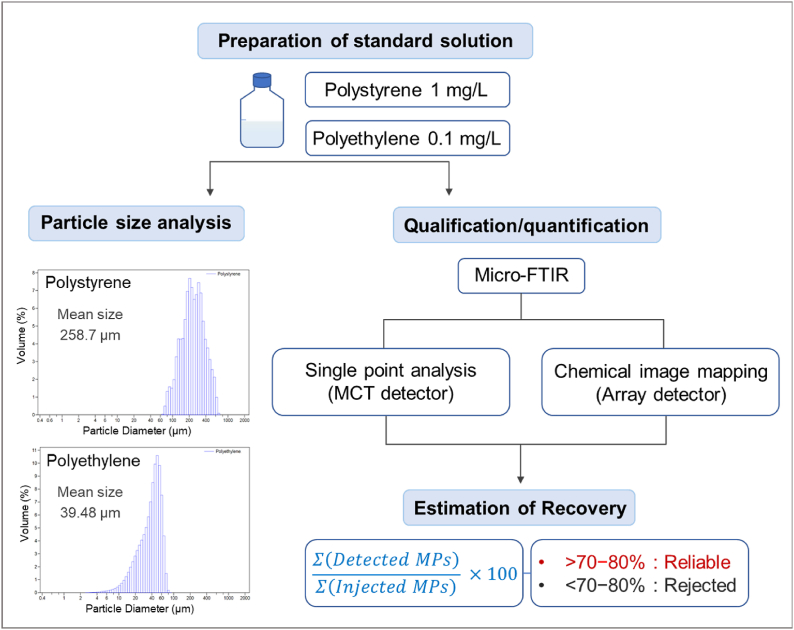
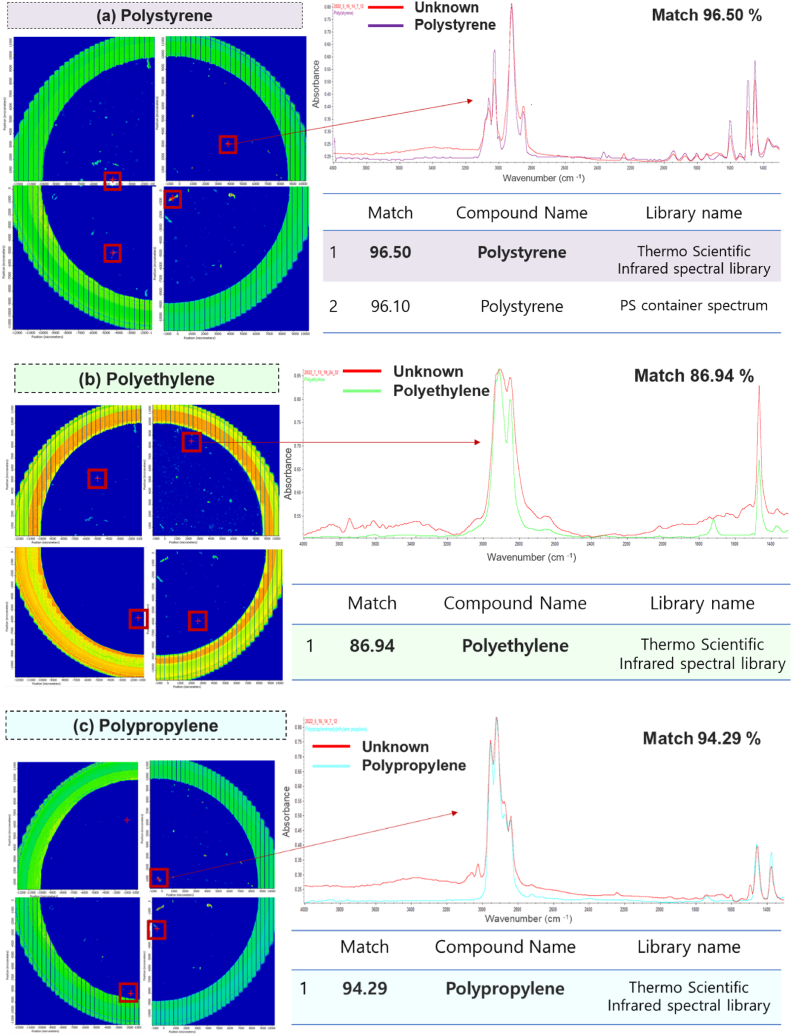
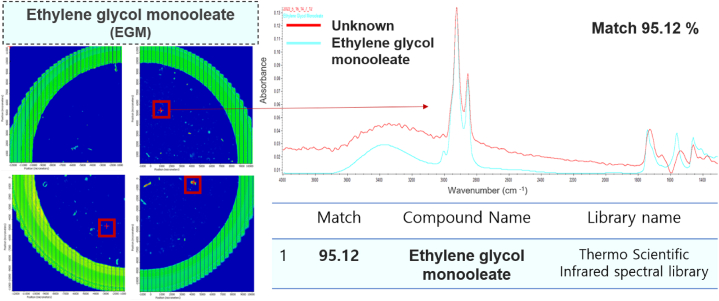
Since the COVID-19 outbreak, the use of disposable plastics has rapidly increased along with the amount of plastic waste. During fragmentation, microplastics and other chemical substances contained in plastics are released. These then enter humans through food which could be problematic considering their hazardous potential. Polystyrene (PS), which is widely used in disposable containers, releases large amounts of microplastics (MPs), but no studies have investigated the release mechanisms of PS-MPs and simultaneously exposed contaminants. Therefore, in this study, the effects of pH (3, 5, 7, and 9), temperature (20, 50, 80, and 100 °C), and exposure time (2, 4, 6, and 8 h) on MPs release were systematically examined. A quantitative/qualitative study of MPs and styrene monomers was performed using microscopy-equipped Fourier-transformed infrared spectroscopy and gas chromatography-mass spectrometry. The release of PS-MPs (36 items/container) and simultaneously exposed pollutants (SEP), such as ethylene glycol monooleate (EGM), was highest at pH 9, 100 °C, and 6 h, which was proportional to the test temperature and time. Under the same conditions, 2.58 μg/L of styrene monomer migrated to the liquid food simulants. The fragmentation was proceeded by oxidation/hydrolysis and accelerated by increased temperature and exposure time. The strong positive correlation between PS-MPs and SEPs releases at pH and temperature indicates that PS-MPs and SEPs follow the same release process. However, a strongly negative correlation between PS-MPs and styrene monomers at the exposed time shows that styrene migration does not follow the same release process, but does its partition coefficient.
自新冠疫情爆发以来,一次性塑料的使用量随着塑料垃圾的数量迅速增加。在破碎过程中,塑料中含有的微塑料和其他化学物质会被释放出来。然后,这些物质通过食物进入人体,考虑到它们的潜在危害,这可能会带来问题。广泛用于一次性容器的聚苯乙烯(PS)会释放大量微塑料(MPs),但尚无研究调查PS-MPs的释放机制以及同时暴露的污染物。因此,在本研究中,系统地考察了pH值(3、5、7和9)、温度(20、50、80和100°C)和暴露时间(2、4、6和8小时)对MPs释放的影响。使用配备显微镜的傅里叶变换红外光谱和气相色谱-质谱联用仪对MPs和苯乙烯单体进行了定量/定性研究。PS-MPs(36个/容器)和同时暴露的污染物(SEP),如乙二醇单油酸酯(EGM)的释放在pH值为9、温度为100°C和暴露时间为6小时时最高,这与测试温度和时间成正比。在相同条件下,有2.58μg/L的苯乙烯单体迁移到液态食品模拟物中。破碎过程通过氧化/水解进行,并随着温度和暴露时间的增加而加速。PS-MPs和SEP在pH值和温度下的释放之间存在强正相关,表明PS-MPs和SEP遵循相同的释放过程。然而,在暴露时间下,PS-MPs与苯乙烯单体之间存在强负相关,表明苯乙烯的迁移不遵循相同的释放过程,而是遵循其分配系数。