Pedrero-Sánchez José Francisco, Belda-Lois Juan Manuel, Serra-Añó Pilar, Mollà-Casanova Sara, López-Pascual Juan
Instituto de Biomecánica (IBV), Universitat Politècnica de València, Valencia, Spain.
Department of Mechanical and Materials Engineering (DIMM), Universitat Politècnica de València, Valencia, Spain.
Front Aging Neurosci. 2023 Jun 2;15:1152917. doi: 10.3389/fnagi.2023.1152917. eCollection 2023.
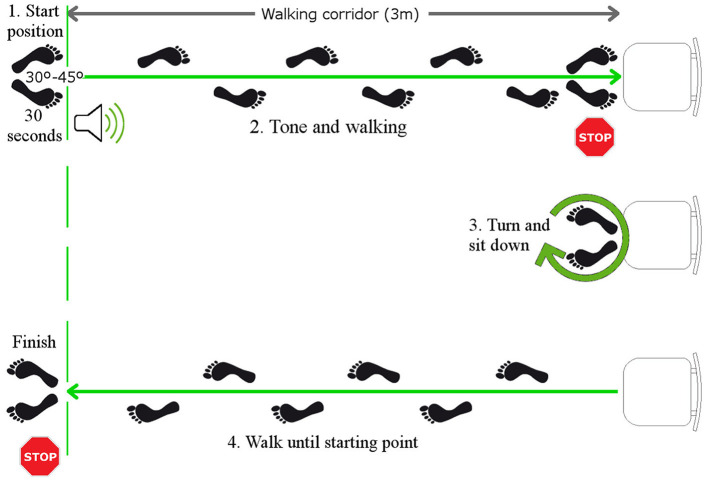
Parkinson's disease is one of the most prevalent neurodegenerative diseases. In the most advanced stages, PD produces motor dysfunction that impairs basic activities of daily living such as balance, gait, sitting, or standing. Early identification allows healthcare personnel to intervene more effectively in rehabilitation. Understanding the altered aspects and impact on the progression of the disease is important for improving the quality of life. This study proposes a two-stage neural network model for the classifying the initial stages of PD using data recorded with smartphone sensors during a modified Timed Up & Go test.
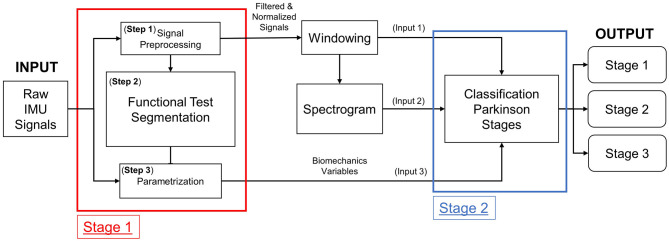
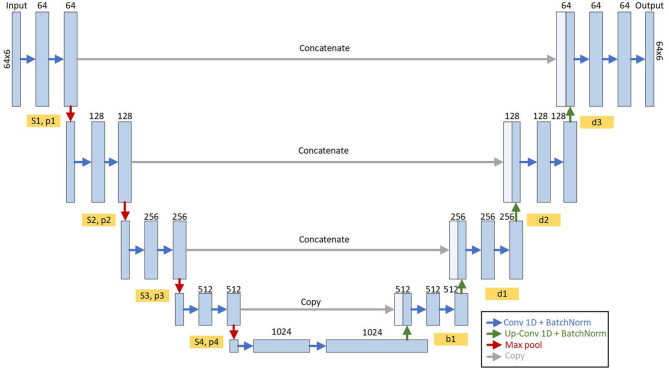
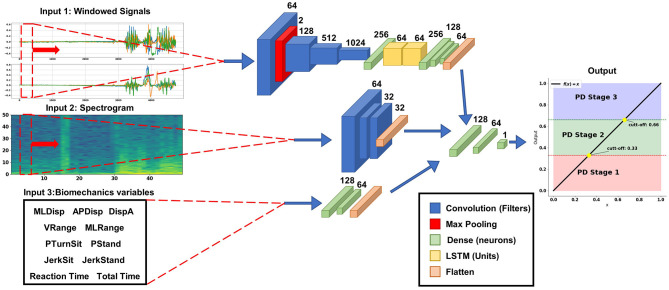
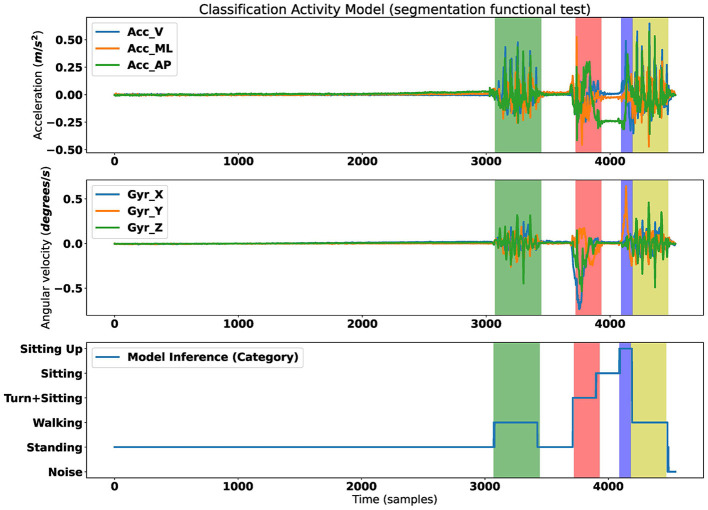
The proposed model consists on two stages: in the first stage, a semantic segmentation of the raw sensor signals classifies the activities included in the test and obtains biomechanical variables that are considered clinically relevant parameters for functional assessment. The second stage is a neural network with three input branches: one with the biomechanical variables, one with the spectrogram image of the sensor signals, and the third with the raw sensor signals.
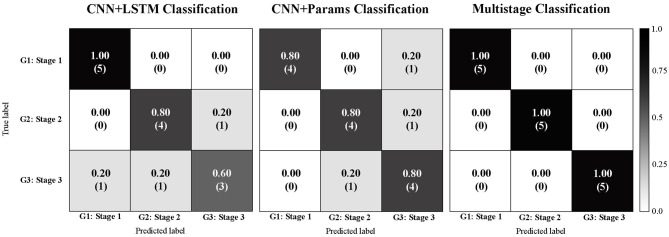
This stage employs convolutional layers and long short-term memory. The results show a mean accuracy of 99.64% for the stratified k-fold training/validation process and 100% success rate of participants in the test phase.
The proposed model is capable of identifying the three initial stages of Parkinson's disease using a 2-min functional test. The test easy instrumentation requirements and short duration make it feasible for use feasible in the clinical context.
帕金森病是最常见的神经退行性疾病之一。在最晚期阶段,帕金森病会导致运动功能障碍,损害诸如平衡、步态、坐立或站立等基本日常生活活动。早期识别可使医护人员在康复过程中更有效地进行干预。了解疾病进展过程中发生改变的方面及其影响对于提高生活质量很重要。本研究提出了一种两阶段神经网络模型,用于使用改良的定时起立行走测试期间通过智能手机传感器记录的数据对帕金森病的初始阶段进行分类。
所提出的模型包括两个阶段:在第一阶段,对原始传感器信号进行语义分割,对测试中包含的活动进行分类,并获得被视为功能评估临床相关参数的生物力学变量。第二阶段是一个具有三个输入分支的神经网络:一个分支输入生物力学变量,一个分支输入传感器信号的频谱图图像,第三个分支输入原始传感器信号。
此阶段采用卷积层和长短期记忆。结果显示,分层k折训练/验证过程的平均准确率为99.64%,测试阶段参与者的成功率为100%。
所提出的模型能够通过2分钟的功能测试识别帕金森病的三个初始阶段。该测试仪器要求简单且持续时间短,使其在临床环境中使用切实可行。