Department of Chemistry, College of Natural Sciences, Makerere University, P.O. Box 7062, Kampala, Uganda.
Department of Forestry, Biodiversity, and Tourism, College of Agriculture and Environmental Sciences, Makerere University, P.O. Box 7062, Kampala, Uganda.
BMC Complement Med Ther. 2023 Jun 19;23(1):201. doi: 10.1186/s12906-023-04026-4.
Spermacoce princeae (K. Schum) has been used in the treatment of bacterial skin infections in Uganda. Pharmacological studies revealed that extracts of S. princeae exhibited antibacterial, antioxidant, and sun protection potential. This study aimed at isolating and identifying pure compounds from the extracts based on comprehensive analytical characterization by multiple analytical techniques.
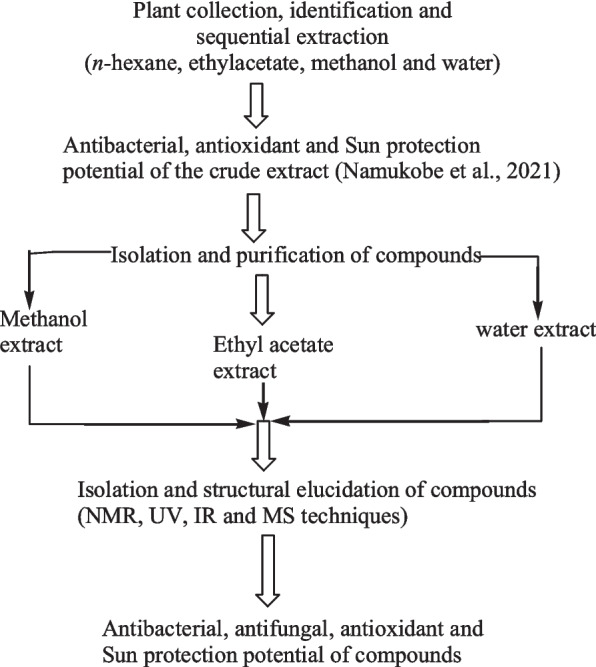
The plant samples were extracted by sequential maceration using n-hexane, ethyl acetate, methanol, and distilled water. The compounds were isolated using a combination of chromatographic techniques and their structures were elucidated by multiple spectroscopic techniques. The antibacterial and antifungal activity determination of the isolated compounds was carried out using an agar well diffusion and potato dextrose assay against Pseudomonas aeruginosa, Staphylococcus aureus, Escherichia coli, Klebsiella pneumoniae, Candida albicans, and Aspergillus flavus while the antioxidant activity was screened with the 2,2-diphenyl-2-picryl-hydrazyl (DPPH) radical scavenging assay. The sun protection factor was determined using a Shimadzu Ultra Violet-visible (UV-VIS) double beam spectrophotometer between 290 to 320 nm.
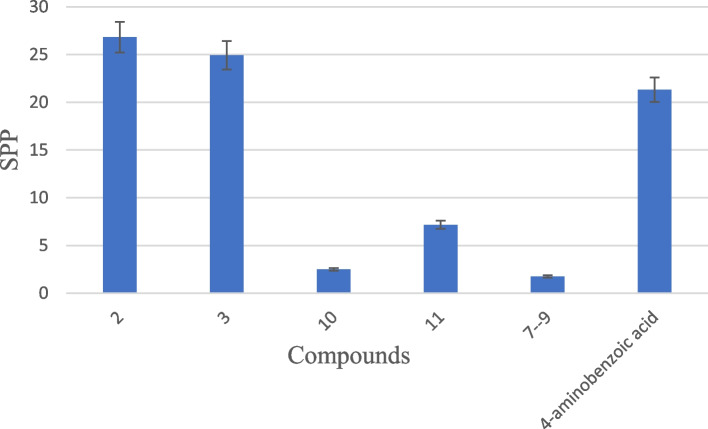
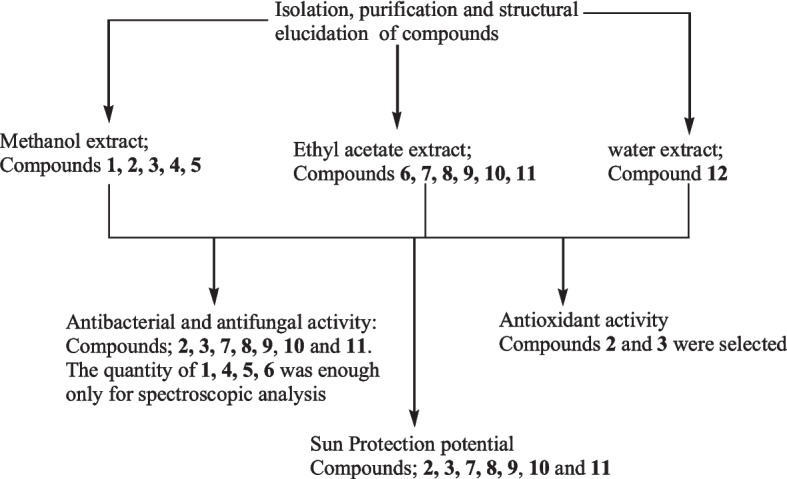
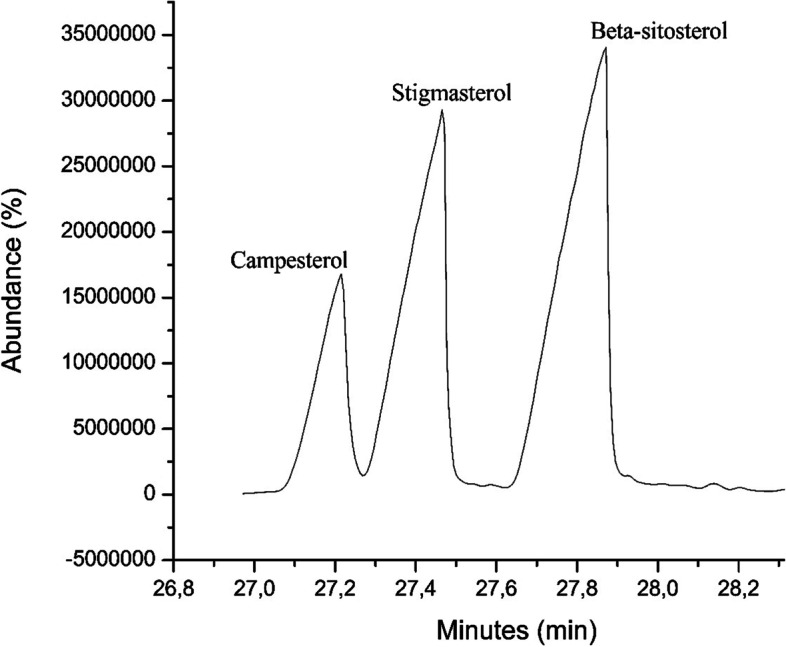
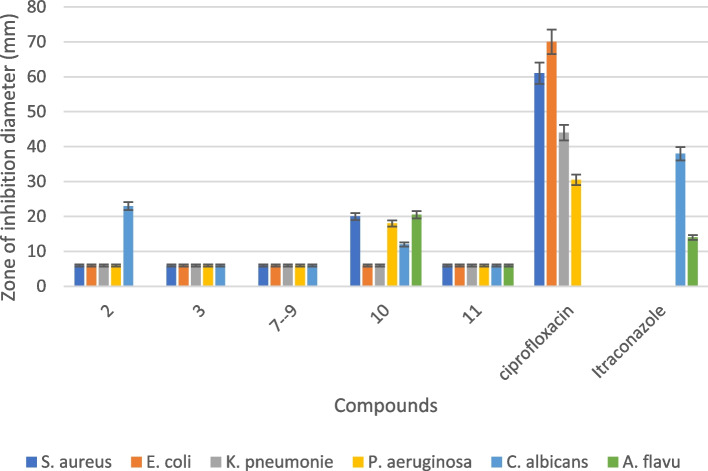
Eleven compounds; quercetin (1), kaempferol-3-O-rutinoside (2), rutin (3, 12), myo-inositol (4), asperulosidic acid (5), hexadecanoic acid (6), β-sitosterol (7), stigmasterol (8), campesterol (9), ursolic acid (10), and β-sitosterol glucoside (11) were identified in the S. princeae extracts. Compound 2 had good antifungal activity against C. albicans (zone of inhibition, 23.0 ± 0.1 mm). Compound 10 showed antibacterial and antifungal activity against S. aureus, P. aeruginosa, C. albicans, and A. flavus. Compound 2 had a good percentage radical scavenging effect (IC = 64.81 µg/ml) and a good sun protection factor (SPF = 26.83).
This study reports the first-time isolation and identification of compounds 1 to 11 from S. princeae, which contribute to its antimicrobial, antioxidant, and sun protection potential.
在乌干达,Spermacoce princeae(K. Schum)被用于治疗细菌皮肤感染。药理学研究表明,S. princeae 的提取物具有抗菌、抗氧化和防晒潜力。本研究旨在基于多种分析技术的综合分析特性,从提取物中分离和鉴定纯化合物。
采用正己烷、乙酸乙酯、甲醇和蒸馏水依次浸提植物样品,结合色谱技术分离化合物,并通过多种光谱技术解析其结构。采用琼脂孔扩散法和马铃薯葡萄糖琼脂法测定分离化合物对铜绿假单胞菌、金黄色葡萄球菌、大肠杆菌、肺炎克雷伯菌、白色念珠菌和黄曲霉的抑菌和抗真菌活性,采用 2,2-二苯基-2-苦基肼(DPPH)自由基清除法筛选抗氧化活性,用 Shimadzu 紫外可见(UV-VIS)双光束分光光度计在 290-320nm 之间测定防晒因子。
从 S. princeae 提取物中鉴定出 11 种化合物:槲皮素(1)、山柰酚-3-O-芸香糖苷(2)、芦丁(3、12)、肌醇(4)、asperulosidic 酸(5)、十六烷酸(6)、β-谷甾醇(7)、豆甾醇(8)、菜油甾醇(9)、乌苏酸(10)和β-谷甾醇葡萄糖苷(11)。化合物 2 对白色念珠菌具有良好的抗真菌活性(抑菌圈,23.0±0.1mm)。化合物 10 对金黄色葡萄球菌、铜绿假单胞菌、白色念珠菌和黄曲霉具有良好的抑菌和抗真菌活性。化合物 2 具有良好的自由基清除率(IC=64.81μg/ml)和防晒系数(SPF=26.83)。
本研究首次从 S. princeae 中分离鉴定出化合物 1 至 11,这有助于其抗菌、抗氧化和防晒潜力。