Department of Cardiology, University Heart & Vascular Center Hamburg, University Medical Center Hamburg-Eppendorf, Martinistr. 52, Hamburg 20246, Germany.
German Center for Cardiovascular Research (DZHK), Partner Site Hamburg/Kiel/Luebeck, Martinistr. 52, 20246 Hamburg, Germany.
Europace. 2023 Jul 4;25(7). doi: 10.1093/europace/euad166.
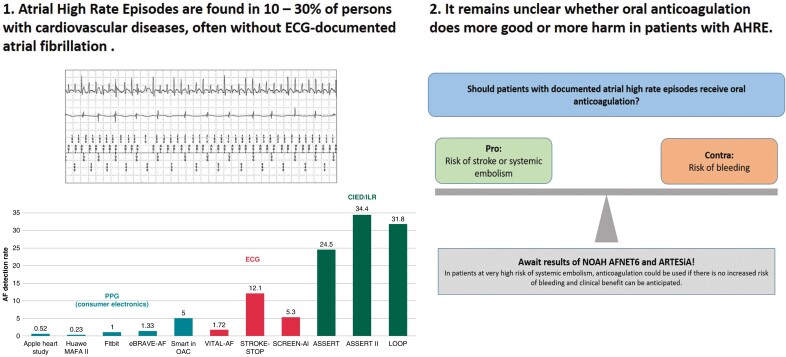
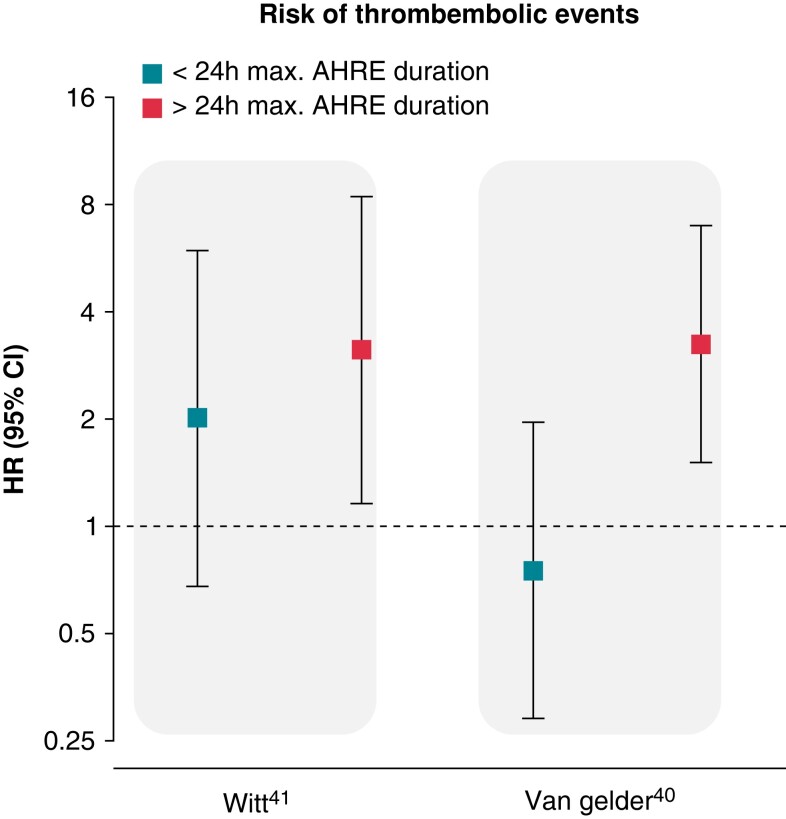
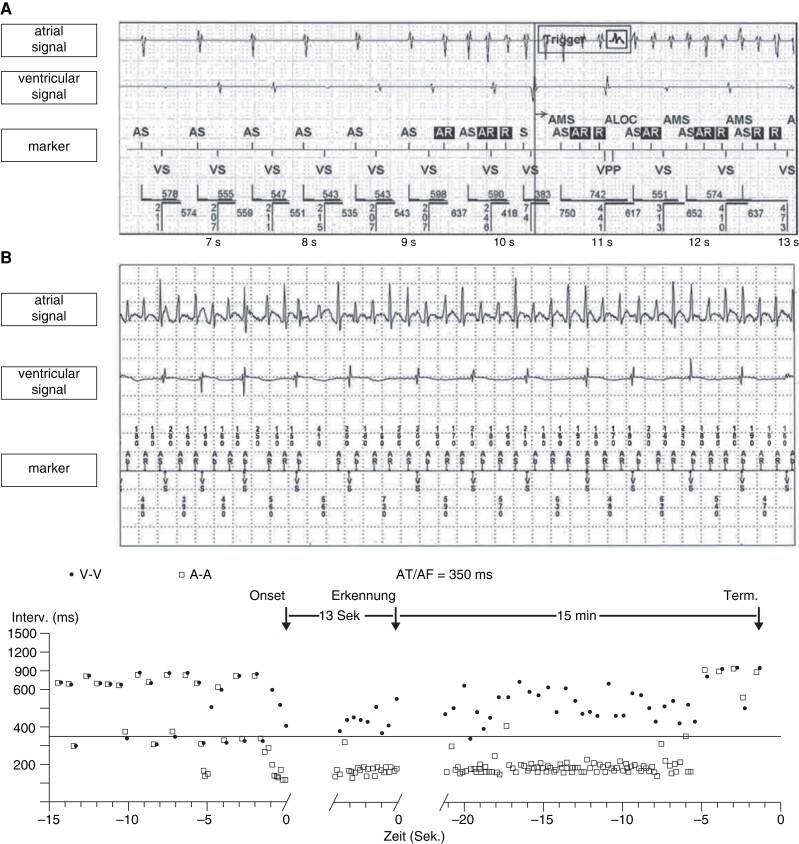
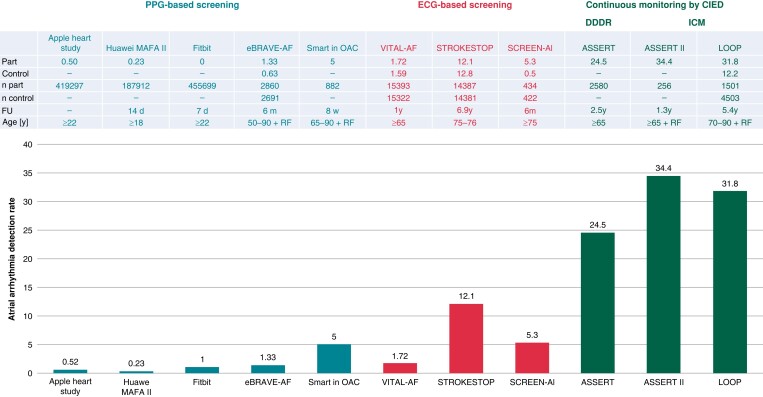
Atrial high-rate episodes (AHRE) are atrial tachyarrhythmias detected by continuous rhythm monitoring by pacemakers, defibrillators, or implantable cardiac monitors. Atrial high-rate episodes occur in 10-30% of elderly patients without atrial fibrillation. However, it remains unclear whether the presence of these arrhythmias has therapeutic consequences. The presence of AHRE increases the risk of stroke compared with patients without AHRE. Oral anticoagulation would have the potential to reduce the risk of stroke in patients with AHRE but is also associated with a rate of major bleeding of ∼2%/year. The stroke rate in patients with AHRE appears to be lower than the stroke rate in patients with atrial fibrillation. Wearables like smart-watches will increase the absolute number of patients in whom atrial arrhythmias are detected. It remains unclear whether anticoagulation is effective and, equally important, safe in patients with AHRE. Two randomized clinical trials, NOAH-AFNET6 and ARTESiA, are expected to report soon. They will provide much-needed information on the efficacy and safety of oral anticoagulation in patients with AHRE.
房性心动过速事件(AHRE)是通过起搏器、除颤器或植入式心脏监测器进行的连续节律监测检测到的房性快速性心律失常。在没有心房颤动的老年患者中,10-30%会发生房性心动过速事件。然而,这些心律失常是否具有治疗意义仍不清楚。与没有房性心动过速事件的患者相比,存在 AHRE 会增加中风的风险。口服抗凝剂有可能降低 AHRE 患者的中风风险,但也与每年约 2%的大出血发生率相关。AHRE 患者的中风率似乎低于心房颤动患者的中风率。智能手表等可穿戴设备将增加检测到房性心律失常的患者数量。口服抗凝剂在 AHRE 患者中的有效性和同样重要的安全性尚不清楚。两项随机临床试验,NOAH-AFNET6 和 ARTESiA,预计将很快报告。它们将提供关于 AHRE 患者口服抗凝治疗的疗效和安全性的急需信息。