Pei Ying, Lu Yan, Li HuiZi, Jiang ChengYing, Wang Lei
Postgraduate Union Training Base of Jinzhou Medical University, PLA Rocket Force Characteristic Medical Center, Beijing, China.
Department of Neurology, PLA Rocket Force Characteristic Medical Center, Beijing, China.
Front Aging Neurosci. 2023 Jun 7;15:1174599. doi: 10.3389/fnagi.2023.1174599. eCollection 2023.
Gut-brain axis might play an important role in cognitive impairments by various diseases including Alzheimer's disease (AD).
To investigate the differences in gut microbial composition, intestinal barrier function, and systemic inflammation in patients with AD or mild cognitive impairment (MCI), and normal control (NC) cases.
A total of 118 subjects (45 AD, 38 MCI, and 35 NC) were recruited. Cognitive function was assessed using Mini-Mental State Examination (MMSE), and Montreal Cognitive Assessment Scale (MoCA). Functional ability was assessed using Activity of Daily Living Scale (ADL). The composition of gut microbiome was examined by 16S rRNA high-throughput sequencing. Phylogenetic Investigation of Communities by Reconstruction of Unobserved States (PICRUSt) was used to predict functional transfer of gut microbiota. Gut barrier dysfunction was evaluated by measuring the levels of diamine oxidase (DAO), D-lactic acid (DA), and endotoxin (ET). The serum high-sensitivity C-reactive protein (hs-CRP) level was used to indicate systemic inflammation.
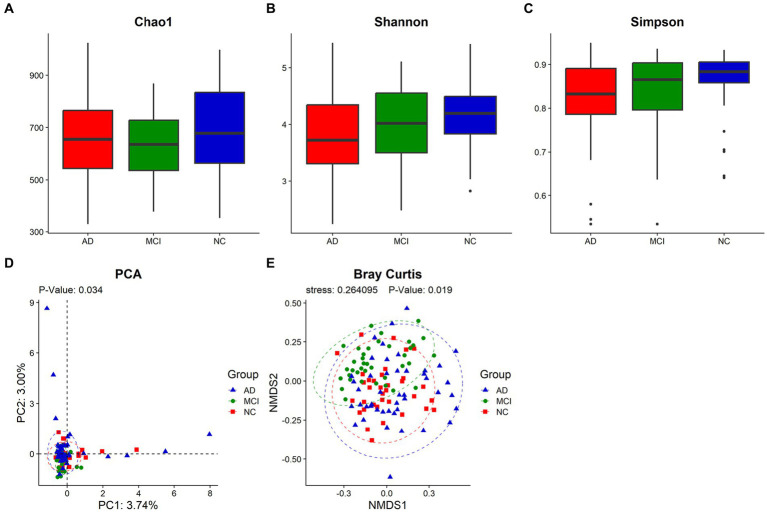
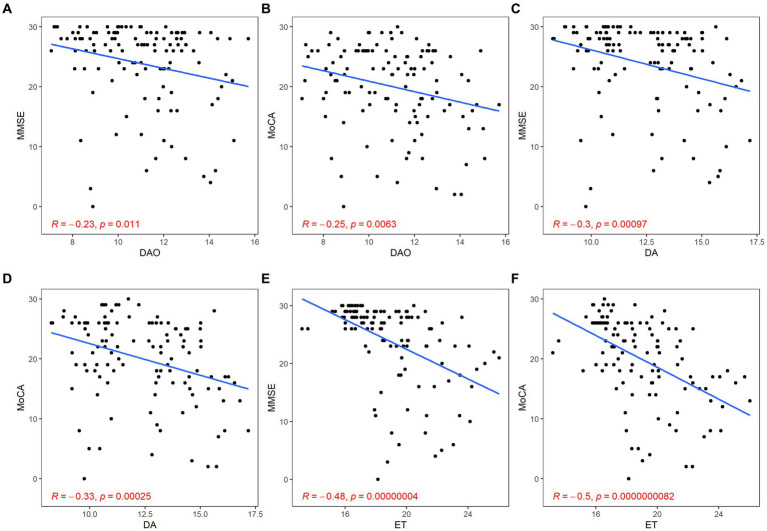
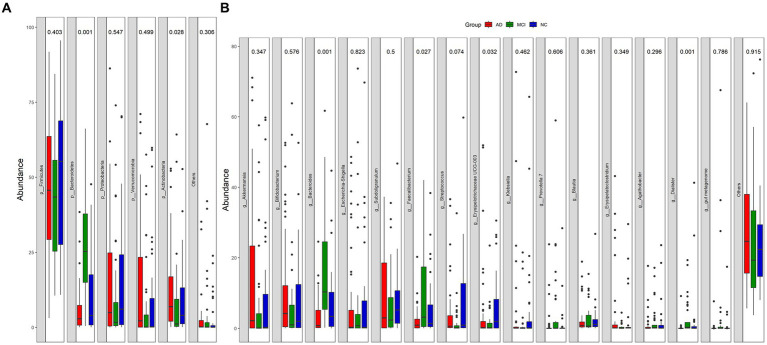
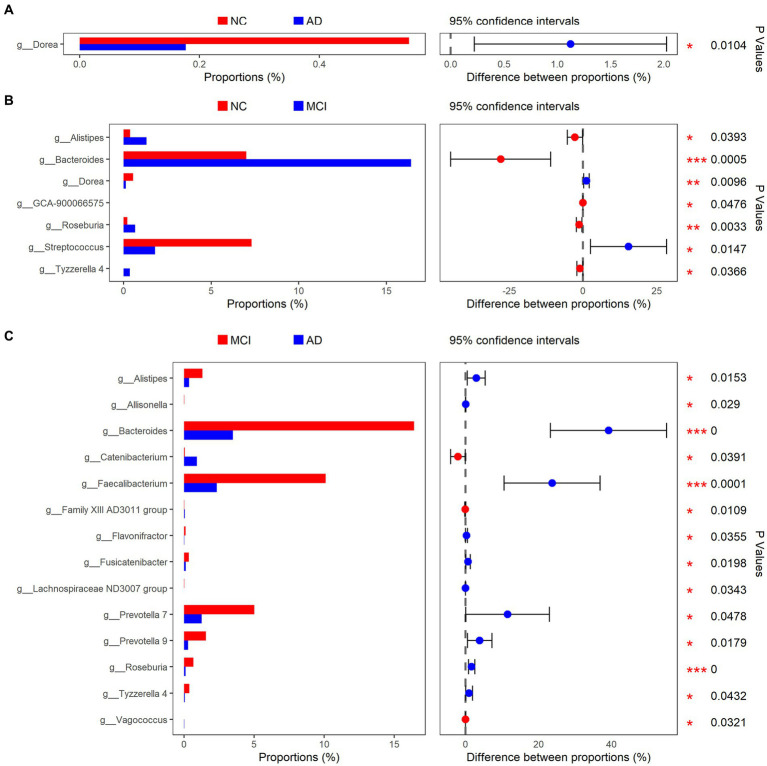
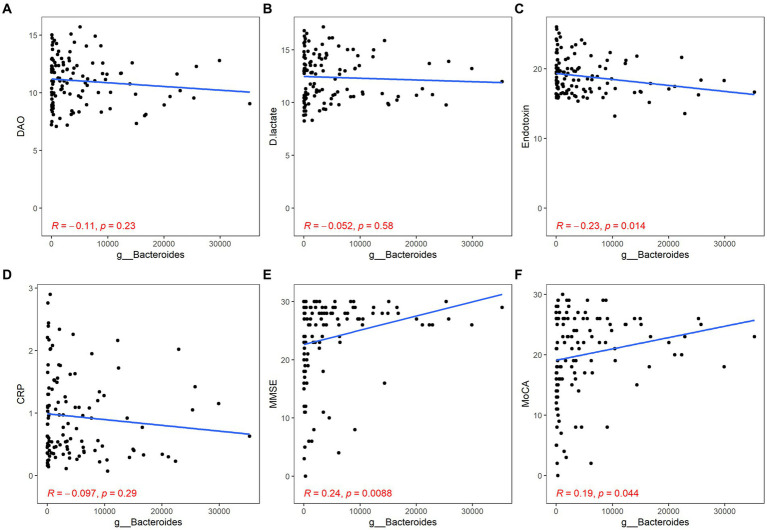
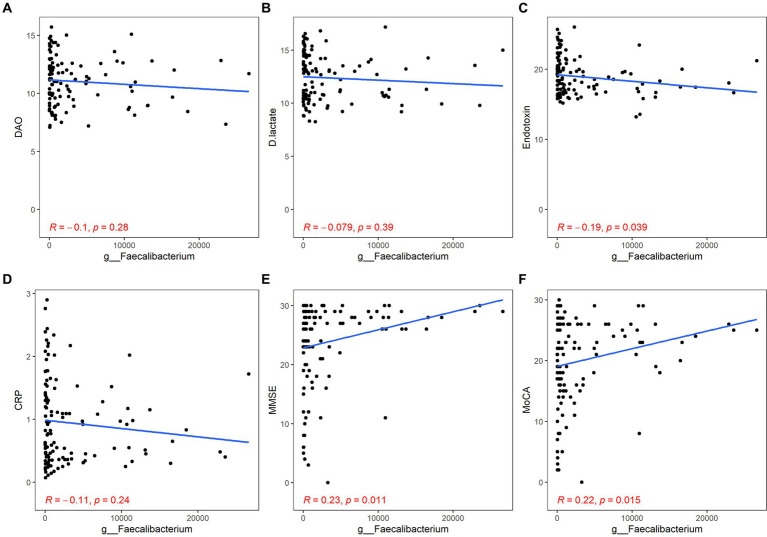
Compared with normal controls, patients with cognitive impairments (AD and MCI) had lower abundance of and higher levels of DAO, DA, and ET. Kyoto Encyclopedia of Genes and Genomes (KEGG) results showed that the pathways related to glycan biosynthesis and metabolism increased in MCI patients, while the ones related to membrane transport decreased. The abundance of and was negatively correlated with the content of ET, and positively correlated with the scores of MMSE and MoCA. The hs-CRP levels were similar among the three groups. A significant negative correlation was observed between the severity of gut barrier dysfunction and cognitive function.
Cognitive impairments might be associated with gut microbial dysbiosis and intestinal barrier dysfunction.
肠-脑轴可能在包括阿尔茨海默病(AD)在内的多种疾病所致的认知障碍中起重要作用。
探讨AD或轻度认知障碍(MCI)患者与正常对照(NC)者肠道微生物组成、肠道屏障功能及全身炎症的差异。
共纳入118名受试者(45例AD患者、38例MCI患者和35例NC者)。采用简易精神状态检查表(MMSE)和蒙特利尔认知评估量表(MoCA)评估认知功能。采用日常生活活动量表(ADL)评估功能能力。通过16S rRNA高通量测序检测肠道微生物群的组成。使用未观察状态重建的群落系统发育研究(PICRUSt)预测肠道微生物群的功能转移。通过测量二胺氧化酶(DAO)、D-乳酸(DA)和内毒素(ET)水平评估肠道屏障功能障碍。采用血清高敏C反应蛋白(hs-CRP)水平表示全身炎症。
与正常对照相比,认知障碍患者(AD和MCI)的[具体微生物名称未给出]丰度较低,DAO、DA和ET水平较高。京都基因与基因组百科全书(KEGG)结果显示,MCI患者中与聚糖生物合成和代谢相关的通路增加,而与膜转运相关的通路减少。[具体微生物名称未给出]和[具体微生物名称未给出]的丰度与ET含量呈负相关,与MMSE和MoCA评分呈正相关。三组hs-CRP水平相似。肠道屏障功能障碍的严重程度与认知功能之间存在显著负相关。
认知障碍可能与肠道微生物群失调和肠道屏障功能障碍有关。