Department of Psychology, Arizona State University, USA.
Department of Psychology, Arizona State University, USA.
Drug Alcohol Depend. 2023 Aug 1;249:110837. doi: 10.1016/j.drugalcdep.2023.110837. Epub 2023 Jun 16.
Simultaneous alcohol and cannabis use (SAM) is associated with riskier drinking. However, little is known regarding mechanisms of risk during drinking episodes. The current study tested whether subjective responses to simultaneous vs. alcohol-only use (i.e., high arousal positive/reward, high arousal negative/aggression, low arousal positive/relaxation, low arousal negative/impairment) were mechanisms through which SAM use was associated with daily drinking.
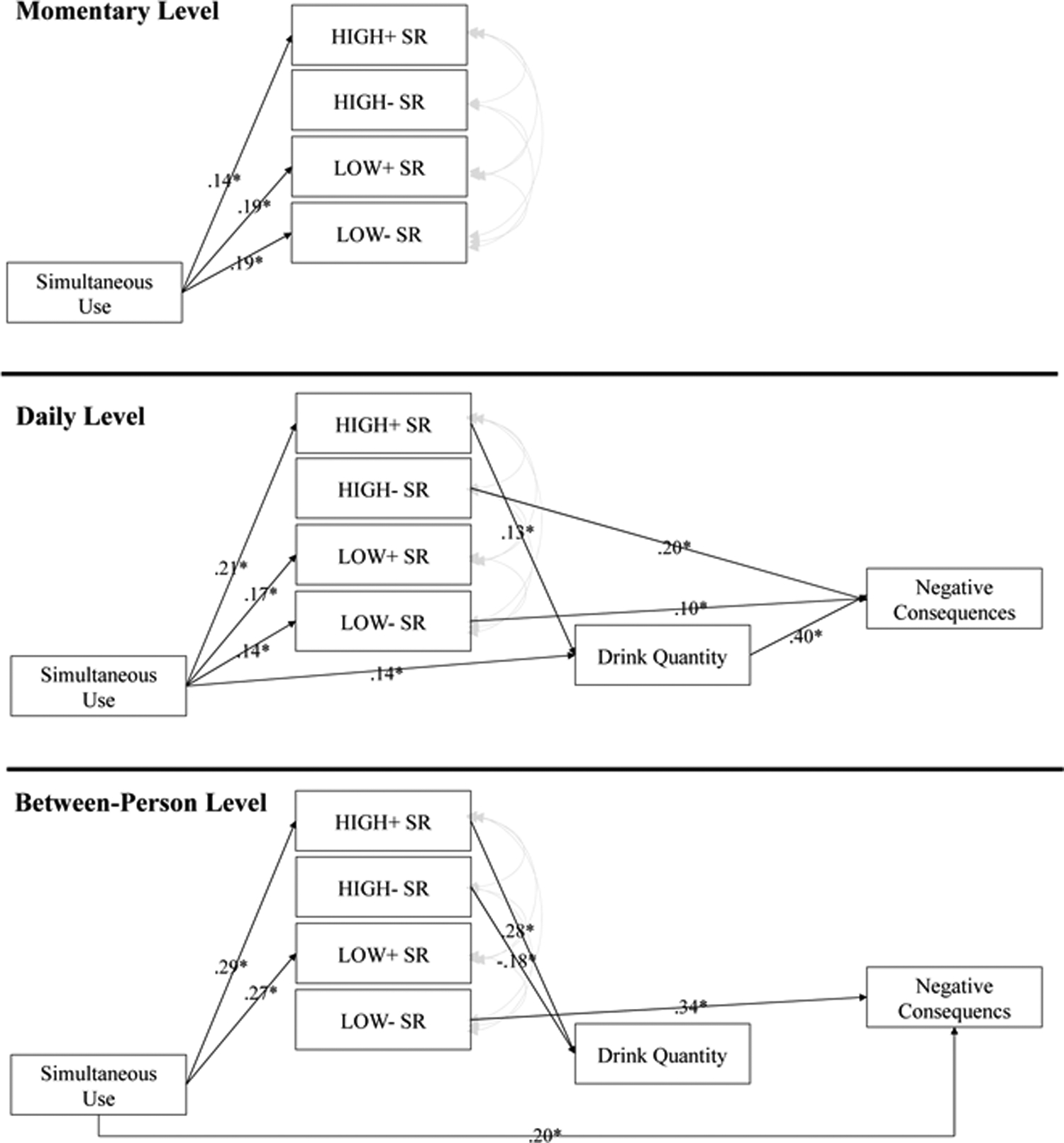
Emerging adults who co-use alcohol and cannabis (N=85) completed 21 days of ecological momentary assessment with drink-contingent reports during drinking episodes. Participants reported on their simultaneous use and current subjective effects during drink reports and past-night total drinks consumed and negative consequences experienced the next morning. Three-level multilevel models (momentary, daily, person level) tested whether SAM use predicted subjective responses, and whether subjective responses mediated associations between SAM use, heavier drinking and negative consequences.
At the momentary and day-level, SAM (vs. alcohol-only) use predicted increased high arousal positive/rewarding, low arousal positive/relaxing, and low arousal negative/impairing subjective effects. SAM use indirectly predicted heavier day-level drinking and further negative consequences through high arousal positive/rewarding response. SAM use also indirectly predicted day-level negative consequences through low arousal negative/impairing response. At the person-level, more frequent SAM use predicted higher person-average high arousal positive/rewarding and low arousal positive/relaxing responses, and high arousal positive/rewarding response mediated relation between SAM frequency and heavier drinking.
Simultaneous use was associated with reward, relief, and impairment, and reward and impairment were mechanisms of risk between SAM use and riskier drinking. Findings may inform theory and just-in-time interventions seeking to reduce alcohol misuse.
同时饮酒和使用大麻(SAM)与更危险的饮酒行为有关。然而,对于饮酒过程中风险的机制知之甚少。本研究旨在检验同时使用酒精和大麻(即高唤醒积极/奖励、高唤醒消极/攻击、低唤醒积极/放松、低唤醒消极/损害)与 SAM 使用与每日饮酒之间的关联的机制。
共使用酒精和大麻的成年早期参与者(N=85)完成了 21 天的生态瞬时评估,并在饮酒期间进行了与饮酒相关的报告。参与者在饮酒报告中报告了他们的同时使用和当前的主观效应,以及前一晚的总饮酒量和第二天早上经历的负面后果。三级多层模型(瞬时、日常、个体水平)检验了 SAM 使用是否预测了主观反应,以及主观反应是否在 SAM 使用、更大量饮酒和负面后果之间的关联中起中介作用。
在瞬时和日常水平上,SAM(与酒精单独使用相比)使用预测了更高的高唤醒积极/奖励、低唤醒积极/放松和低唤醒消极/损害的主观效应。SAM 使用通过高唤醒积极/奖励反应间接预测了更大量的日常饮酒和进一步的负面后果。SAM 使用也通过低唤醒消极/损害反应间接预测了日常负面后果。在个体水平上,更频繁的 SAM 使用预测了更高的个体平均高唤醒积极/奖励和低唤醒积极/放松反应,并且高唤醒积极/奖励反应介导了 SAM 使用频率与更大量饮酒之间的关系。
同时使用与奖励、缓解和损害有关,奖励和损害是 SAM 使用与更危险的饮酒行为之间风险的机制。这些发现可能为减少酒精滥用的理论和即时干预提供信息。