School of Engineering Medicine, Beihang University, Beijing, 100191, China.
School of Biological Science and Medical Engineering, Beihang University, Beijing, 100191, China.
Mil Med Res. 2023 Jun 26;10(1):29. doi: 10.1186/s40779-023-00464-w.
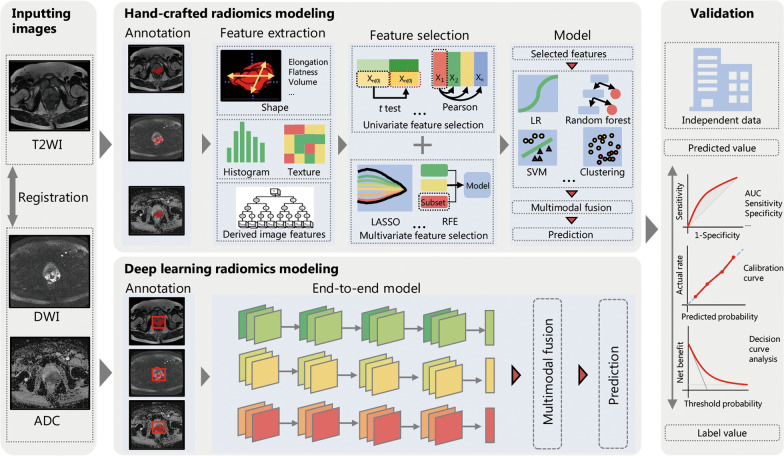
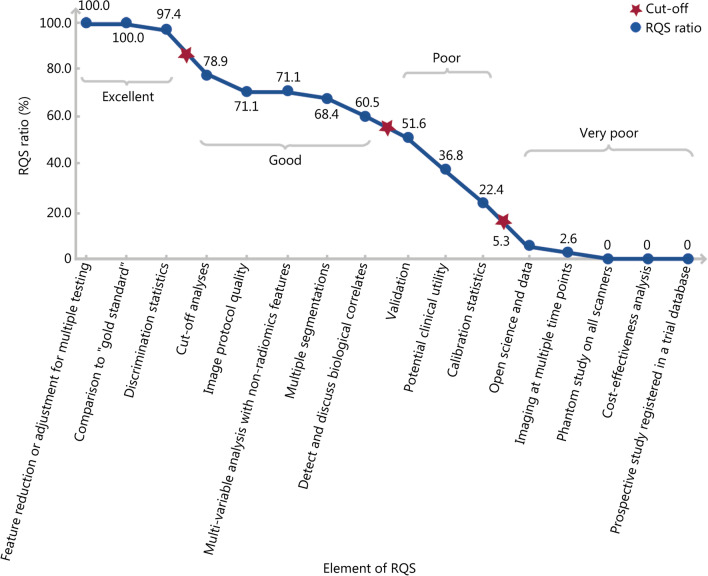
The present study aimed to explore the potential of artificial intelligence (AI) methodology based on magnetic resonance (MR) images to aid in the management of prostate cancer (PCa). To this end, we reviewed and summarized the studies comparing the diagnostic and predictive performance for PCa between AI and common clinical assessment methods based on MR images and/or clinical characteristics, thereby investigating whether AI methods are generally superior to common clinical assessment methods for the diagnosis and prediction fields of PCa. First, we found that, in the included studies of the present study, AI methods were generally equal to or better than the clinical assessment methods for the risk assessment of PCa, such as risk stratification of prostate lesions and the prediction of therapeutic outcomes or PCa progression. In particular, for the diagnosis of clinically significant PCa, the AI methods achieved a higher summary receiver operator characteristic curve (SROC-AUC) than that of the clinical assessment methods (0.87 vs. 0.82). For the prediction of adverse pathology, the AI methods also achieved a higher SROC-AUC than that of the clinical assessment methods (0.86 vs. 0.75). Second, as revealed by the radiomics quality score (RQS), the studies included in the present study presented a relatively high total average RQS of 15.2 (11.0-20.0). Further, the scores of the individual RQS elements implied that the AI models in these studies were constructed with relatively perfect and standard radiomics processes, but the exact generalizability and clinical practicality of the AI models should be further validated using higher levels of evidence, such as prospective studies and open-testing datasets.
本研究旨在探索基于磁共振(MR)图像的人工智能(AI)方法在前列腺癌(PCa)管理中的应用潜力。为此,我们对基于 MR 图像和/或临床特征的 AI 与常见临床评估方法在 PCa 诊断和预测性能方面的比较研究进行了综述和总结,以探讨 AI 方法是否普遍优于 PCa 诊断和预测领域的常见临床评估方法。首先,我们发现,在本研究纳入的研究中,AI 方法在 PCa 的风险评估领域,如前列腺病变的风险分层和治疗效果或 PCa 进展的预测,通常与临床评估方法相当或更好。特别是对于临床显著 PCa 的诊断,AI 方法的综合受试者工作特征曲线(SROC-AUC)高于临床评估方法(0.87 比 0.82)。对于不良病理的预测,AI 方法的 SROC-AUC 也高于临床评估方法(0.86 比 0.75)。其次,根据放射组学质量评分(RQS),本研究纳入的研究呈现出相对较高的总平均 RQS 为 15.2(11.0-20.0)。此外,各个 RQS 元素的评分表明,这些研究中的 AI 模型采用了相对完善和标准的放射组学流程构建,但 AI 模型的确切泛化性和临床实用性仍需使用更高水平的证据(如前瞻性研究和开放测试数据集)进一步验证。