Key Laboratory of Carcinogenesis and Translational Research (Ministry of Education/Beijing), Department of Cancer Epidemiology, Peking University Cancer Hospital & Institute, Beijing, China.
PYLOTUM Key Joint Laboratory for Upper GI Cancer, Technische Universität München, Munich, Germany, and Peking University Cancer Hospital & Institute, Beijing, China.
Microbiol Spectr. 2023 Aug 17;11(4):e0534722. doi: 10.1128/spectrum.05347-22. Epub 2023 Jun 26.
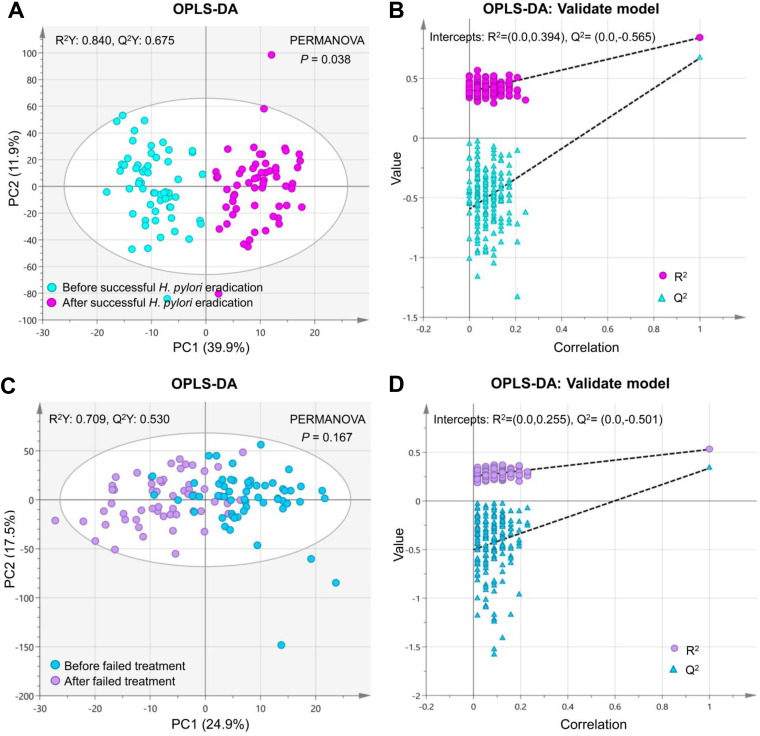
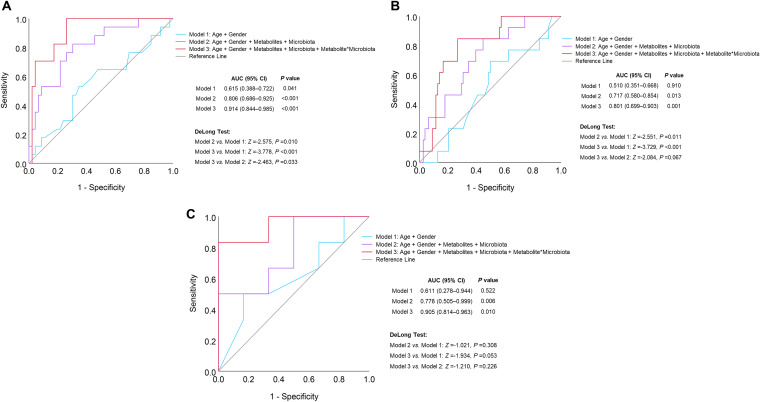
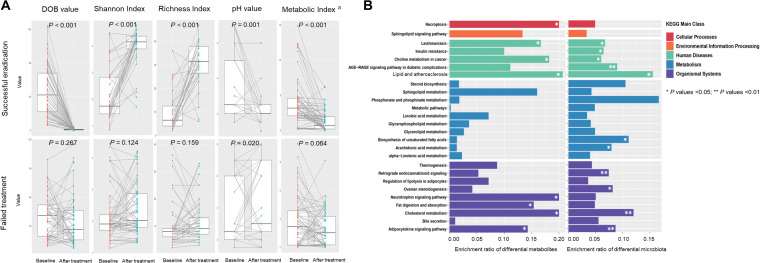
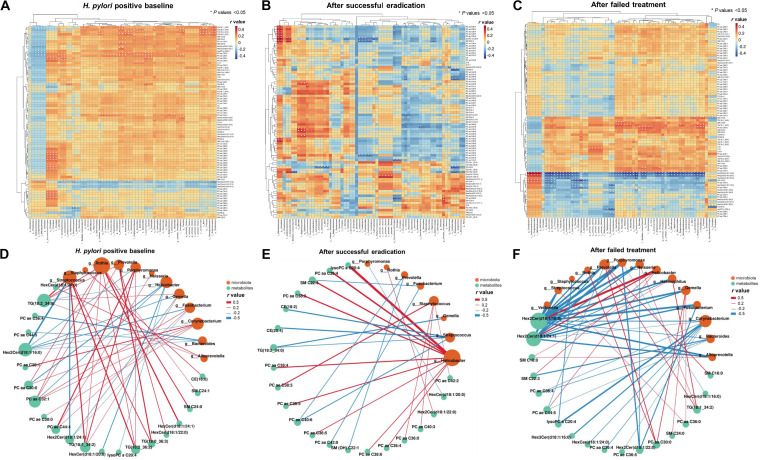
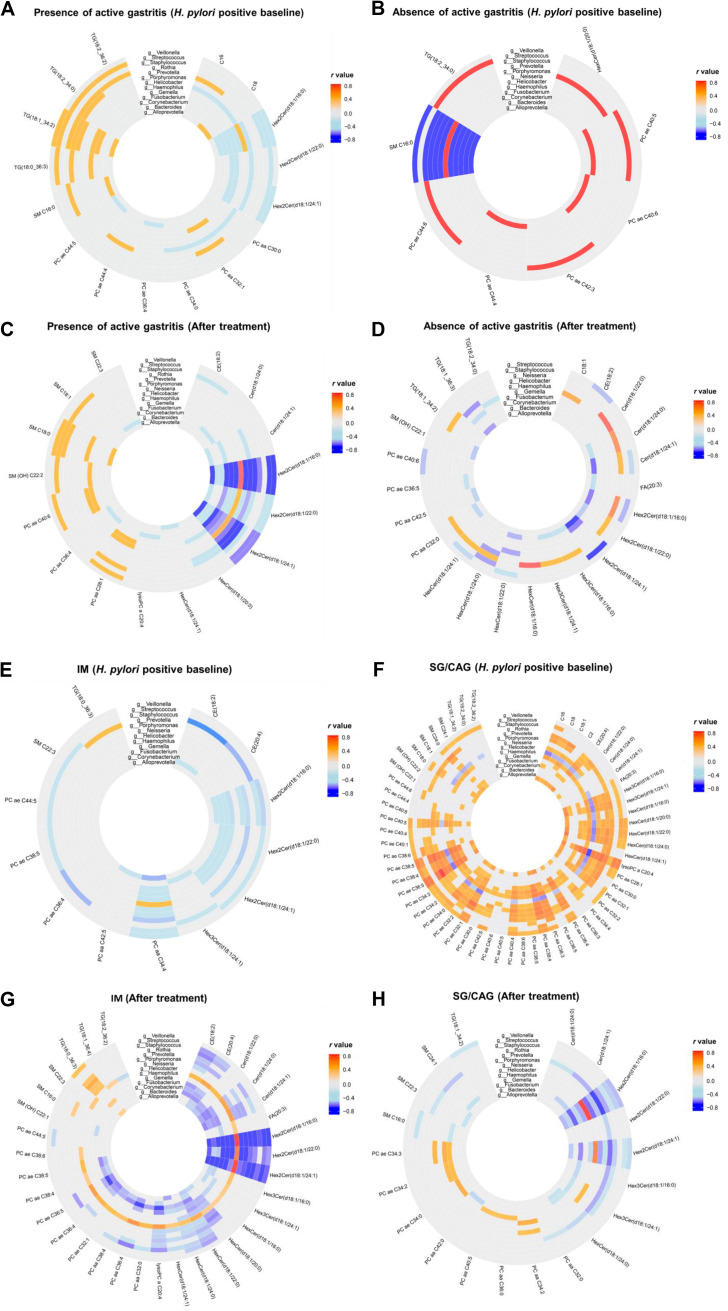
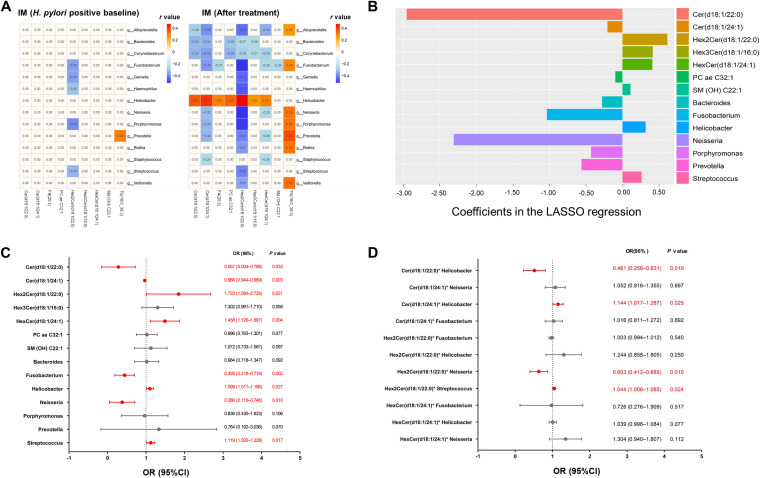
Metabolites and their interactions with microbiota may be involved in Helicobacter pylori-associated gastric lesion development. This study aimed to explore metabolite alterations upon H. pylori eradication and possible roles of microbiota-metabolite interactions in progression of precancerous lesions. Targeted metabolomics assays and 16S rRNA gene sequencing were conducted to investigate metabolic and microbial alterations of paired gastric biopsy specimens in 58 subjects with successful and 57 subjects with failed anti-H. pylori treatment. Integrative analyses were performed by combining the metabolomics and microbiome profiles from the same intervention participants. A total of 81 metabolites were significantly altered after successful eradication compared to failed treatment, including acylcarnitines, ceramides, triacylglycerol, cholesterol esters, fatty acid, sphingolipids, glycerophospholipids, and glycosylceramides, with values of <0.05 for all. The differential metabolites showed significant correlations with microbiota in baseline biopsy specimens, such as negative correlations between and glycerophospholipids, glycosylceramide, and triacylglycerol (0.05 for all), which were altered by eradication. The characteristic negative correlations between glycosylceramides and , Streptococcus, and in H. pylori-positive baseline biopsy specimens were further noticed in active gastritis and intestinal metaplasia (0.05 for all). A panel including differential metabolites, genera, and their interactions may help to discriminate high-risk subjects who progressed from mild to advanced precancerous lesions in short-term and long-term follow-up periods with areas under the curve (AUC) of 0.914 and 0.801, respectively. Therefore, our findings provide new insights into the metabolites and microbiota interactions in H. pylori-associated gastric lesion progression. In this study, a panel was established including differential metabolites, genera, and their interactions, which may help to discriminate high-risk subjects for progression from mild lesions to advanced precancerous lesions in short-term and long-term follow-up.
代谢物及其与微生物组的相互作用可能参与了幽门螺杆菌相关胃病变的发展。本研究旨在探索幽门螺杆菌根除后代谢物的变化,以及微生物组-代谢物相互作用在癌前病变进展中的可能作用。对 58 例成功和 57 例抗幽门螺杆菌治疗失败的患者配对胃活检标本进行靶向代谢组学分析和 16S rRNA 基因测序。通过对来自同一干预参与者的代谢组学和微生物组谱进行综合分析。与失败治疗相比,成功根除后共有 81 种代谢物发生显著变化,包括酰基辅酶 A、神经酰胺、三酰甘油、胆固醇酯、脂肪酸、鞘脂、甘油磷脂和糖基神经酰胺,所有代谢物的 P 值均小于 0.05。差异代谢物与基线活检标本中的微生物组存在显著相关性,如与甘油磷脂、糖基神经酰胺和三酰甘油呈负相关(所有 P 值均为 0.05),根除后这些代谢物发生改变。在幽门螺杆菌阳性的基线活检标本中,糖苷神经酰胺与 、链球菌和 之间的特征性负相关关系在活动性胃炎和肠化生中进一步观察到(所有 P 值均为 0.05)。包括差异代谢物、属及其相互作用的模型可能有助于区分在短期和长期随访期间从轻度进展为高级癌前病变的高危患者,曲线下面积(AUC)分别为 0.914 和 0.801。因此,我们的研究结果为幽门螺杆菌相关胃病变进展中的代谢物和微生物组相互作用提供了新的见解。在本研究中,建立了一个包含差异代谢物、属及其相互作用的模型,该模型可能有助于区分短期和长期随访中从轻度病变进展为高级癌前病变的高危患者。