Del-Castillo-Llamosas Alexandra, Rodríguez-Rebelo Fernando, Rodríguez-Martínez Beatriz, Mallo-Fraga Adrián, Del-Río Pablo G, Gullón Beatriz
Departamento de Enxeñaría Química, Facultade de Ciencias, Universidade de Vigo, 32004 Ourense, Spain.
Stokes Laboratories, School of Engineering, Bernal Institute, University of Limerick, V94 T9PX Limerick, Ireland.
Antioxidants (Basel). 2023 May 26;12(6):1156. doi: 10.3390/antiox12061156.
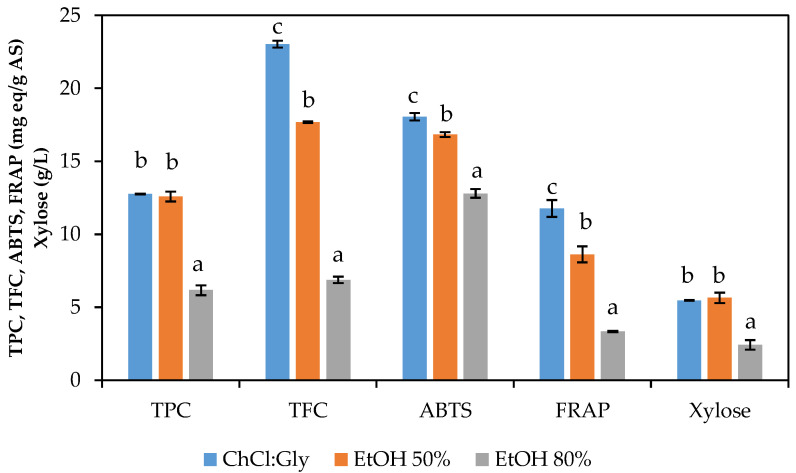
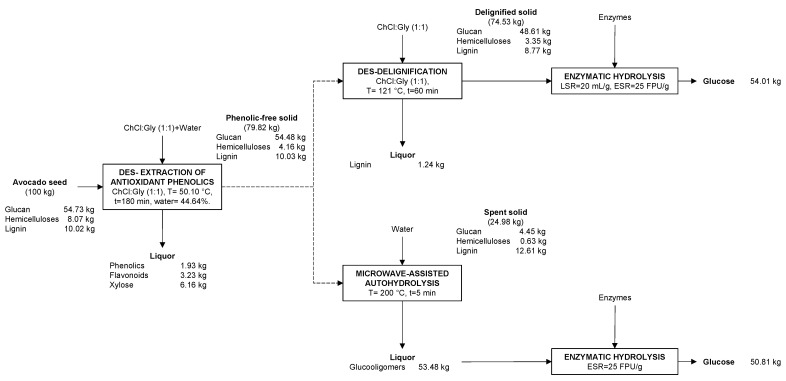
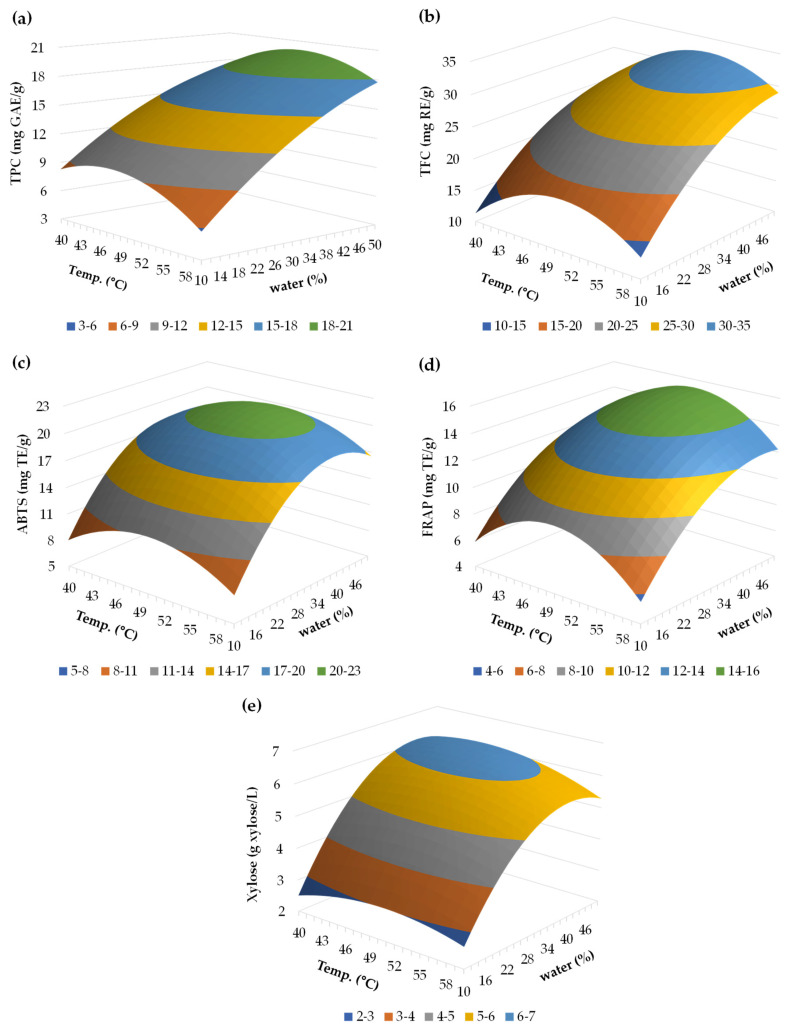
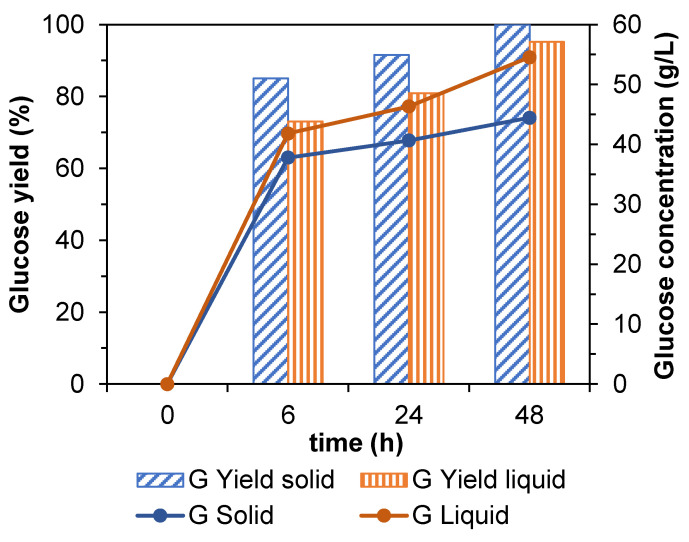
Avocado seeds represent the chief waste produced in avocado processing, leading not only to environmental problems regarding its elimination but to a loss of economic profitability. In fact, avocado seeds are known as interesting sources of bioactive compounds and carbohydrates, so their utilization may reduce the negative effect produced during the industrial manufacture of avocado-related products. In this sense, deep eutectic solvents (DES) are a novel greener alternative than organic solvents to extract bioactive polyphenols and carbohydrates. The study was based on a Box-Behnken experimental design to study the effect of three factors, temperature (40, 50, 60 °C), time (60, 120, 180 min) and water content (10, 30, 50% /) on the responses of total phenolic (TPC) and flavonoid content (TFC), antioxidant capacity (measured as ABTS and FRAP) and xylose content in the extract. The DES Choline chloride:glycerol (1:1) was used as solvent on avocado seed. Under optimal conditions, TPC: 19.71 mg GAE/g, TFC: 33.41 mg RE/g, ABTS: 20.91 mg TE/g, FRAP: 15.59 mg TE/g and xylose: 5.47 g/L were obtained. The tentative identification of eight phenolic compounds was assayed via HPLC-ESI. The carbohydrate content of the solid residue was also evaluated, and that solid was subjected to two different processing (delignification with DES and microwave-assisted autohydrolysis) to increase the glucan susceptibility to enzymes, and was also assayed reaching almost quantitative glucose yields. These results, added to the non-toxic, eco-friendly, and economic nature of DES, demonstrate that these solvents are an efficient alternative to organic solvents to recover phenolics and carbohydrates from food wastes.
鳄梨种子是鳄梨加工过程中产生的主要废弃物,这不仅会引发与废弃物处理相关的环境问题,还会导致经济收益的损失。事实上,鳄梨种子是生物活性化合物和碳水化合物的有趣来源,因此对其加以利用可能会减少鳄梨相关产品工业生产过程中产生的负面影响。从这个意义上讲,与有机溶剂相比,深共晶溶剂(DES)是一种新型的更环保的替代物,可用于提取生物活性多酚和碳水化合物。该研究基于Box-Behnken实验设计,以研究温度(40、50、60℃)、时间(60、120、180分钟)和含水量(10%、30%、50%)这三个因素对提取物中总酚含量(TPC)、黄酮含量(TFC)、抗氧化能力(以ABTS和FRAP衡量)以及木糖含量的影响。将氯化胆碱:甘油(1:1)的深共晶溶剂用作鳄梨种子的溶剂。在最佳条件下,获得了以下结果:TPC为19.71毫克没食子酸当量/克,TFC为33.41毫克芦丁当量/克,ABTS为20.91毫克 Trolox当量/克,FRAP为15.59毫克 Trolox当量/克,木糖为5.47克/升。通过HPLC-ESI对八种酚类化合物进行了初步鉴定。还评估了固体残渣的碳水化合物含量,并对该固体进行了两种不同的处理(用深共晶溶剂脱木质素和微波辅助自水解),以提高葡聚糖对酶的敏感性,并且还进行了分析,几乎达到了定量的葡萄糖产率。这些结果,再加上深共晶溶剂无毒、环保且经济的特性,表明这些溶剂是从食品废弃物中回收酚类和碳水化合物的有机溶剂的有效替代品。