Brito Ramayana Morais de Medeiros, da Silva Maria Carolina Machado, Vieira-Santos Flaviane, de Almeida Lopes Camila, Souza Jorge Lucas Nascimento, Bastilho Alexandre Lazoski, de Barros Fernandes Heliana, de Miranda Aline Silva, de Oliveira Antônio Carlos Pinheiro, de Almeida Vitor Ricardo Wagner, de Andrade-Neto Valter Ferreira, Bueno Lilian Lacerda, Fujiwara Ricardo Toshio, Magalhães Luísa Mourão Dias
Laboratory of Immunobiology and Control of Parasites, Department of Parasitology, Institute of Biological Sciences, Federal University of Minas Gerais, Belo Horizonte, MG, Brazil.
Laboratory of Malaria and Toxoplasmosis Biology, Department of Microbiology and Parasitology, Biosciences Centre, Federal University of Rio Grande do Norte, Natal, RN, Brazil.
Brain Behav Immun Health. 2023 Jun 10;30:100652. doi: 10.1016/j.bbih.2023.100652. eCollection 2023 Jul.
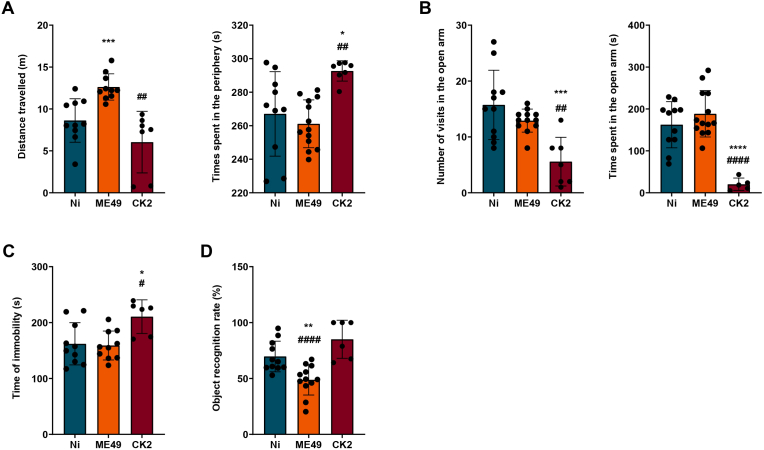
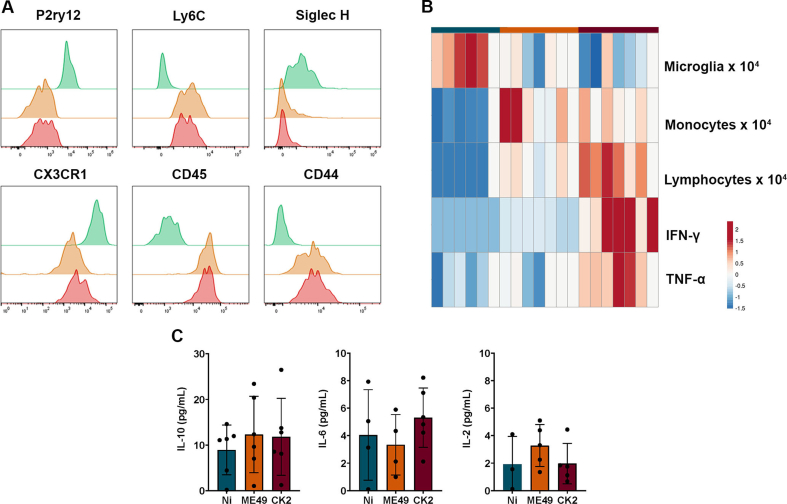
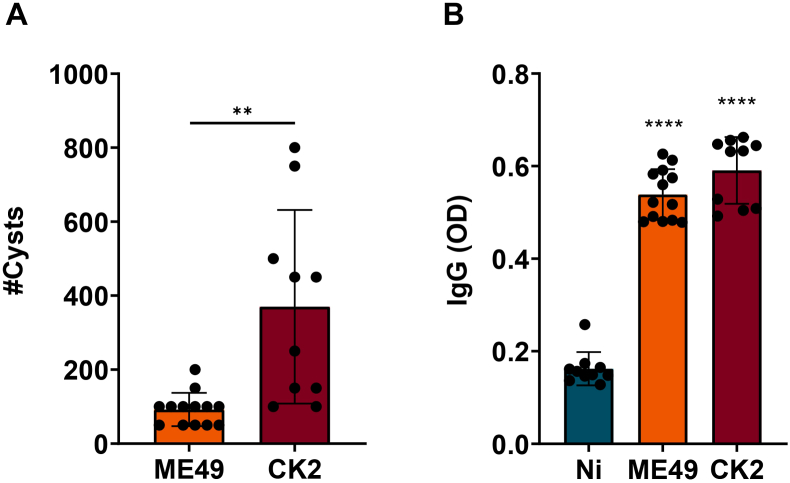
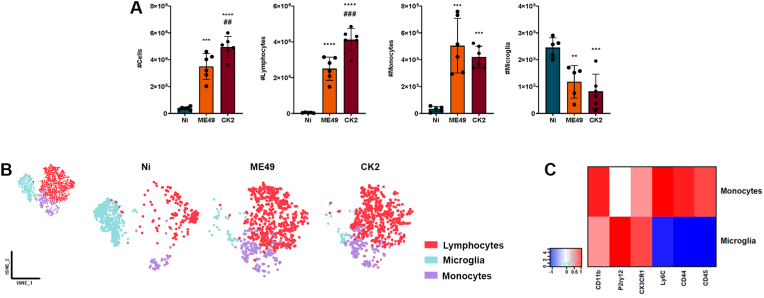
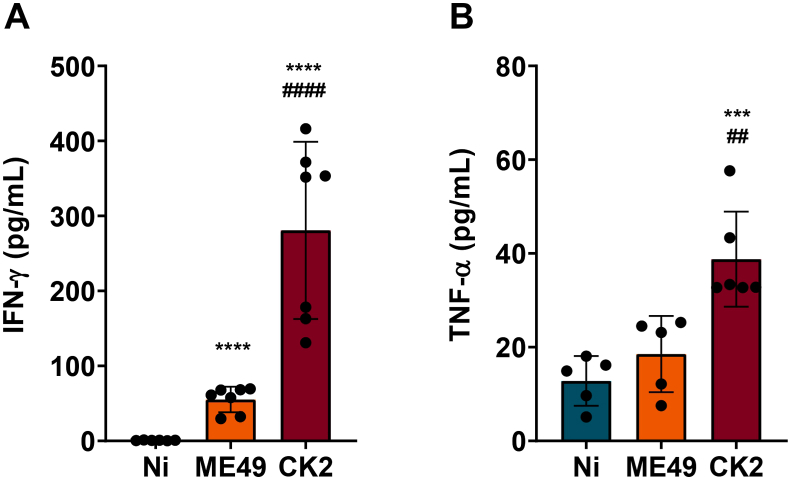
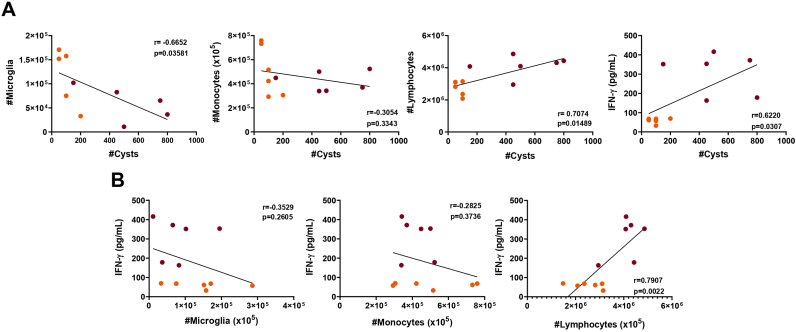
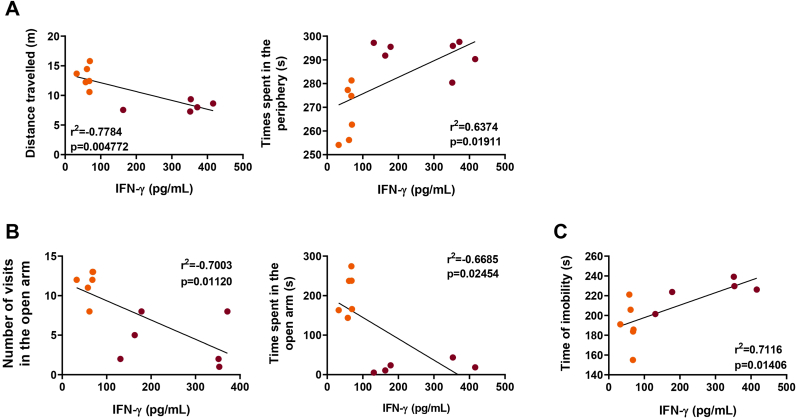
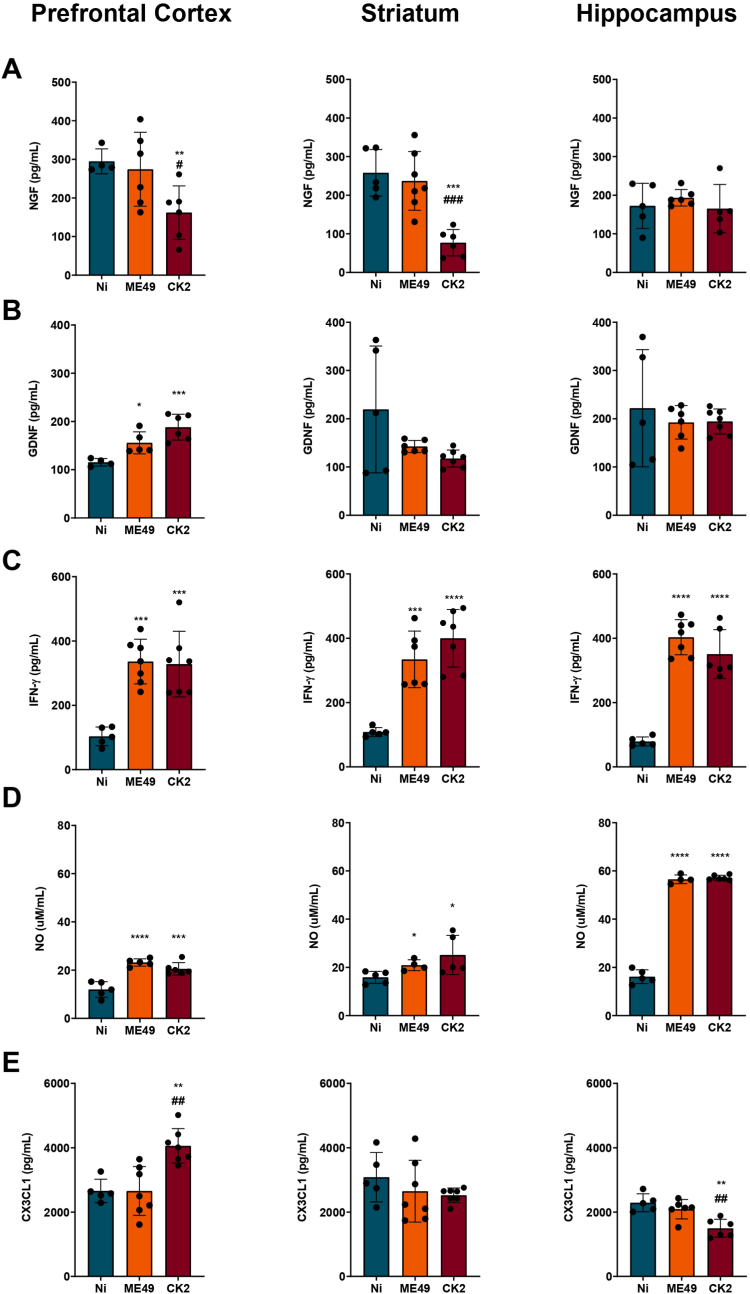
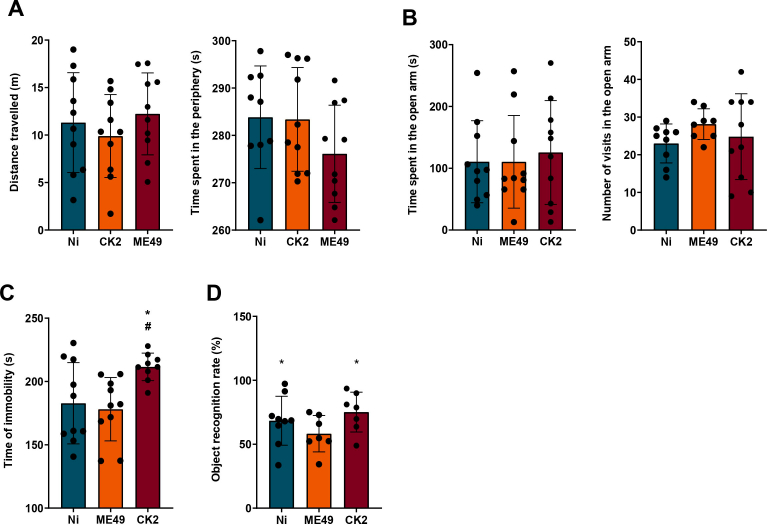
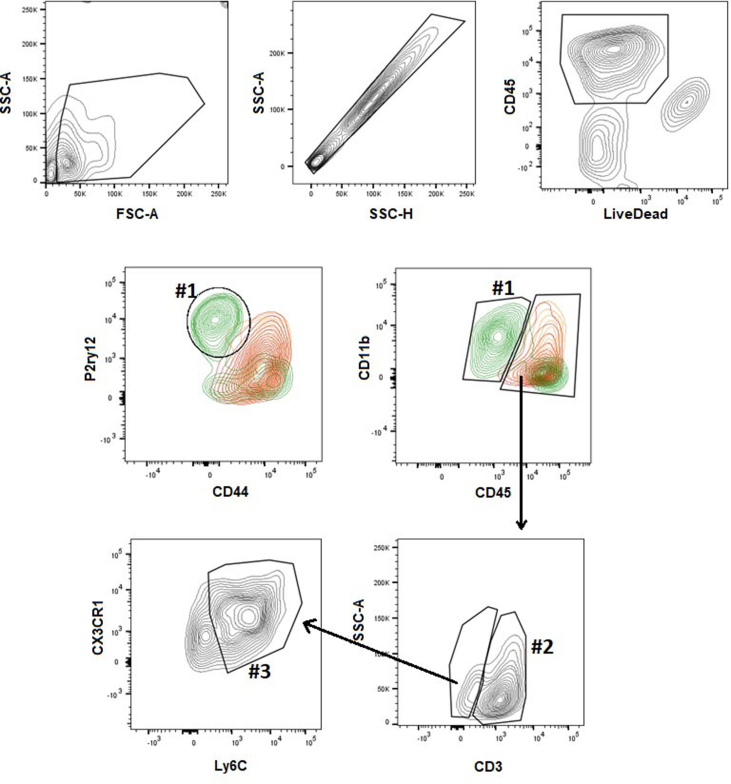
chronic infection is characterized by the establishment of tissue cysts in the brain and increased levels of IFN-γ, which can lead to brain circuitry interference and consequently abnormal behaviour in mice. In this sense, the study presented here sought to investigate the impact of chronic infection by two strains in the brain of infection-resistant mice, as a model for studying the involvement of chronic neuroinflammation with the development of behavioural alterations. For that, male BALB/c mice were divided into three groups: non-infected (Ni), infected with ME49 clonal strain (ME49), and infected with TgCkBrRN2 atypical strain (CK2). Mice were monitored for 60 days to establish the chronic infection and then submitted to behavioural assessment. The enzyme-linked immunosorbent assay was used for measurement of specific IgG in the blood and levels of inflammatory cytokines and neurotrophic factors in the brain, and the cell's immunophenotype was determined by multiparametric flow cytometry. Mice infected with ME49 clonal strain displayed hyperlocomotor activity and memory deficit, although no signs of depressive- and/or anxiety-like behaviour were detected; on the other hand, chronic infection with CK2 atypical strain induced anxiety- and depressive-like behaviour. During chronic infection by CK2 atypical strain, mice displayed a higher number of brain tissue cysts and inflammatory infiltrate, composed mainly of CD3 T lymphocytes and Ly6C inflammatory monocytes, compared to mice infected with the ME49 clonal strain. Infected mice presented a marked decrease of microglia population compared to non-infected group. Chronic infection with CK2 strain produced elevated levels of IFN-γ and TNF-ɑ in the brain, decreased NGF levels in the prefrontal cortex and striatum, and altered levels of fractalkine (CX3CL1) in the prefrontal cortex and hippocampus. The persistent inflammation and the disturbance in the cerebral homeostasis may contribute to altered behaviour in mice, as the levels of IFN-γ were shown to be correlated with the behavioural parameters assessed here. Considering the high incidence and life-long persistence of infection, this approach can be considered a suitable model for studying the impact of chronic infections in the brain and how it impacts in behavioural responses.
慢性感染的特征是在大脑中形成组织囊肿以及干扰素-γ水平升高,这会导致大脑神经回路干扰,进而使小鼠出现异常行为。从这个意义上讲,本研究旨在调查两种菌株的慢性感染对抗感染小鼠大脑的影响,以此作为研究慢性神经炎症与行为改变发展之间关系的模型。为此,将雄性BALB/c小鼠分为三组:未感染组(Ni)、感染ME49克隆株组(ME49)和感染TgCkBrRN2非典型株组(CK2)。对小鼠进行60天的监测以建立慢性感染,然后进行行为评估。采用酶联免疫吸附测定法测量血液中的特异性IgG以及大脑中炎性细胞因子和神经营养因子的水平,并通过多参数流式细胞术确定细胞的免疫表型。感染ME49克隆株的小鼠表现出运动活动亢进和记忆缺陷,尽管未检测到抑郁和/或焦虑样行为的迹象;另一方面,感染CK2非典型株会诱发焦虑和抑郁样行为。与感染ME49克隆株的小鼠相比,在感染CK2非典型株的慢性感染过程中,小鼠的脑组织囊肿和炎性浸润数量更多,主要由CD3 T淋巴细胞和Ly6C炎性单核细胞组成。与未感染组相比,感染小鼠的小胶质细胞数量明显减少。感染CK2株的慢性感染导致大脑中干扰素-γ和肿瘤坏死因子-α水平升高,前额叶皮质和纹状体中神经生长因子水平降低,前额叶皮质和海马体中趋化因子(CX3CL1)水平改变。持续的炎症和脑内稳态的紊乱可能导致小鼠行为改变,因为干扰素-γ水平与这里评估的行为参数相关。考虑到感染的高发病率和终身持续性,这种方法可被视为研究慢性感染对大脑的影响及其对行为反应影响的合适模型。