Bleibel Layla, Dziomba Szymon, Waleron Krzysztof Franciszek, Kowalczyk Edward, Karbownik Michał Seweryn
Department of Pharmacology and Toxicology, Medical University of Lodz, Łódź, Poland.
Department of Toxicology, Medical University of Gdansk, Gdańsk, Poland.
Front Microbiol. 2023 Jun 15;14:1211447. doi: 10.3389/fmicb.2023.1211447. eCollection 2023.
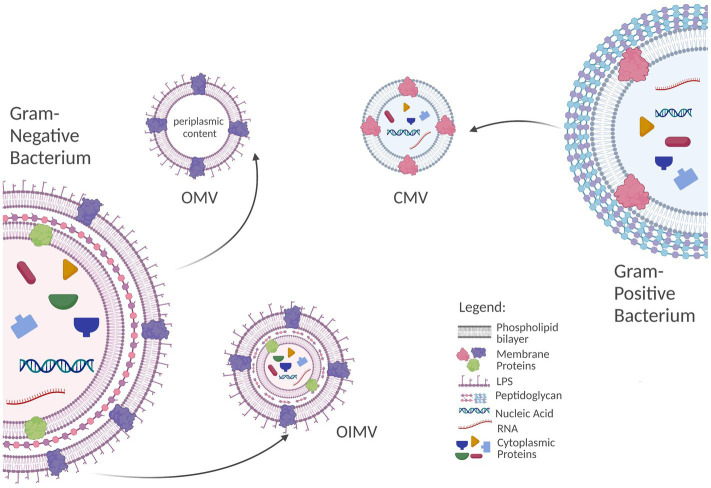
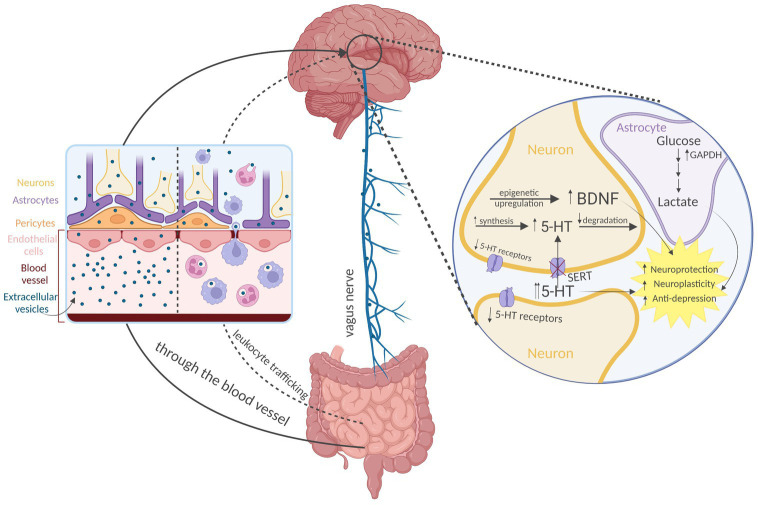
The intake of psychobiotic bacteria appears to be a promising adjunct to neuropsychiatric treatment, and their consumption may even be beneficial for healthy people in terms of mental functioning. The psychobiotics' mechanism of action is largely outlined by the gut-brain axis; however, it is not fully understood. Based on very recent studies, we provide compelling evidence to suggest a novel understanding of this mechanism: bacterial extracellular vesicles appear to mediate many known effects that psychobiotic bacteria exert on the brain. In this mini-review paper, we characterize the extracellular vesicles derived from psychobiotic bacteria to demonstrate that they can be absorbed from the gastrointestinal tract, penetrate to the brain, and carry the intracellular content to exert beneficial multidirectional action. Specifically, by regulating epigenetic factors, extracellular vesicles from psychobiotics appear to enhance expression of neurotrophic molecules, improve serotonergic neurotransmission, and likely supply astrocytes with glycolytic enzymes to favor neuroprotective mechanisms. As a result, some data suggest an antidepressant action of extracellular vesicles that originate even from taxonomically remote psychobiotic bacteria. As such, these extracellular vesicles may be regarded as postbiotics of potentially therapeutic application. The mini-review is enriched with illustrations to better introduce the complex nature of brain signaling mediated by bacterial extracellular vesicles and indicates knowledge gaps that require scientific exploration before further progress is made. In conclusion, bacterial extracellular vesicles appear to represent the missing piece of the puzzle in the mechanism of action of psychobiotics.
摄入精神益生菌似乎是神经精神疾病治疗的一种有前景的辅助手段,甚至对健康人的心理功能也可能有益。精神益生菌的作用机制很大程度上由肠脑轴概述;然而,其尚未完全被理解。基于最近的研究,我们提供了令人信服的证据,以提出对这一机制的新认识:细菌细胞外囊泡似乎介导了精神益生菌对大脑产生的许多已知影响。在这篇小型综述论文中,我们对源自精神益生菌的细胞外囊泡进行了表征,以证明它们可以从胃肠道吸收,穿透进入大脑,并携带细胞内物质发挥有益的多向作用。具体而言,通过调节表观遗传因子,精神益生菌的细胞外囊泡似乎能增强神经营养分子的表达,改善血清素能神经传递,并可能为星形胶质细胞提供糖酵解酶以促进神经保护机制。因此,一些数据表明,即使是分类学上距离较远的精神益生菌产生的细胞外囊泡也具有抗抑郁作用。因此,这些细胞外囊泡可被视为具有潜在治疗应用价值的后生元。这篇小型综述配有插图,以更好地介绍细菌细胞外囊泡介导的脑信号传导的复杂性质,并指出在取得进一步进展之前需要科学探索的知识空白。总之,细菌细胞外囊泡似乎代表了精神益生菌作用机制中缺失的一环。