Department of Pharmacology and Regenerative Medicine, University of Illinois at Chicago, Chicago, IL, USA.
University of Illinois Cancer Center, Chicago, IL, USA.
RNA Biol. 2023 Jan;20(1):398-408. doi: 10.1080/15476286.2023.2229596.
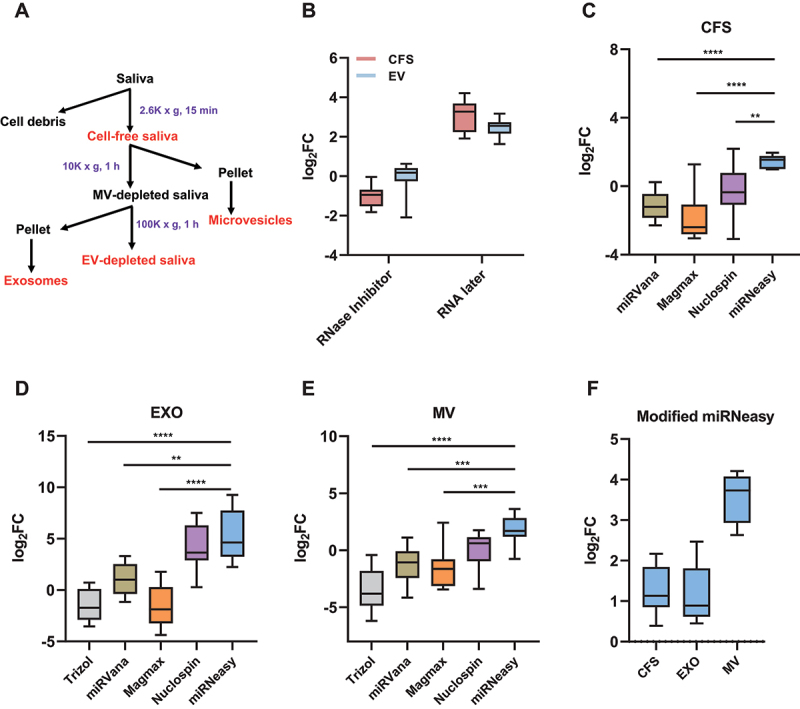
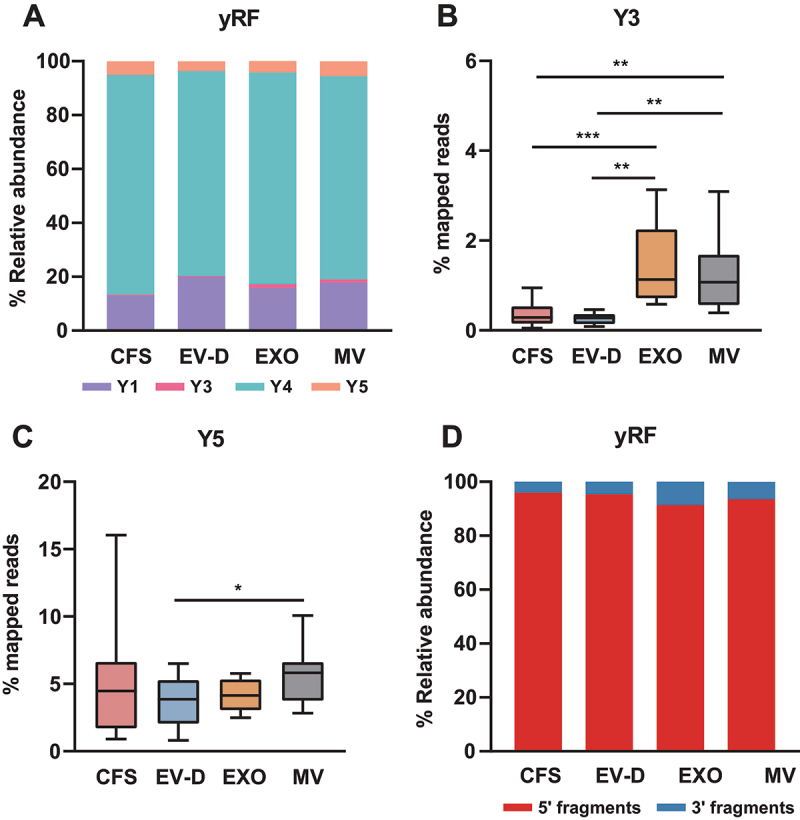
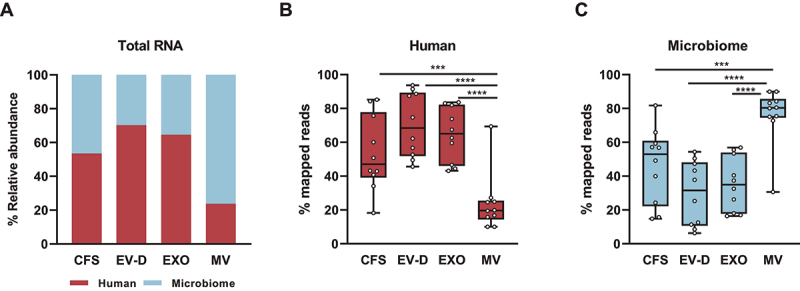
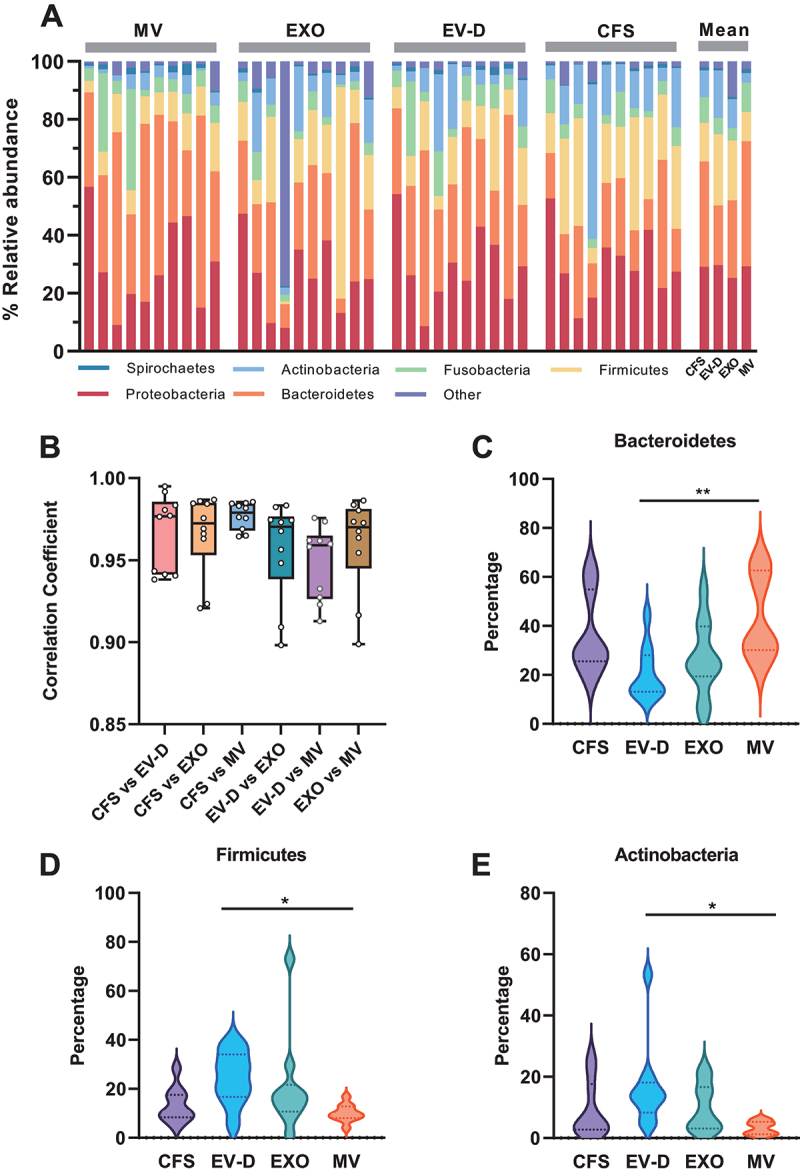
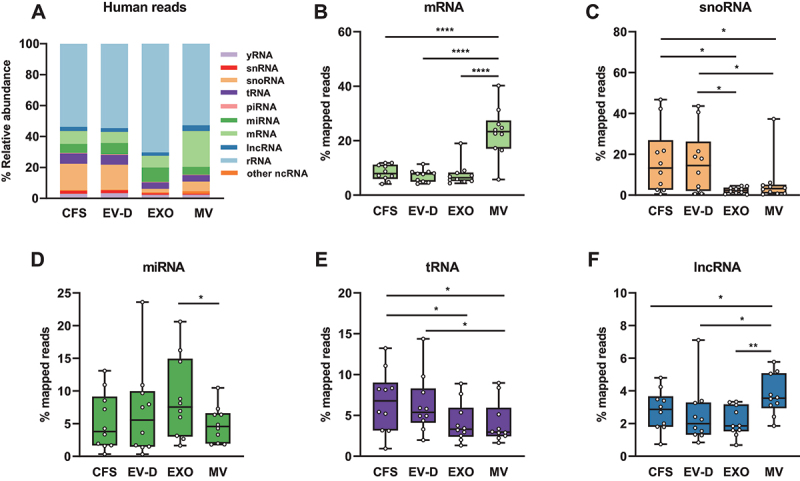
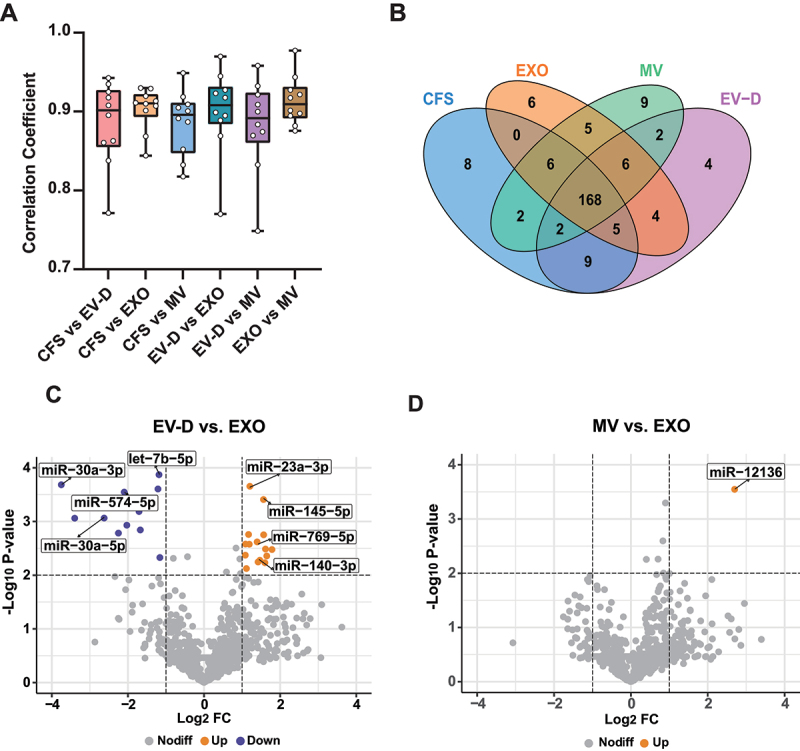
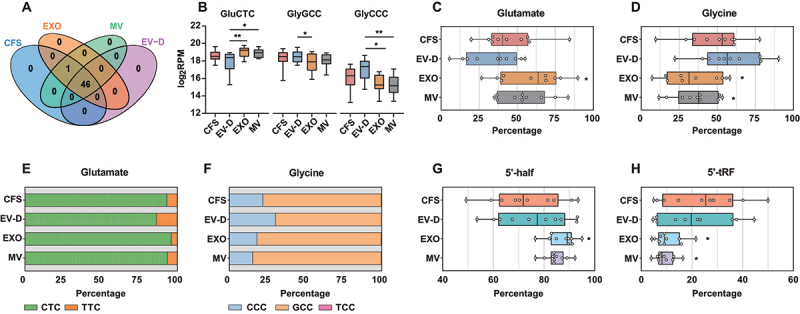
Saliva is a convenient non-invasive source of liquid biopsy to monitor human health and diagnose diseases. In particular, extracellular vesicles (EVs) in saliva can potentially reveal clinically relevant information for systemic health. Recent studies have shown that RNA in saliva EVs could be exploited as biomarkers for disease diagnosis. However, there is no standardized protocol for profiling RNA in saliva EV nor clear guideline on selecting saliva fractions for biomarker analysis. To address these issues, we established a robust protocol for small RNA profiling from fractionated saliva. With this method, we performed comprehensive small RNA sequencing of four saliva fractions, including cell-free saliva (CFS), EV-depleted saliva (EV-D), exosome (EXO), and microvesicle (MV) from ten healthy volunteers. By comparing the expression profiles of total RNA from these fractions, we found that MV was most enriched in microbiome RNA (76.2% of total reads on average), whereas EV-D was notably enriched in human RNA (70.3% of total reads on average). As for human RNA composition, CFS and EV-D were both enriched in snoRNA and tRNA compared with the two EV fractions (EXO and MV, < 0.05). Interestingly, EXO and MV had highly correlated expression profiles for various noncoding RNAs such as miRNA, tRNA, and yRNA. Our study revealed unique characteristics of circulating RNAs in various saliva fractions, which provides a guideline on preparing saliva samples to study specific RNA biomarkers of interest.
唾液是一种方便的非侵入性液体活检来源,可用于监测人体健康和诊断疾病。特别是,唾液中的细胞外囊泡 (EVs) 可能可以揭示与全身健康相关的临床相关信息。最近的研究表明,唾液 EVs 中的 RNA 可以作为疾病诊断的生物标志物。然而,目前还没有用于分析唾液 EV 中 RNA 的标准化方案,也没有用于生物标志物分析的唾液分数选择的明确准则。为了解决这些问题,我们建立了一种从分馏唾液中分析小 RNA 的稳健方案。使用该方法,我们对来自十个健康志愿者的四种唾液部分,包括无细胞唾液 (CFS)、EV 耗尽唾液 (EV-D)、外泌体 (EXO) 和微泡 (MV),进行了全面的小 RNA 测序。通过比较这些部分中总 RNA 的表达谱,我们发现 MV 最富集微生物组 RNA(平均总读数的 76.2%),而 EV-D 则显著富集人类 RNA(平均总读数的 70.3%)。就人类 RNA 组成而言,与两种 EV 部分 (EXO 和 MV,<0.05) 相比,CFS 和 EV-D 均富集 snoRNA 和 tRNA。有趣的是,EXO 和 MV 对各种非编码 RNA(如 miRNA、tRNA 和 yRNA)的表达谱高度相关。我们的研究揭示了各种唾液部分中循环 RNA 的独特特征,为研究特定感兴趣的 RNA 生物标志物准备唾液样本提供了指导。