Liu Jia, Wu Junduo, Li Longbo, Li Tianyi, Wang Junnan
Department of Cardiology, The Second Hospital of Jilin University, Changchun, China.
Front Pharmacol. 2020 Dec 8;11:603104. doi: 10.3389/fphar.2020.603104. eCollection 2020.
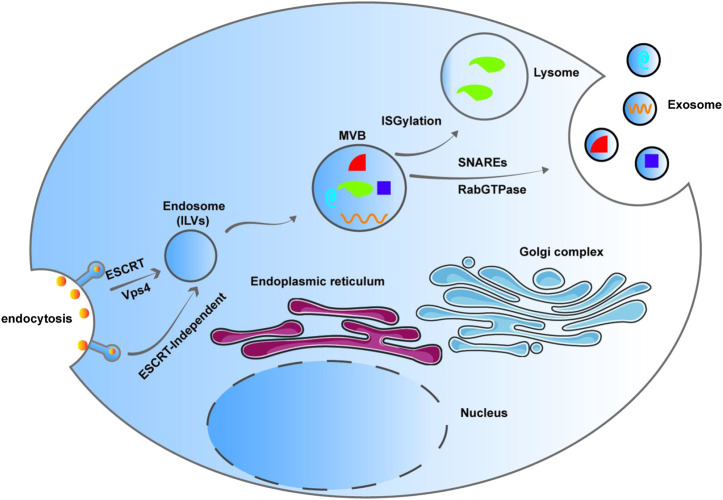
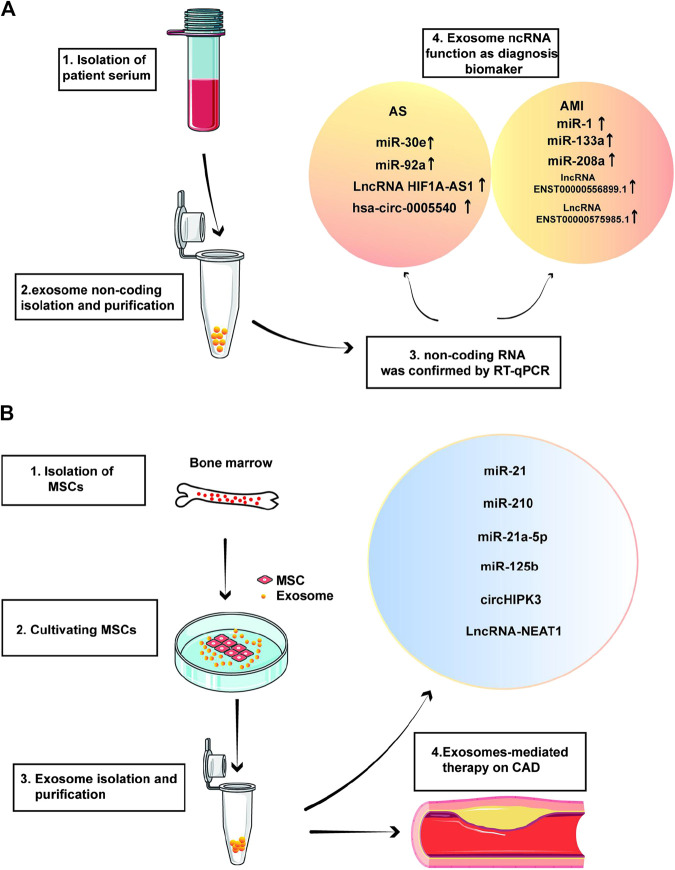
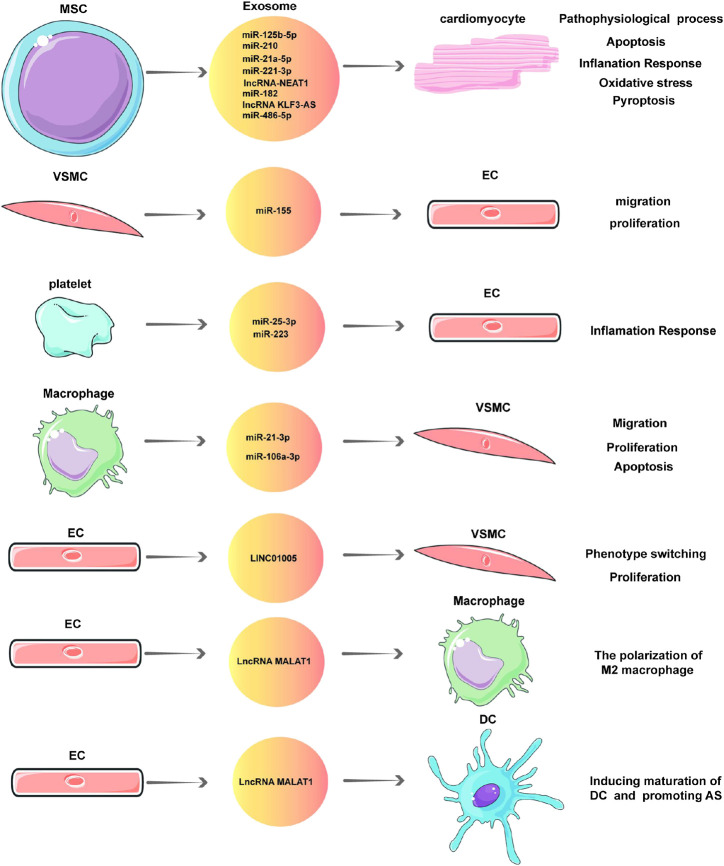
Cardiovascular disease (CVD) remains the leading cause of morbidity and mortality worldwide. Atherosclerosis (AS) is a major cause of CVD. Oxidative stress, endothelial dysfunction, and inflammation are key factors involved in the development and progression of AS. Exosomes are nano-sized vesicles secreted into the extracellular space by most types of cells, and are ideal substances for the transmission and integration of signals between cells. Cells can selectively encapsulate biologically active substances, such as lipids, proteins and RNA in exosomes and act through paracrine mechanisms. Non-coding RNAs (ncRNAs) are important for communication between cells. They can reach the recipient cells through exosomes, causing phenotypic changes and playing a molecular regulatory role in cell function. Elucidating their molecular mechanisms can help identify therapeutic targets or strategies for CVD. Coronary artery disease (CAD) is the most important disease in CVD. Here, we review the role and the regulatory mechanism of exosomal ncRNAs in the pathophysiology of CAD, as well as the potential contribution of exosomal ncRNA to diagnosis and treatment of CAD.
心血管疾病(CVD)仍然是全球发病和死亡的主要原因。动脉粥样硬化(AS)是CVD的主要原因。氧化应激、内皮功能障碍和炎症是参与AS发生和发展的关键因素。外泌体是大多数类型细胞分泌到细胞外空间的纳米级囊泡,是细胞间信号传递和整合的理想物质。细胞可以选择性地将生物活性物质,如脂质、蛋白质和RNA包裹在外泌体中,并通过旁分泌机制发挥作用。非编码RNA(ncRNAs)对细胞间通讯很重要。它们可以通过外泌体到达受体细胞,引起表型变化并在细胞功能中发挥分子调节作用。阐明其分子机制有助于确定CVD的治疗靶点或策略。冠状动脉疾病(CAD)是CVD中最重要的疾病。在此,我们综述外泌体ncRNAs在CAD病理生理学中的作用和调控机制,以及外泌体ncRNA对CAD诊断和治疗的潜在贡献。