Reproductive Medicine Center, The Sixth Affiliated Hospital of Sun Yat-sen University, Guangzhou, 510655, China.
Guangdong Engineering Technology Research Center of Fertility Preservation, Guangzhou, 510610, China.
Adv Sci (Weinh). 2023 Sep;10(26):e2301538. doi: 10.1002/advs.202301538. Epub 2023 Jul 3.
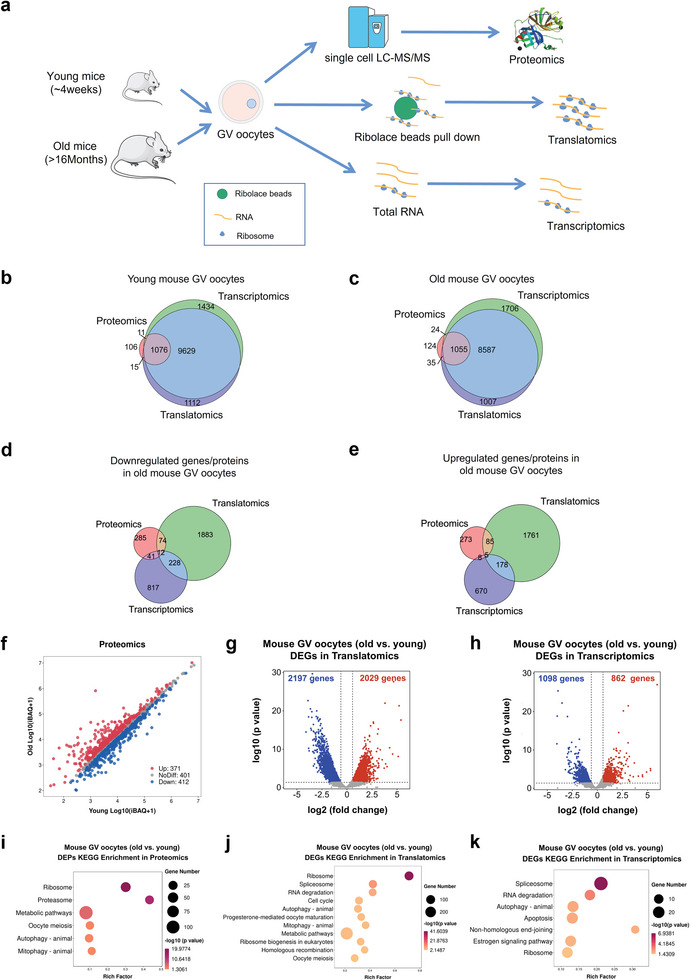
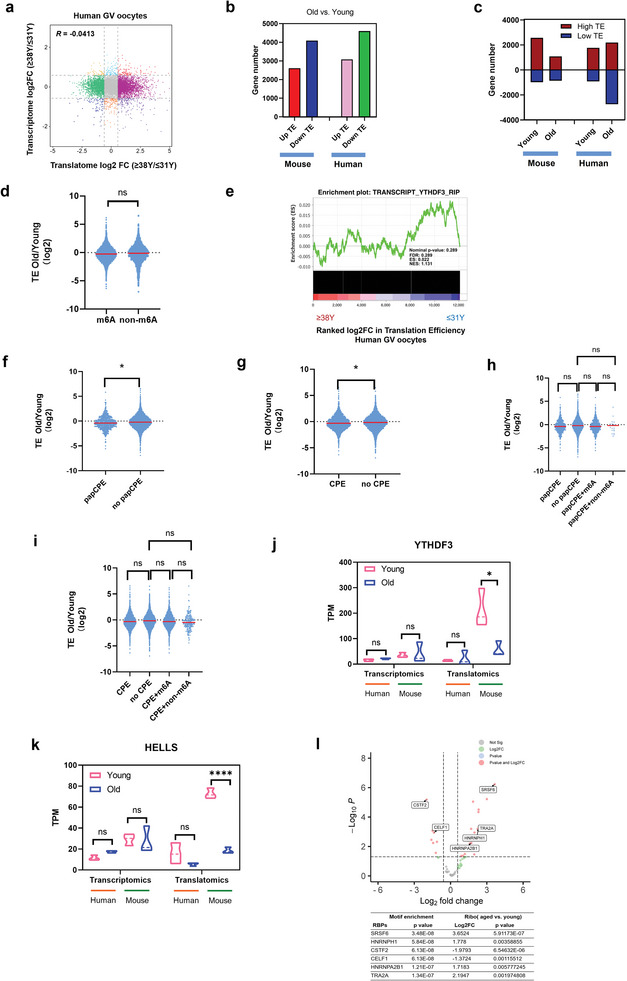
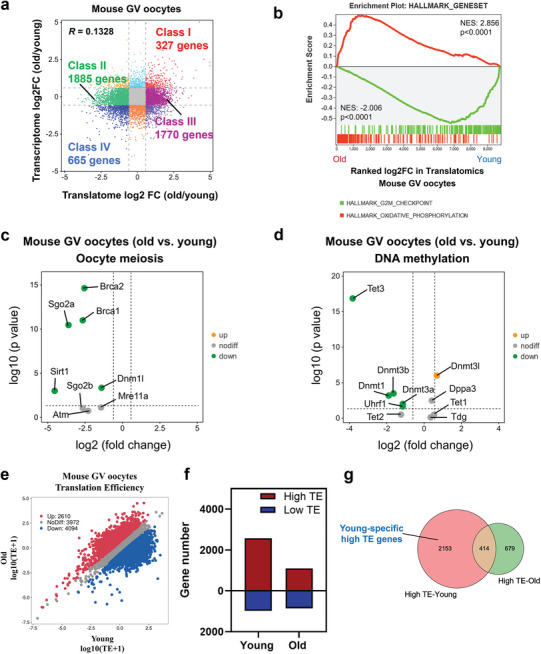
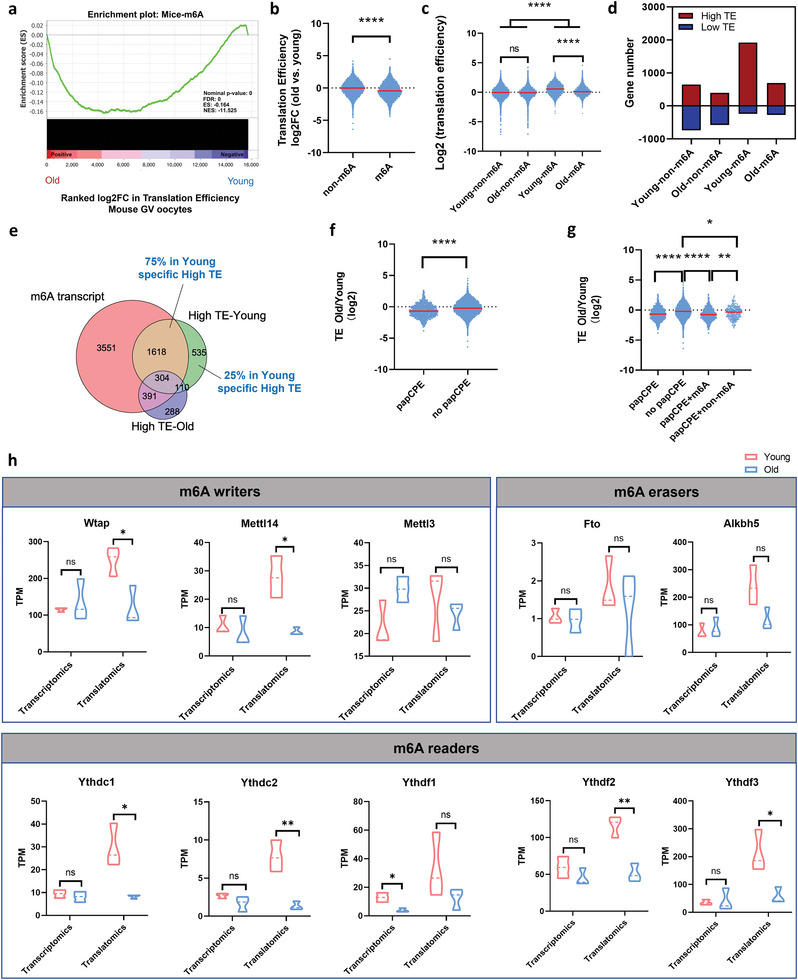
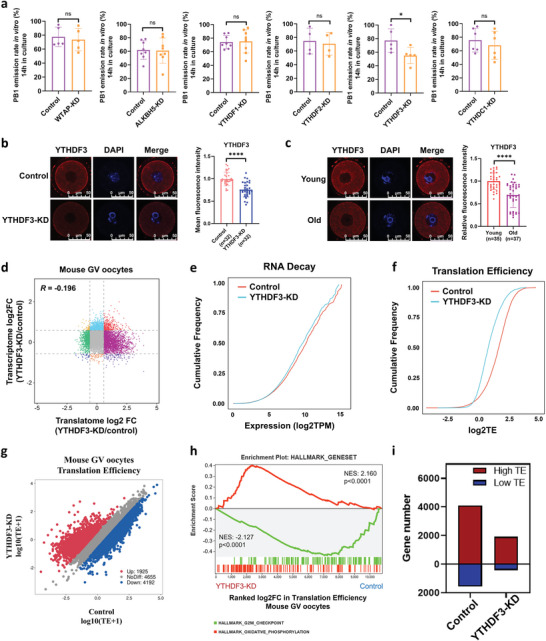
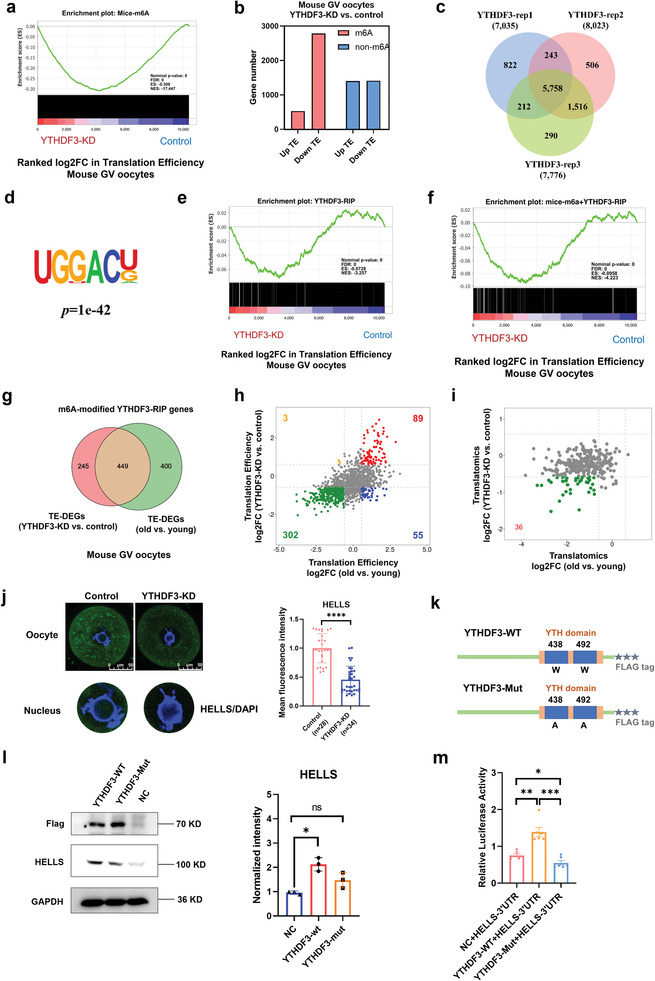
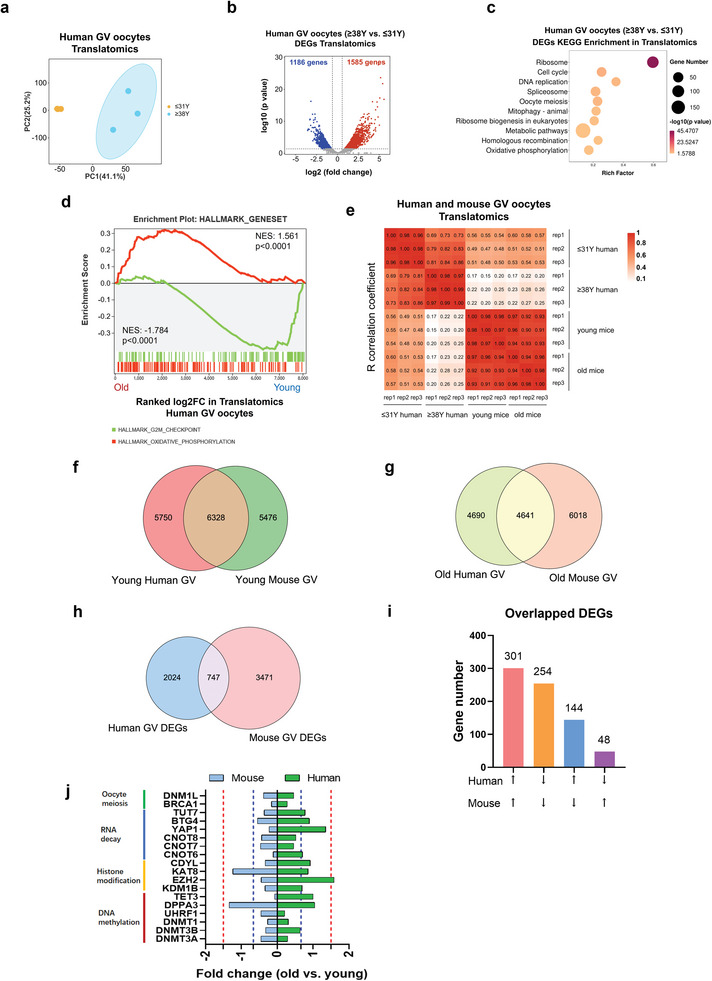
Abnormal resumption of meiosis and decreased oocyte quality are hallmarks of maternal aging. Transcriptional silencing makes translational control an urgent task during meiosis resumption in maternal aging. However, insights into aging-related translational characteristics and underlying mechanisms are limited. Here, using multi-omics analysis of oocytes, it is found that translatomics during aging is related to changes in the proteome and reveals decreased translational efficiency with aging phenotypes in mouse oocytes. Translational efficiency decrease is associated with the N6-methyladenosine (m6A) modification of transcripts. It is further clarified that m6A reader YTHDF3 is significantly decreased in aged oocytes, inhibiting oocyte meiotic maturation. YTHDF3 intervention perturbs the translatome of oocytes and suppress the translational efficiency of aging-associated maternal factors, such as Hells, to affect the oocyte maturation. Moreover, the translational landscape is profiled in human oocyte aging, and the similar translational changes of epigenetic modifications regulators between human and mice oocyte aging are observed. In particular, due to the translational silence of YTHDF3 in human oocytes, translation activity is not associated with m6A modification, but alternative splicing factor SRSF6. Together, the findings profile the specific translational landscapes during oocyte aging in mice and humans, and uncover non-conservative regulators on translation control in meiosis resumption and maternal aging.
减数分裂异常恢复和卵母细胞质量下降是母体衰老的标志。转录沉默使得在母体衰老的减数分裂恢复期间翻译控制成为当务之急。然而,对于与衰老相关的翻译特征和潜在机制的了解有限。在这里,通过对卵母细胞的多组学分析,发现衰老过程中的转译组学与蛋白质组的变化有关,并揭示了小鼠卵母细胞中与衰老表型相关的翻译效率降低。翻译效率的降低与转录本的 N6-甲基腺苷(m6A)修饰有关。进一步阐明,衰老卵母细胞中 m6A 阅读器 YTHDF3 显著减少,抑制卵母细胞减数分裂成熟。YTHDF3 的干预扰乱了卵母细胞的转译组,并抑制了与衰老相关的母性因子(如 Hells)的翻译效率,从而影响卵母细胞的成熟。此外,对人类卵母细胞衰老的翻译景观进行了分析,观察到人类和小鼠卵母细胞衰老之间表观遗传修饰调节剂的类似翻译变化。特别是,由于人类卵母细胞中 YTHDF3 的翻译沉默,翻译活性与 m6A 修饰无关,而是与剪接因子 SRSF6 有关。总之,这些发现描绘了小鼠和人类卵母细胞衰老过程中的特定翻译景观,并揭示了减数分裂恢复和母体衰老过程中转录控制的非保守调节因子。