Bacteriophage Laboratory, Hirszfeld Institute of Immunology and Experimental Therapy, Polish Academy of Sciences, 53-114 Wroclaw, Poland.
Department of Neurosurgery, Wroclaw Medical University, Borowska 213, 54-427 Wroclaw, Poland.
Cells. 2023 Jun 26;12(13):1720. doi: 10.3390/cells12131720.
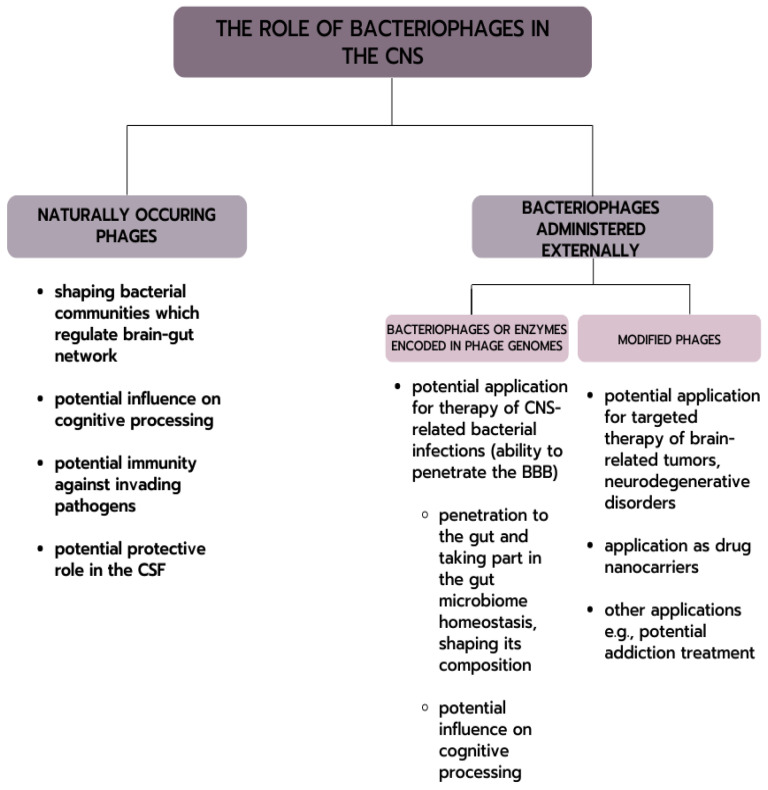
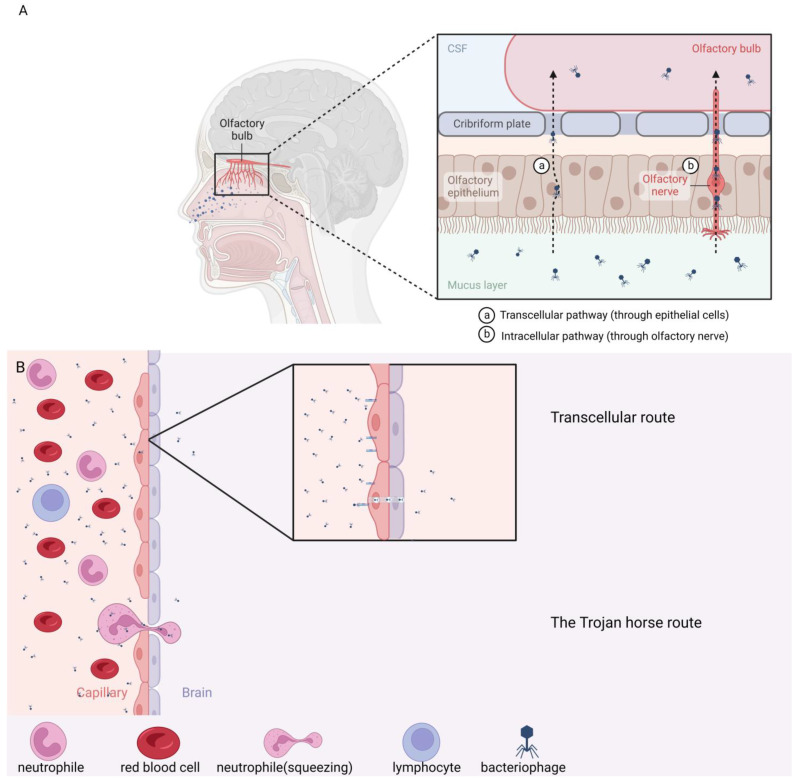
The central nervous system manages all of our activities (e.g., direct thinking and decision-making processes). It receives information from the environment and responds to environmental stimuli. Bacterial viruses (bacteriophages, phages) are the most numerous structures occurring in the biosphere and are also found in the human organism. Therefore, understanding how phages may influence this system is of great importance and is the purpose of this review. We have focused on the effect of natural bacteriophages in the central nervous system, linking them to those present in the gut microbiota, creating the gut-brain axis network, as well as their interdependence. Importantly, based on the current knowledge in the field of phage application (e.g., intranasal) in the treatment of bacterial diseases associated with the brain and nervous system, bacteriophages may have significant therapeutic potential. Moreover, it was indicated that bacteriophages may influence cognitive processing. In addition, phages (via phage display technology) appear promising as a targeted therapeutic tool in the treatment of, among other things, brain cancers. The information collected and reviewed in this work indicates that phages and their impact on the nervous system is a fascinating and, so far, underexplored field. Therefore, the aim of this review is not only to summarize currently available information on the association of phages with the nervous system, but also to stimulate future studies that could pave the way for novel therapeutic approaches potentially useful in treating bacterial and non-bacterial neural diseases.
中枢神经系统管理着我们所有的活动(例如,直接的思维和决策过程)。它从环境中接收信息并对环境刺激做出反应。细菌病毒(噬菌体,噬菌体)是生物圈中数量最多的结构,也存在于人体组织中。因此,了解噬菌体如何影响这个系统非常重要,这也是本综述的目的。我们专注于中枢神经系统中天然噬菌体的作用,将它们与肠道微生物群中存在的噬菌体联系起来,形成肠道-大脑轴网络,以及它们的相互依存关系。重要的是,基于噬菌体应用(例如,鼻内)领域的现有知识,在治疗与大脑和神经系统相关的细菌疾病方面,噬菌体可能具有重要的治疗潜力。此外,有迹象表明噬菌体可能影响认知处理。此外,噬菌体(通过噬菌体展示技术)似乎有望成为治疗脑癌等疾病的靶向治疗工具。本工作中收集和综述的信息表明,噬菌体及其对神经系统的影响是一个引人入胜且迄今为止尚未得到充分探索的领域。因此,本综述的目的不仅是总结目前关于噬菌体与神经系统关联的可用信息,还旨在激发未来的研究,为治疗细菌和非细菌性神经疾病的潜在新治疗方法铺平道路。