Grisolia Antonio, Dell'Olio Gianluca, Spadafora Angelica, De Santo Marzia, Morelli Catia, Leggio Antonella, Pasqua Luigi
Department of Environmental Engineering, University of Calabria, via P. Bucci, 87036 Arcavacata di Rende (CS), Italy.
Department of Pharmacy, Health and Nutritional Sciences, University of Calabria, via P. Bucci, 87036 Arcavacata di Rende (CS), Italy.
Molecules. 2023 Jun 29;28(13):5105. doi: 10.3390/molecules28135105.
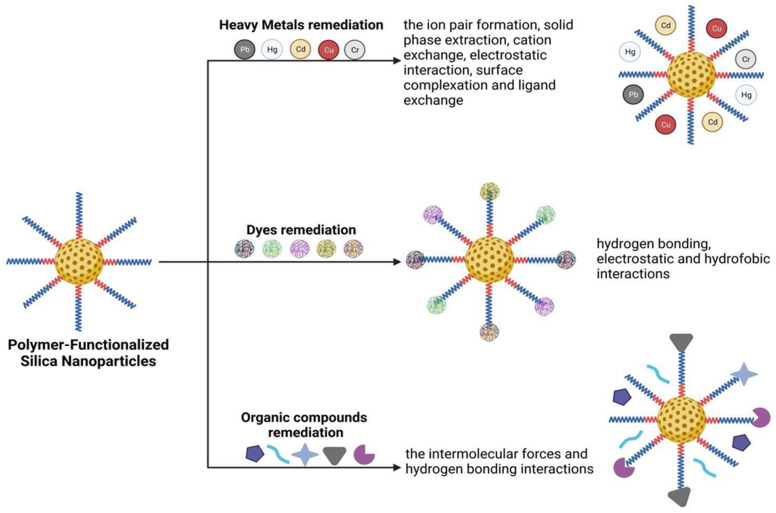
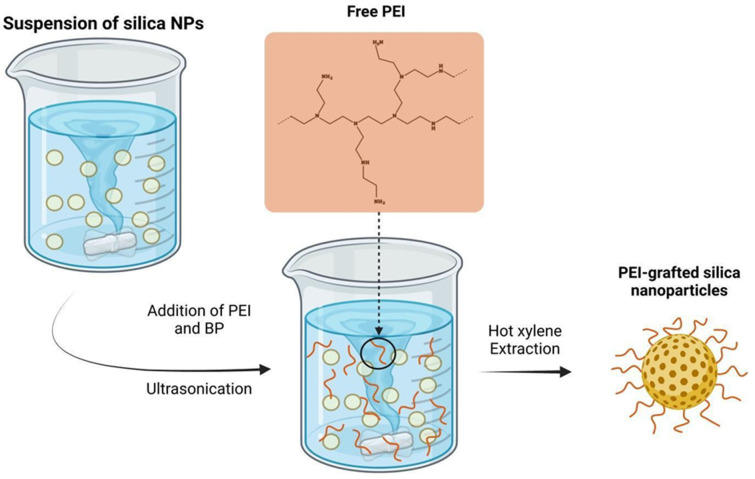
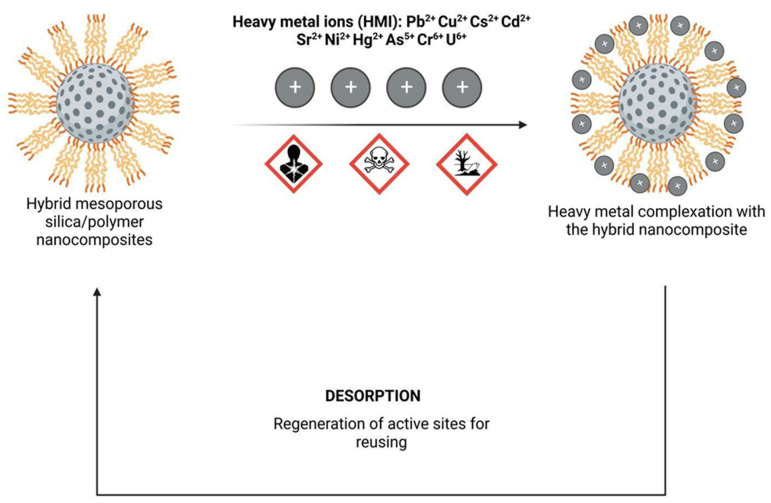
Due to the ever-growing global population, it is necessary to develop highly effective processes that minimize the impact of human activities and consumption on the environment. The levels of organic and inorganic contaminants have rapidly increased in recent years, posing a threat to ecosystems. Removing these toxic pollutants from the environment is a challenging task that requires physical, chemical, and biological methods. An effective solution involves the use of novel engineered materials, such as silica-based nanostructured materials, which exhibit a high removal capacity for various pollutants. The starting materials are also thermally and mechanically stable, allowing for easy design and development at the nanoscale through versatile functionalization procedures, enabling their effective use in pollutant capture. However, improvements concerning mechanical properties or applicability for repeated cycles may be required to refine their structural features. This review focuses on hybrid/composite polymer-silica nanostructured materials. The state of the art in nanomaterial synthesis, different techniques of functionalization, and polymer grafting are described. Furthermore, it explores the application of polymer-modified nanostructured materials for the capture of heavy metals, dyes, hydrocarbons and petroleum derivatives, drugs, and other organic compounds. The paper concludes by offering recommendations for future research aimed at advancing the application of polymer-silica nanostructured materials in the efficiency of pollutant uptake.
由于全球人口不断增长,有必要开发高效的工艺,以尽量减少人类活动和消费对环境的影响。近年来,有机和无机污染物的水平迅速上升,对生态系统构成威胁。从环境中去除这些有毒污染物是一项具有挑战性的任务,需要物理、化学和生物方法。一种有效的解决方案是使用新型工程材料,如硅基纳米结构材料,它对各种污染物具有很高的去除能力。起始材料在热和机械方面也很稳定,通过通用的功能化程序可以在纳米尺度上轻松设计和开发,使其能够有效地用于污染物捕获。然而,可能需要改进其机械性能或重复循环的适用性,以优化其结构特征。本综述重点关注杂化/复合聚合物-硅纳米结构材料。描述了纳米材料合成的现状、不同的功能化技术和聚合物接枝。此外,还探讨了聚合物改性纳米结构材料在捕获重金属、染料、碳氢化合物和石油衍生物、药物及其他有机化合物方面的应用。本文最后针对未来研究提出了建议,旨在提高聚合物-硅纳米结构材料在污染物吸收效率方面的应用。