Postgraduate Programme in Collective Health, Federal University of Maranhão, São Luís 65020-070, MA, Brazil.
Postgraduate Programme in Epidemiology, Federal University of Pelotas, Pelotas 96020-220, RS, Brazil.
Nutrients. 2023 Jun 30;15(13):2974. doi: 10.3390/nu15132974.
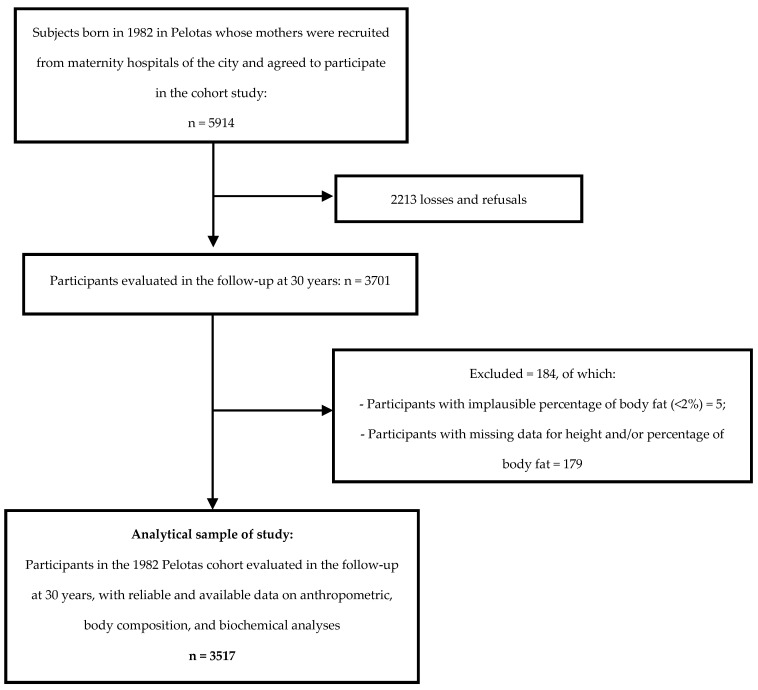
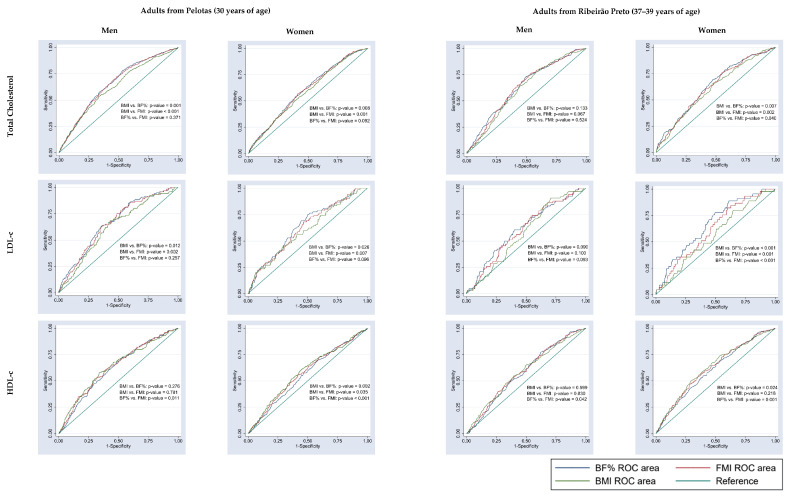
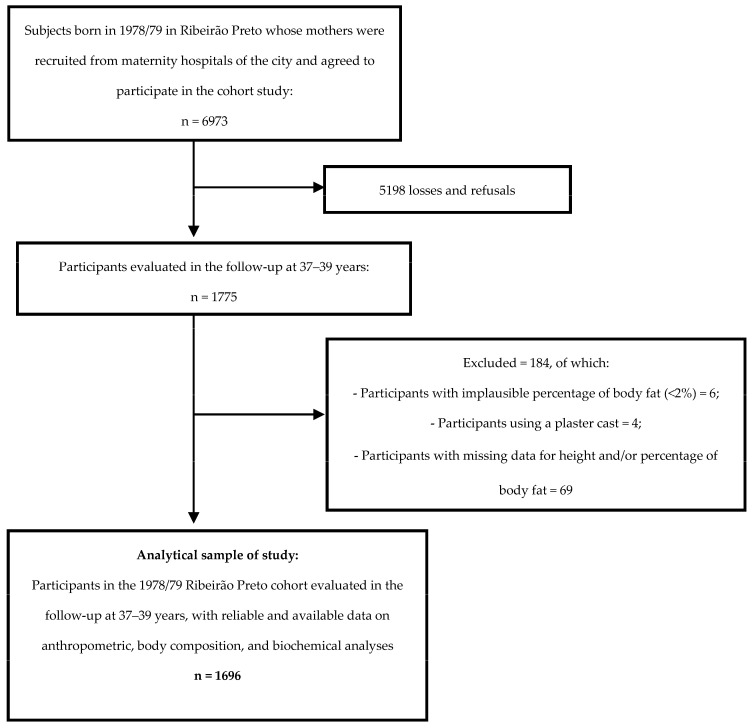
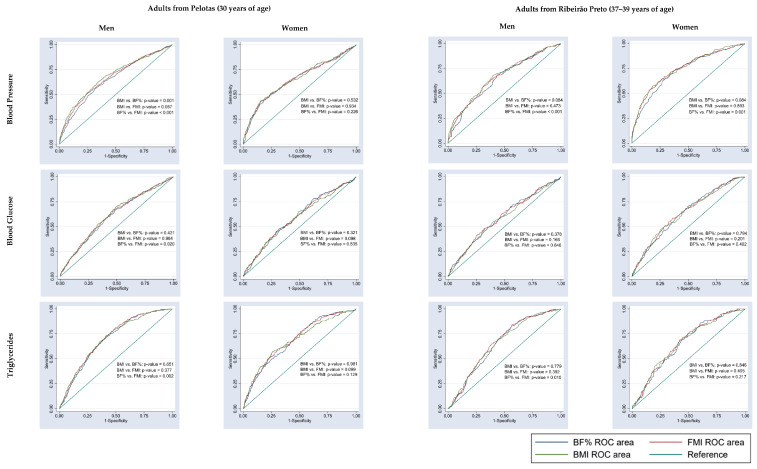
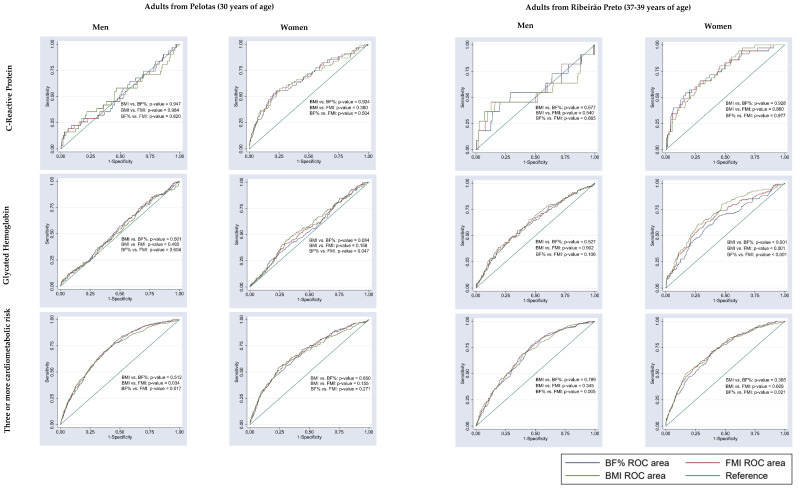
Obesity is a recognized risk factor for the development of cardiometabolic outcomes. Therefore, it is essential to evaluate anthropometric and body composition indicators used for its diagnosis. This study aimed to assess the diagnostic performance of body fat percentage (BF%), fat mass index (FMI) and body mass index (BMI) for detecting cardiometabolic outcomes in adults. A cross-sectional study was conducted involving adults at 30 years of age from Pelotas, RS (n = 3517) and at 37-39 years from Ribeirão Preto, SP (n = 1696). Receiver operating characteristic (ROC) curves were used to determine the cut-off points for predicting cardiometabolic risk factors, including altered blood pressure, blood glucose, triglycerides, total cholesterol, low-density lipoprotein cholesterol (LDL-c), high-density lipoprotein cholesterol (HDDL-c), C-reactive protein and glycated hemoglobin. The cut-off points of BF% ranged from 25.2 to 27.8 in men and from 37.4 to 39.7 in women at 30 years, and from 26.1 to 27.8 in men and from 38.5 to 42.2 in women at 37-39 years. For FMI (kg/m), the cut-off points ranged from 6.3 to 7.5 in men and from 9.5 to 10.8 in women at 30 years, and from 7.3 to 7.8 in men and from 10.2 to 12.2 in women at 37-39 years. The BMI cut-off points (kg/m) ranged from 26.3 to 27.3 in men and from 25.4 to 27.2 in women at 30 years, and from 28.3 to 29.0 in men and from 27.2 to 29.6 in women at 37-39 years. The areas under the curve were similar for the three indicators, ranging from 0.523 to 0.746. BMI showed a performance similar to that of the body fat-based indicators in identifying cardiometabolic outcomes. The cut-off points of the three indicators showed acceptable discriminatory power in subjects with cardiometabolic risk factors.
肥胖是心血管代谢结局发展的公认危险因素。因此,评估用于诊断肥胖的人体测量和身体成分指标至关重要。本研究旨在评估体脂肪百分比(BF%)、脂肪质量指数(FMI)和体重指数(BMI)在检测成年人心血管代谢结局方面的诊断性能。进行了一项横断面研究,涉及来自 Pelotas,RS 的 30 岁成年人(n = 3517)和来自 Ribeirão Preto,SP 的 37-39 岁成年人(n = 1696)。使用受试者工作特征(ROC)曲线确定预测心血管代谢危险因素的截断值,包括血压、血糖、甘油三酯、总胆固醇、低密度脂蛋白胆固醇(LDL-c)、高密度脂蛋白胆固醇(HDL-c)、C-反应蛋白和糖化血红蛋白。在 30 岁时,男性的 BF%截断值范围为 25.2%至 27.8%,女性为 37.4%至 39.7%;在 37-39 岁时,男性为 26.1%至 27.8%,女性为 38.5%至 42.2%。对于 FMI(kg/m),男性的截断值范围为 30 岁时的 6.3 至 7.5,女性为 9.5 至 10.8;在 37-39 岁时,男性为 7.3 至 7.8,女性为 10.2 至 12.2。BMI 的截断值(kg/m)范围为 30 岁时男性为 26.3 至 27.3,女性为 25.4 至 27.2;在 37-39 岁时,男性为 28.3 至 29.0,女性为 27.2 至 29.6。三个指标的曲线下面积相似,范围为 0.523 至 0.746。BMI 在识别心血管代谢结局方面的表现与基于体脂肪的指标相似。三个指标的截断值在有心血管代谢危险因素的受试者中具有可接受的判别能力。