Department of Life Sciences, Food and Nutrition Science, Chalmers University of Technology, SE-41296 Gothenburg, Sweden.
Department of Medical Sciences, Gastroenterology/Hepatology, Uppsala University, SE-75185 Uppsala, Sweden.
Nutrients. 2023 Jul 5;15(13):3045. doi: 10.3390/nu15133045.
A mechanistic understanding of the effects of dietary treatment in irritable bowel syndrome (IBS) is lacking. Our aim was therefore to investigate how fermentable oligo- di-, monosaccharides, and polyols (FODMAPs) and gluten affected gut microbiota and circulating metabolite profiles, as well as to investigate potential links between gut microbiota, metabolites, and IBS symptoms.
We used data from a double-blind, randomized, crossover study with week-long provocations of FODMAPs, gluten, and placebo in participants with IBS. To study the effects of the provocations on fecal microbiota, fecal and plasma short-chain fatty acids, the untargeted plasma metabolome, and IBS symptoms, we used Random Forest, linear mixed model and Spearman correlation analysis.
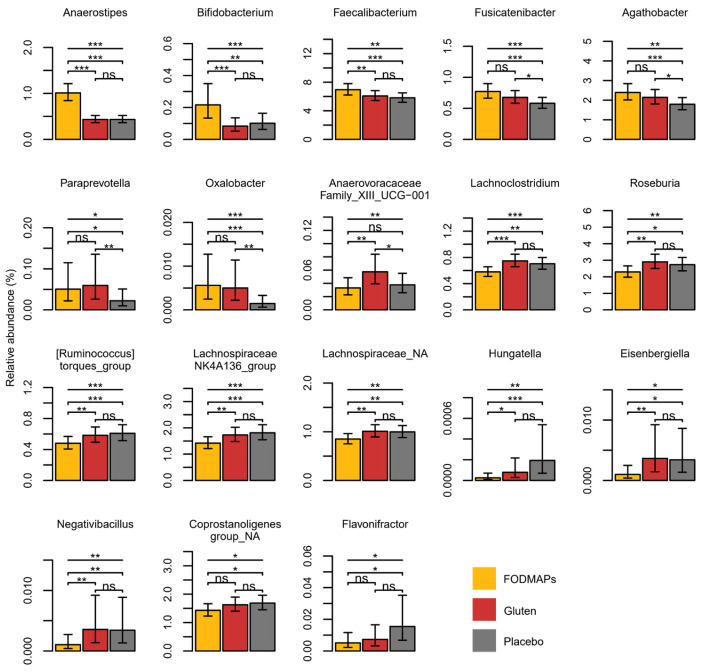
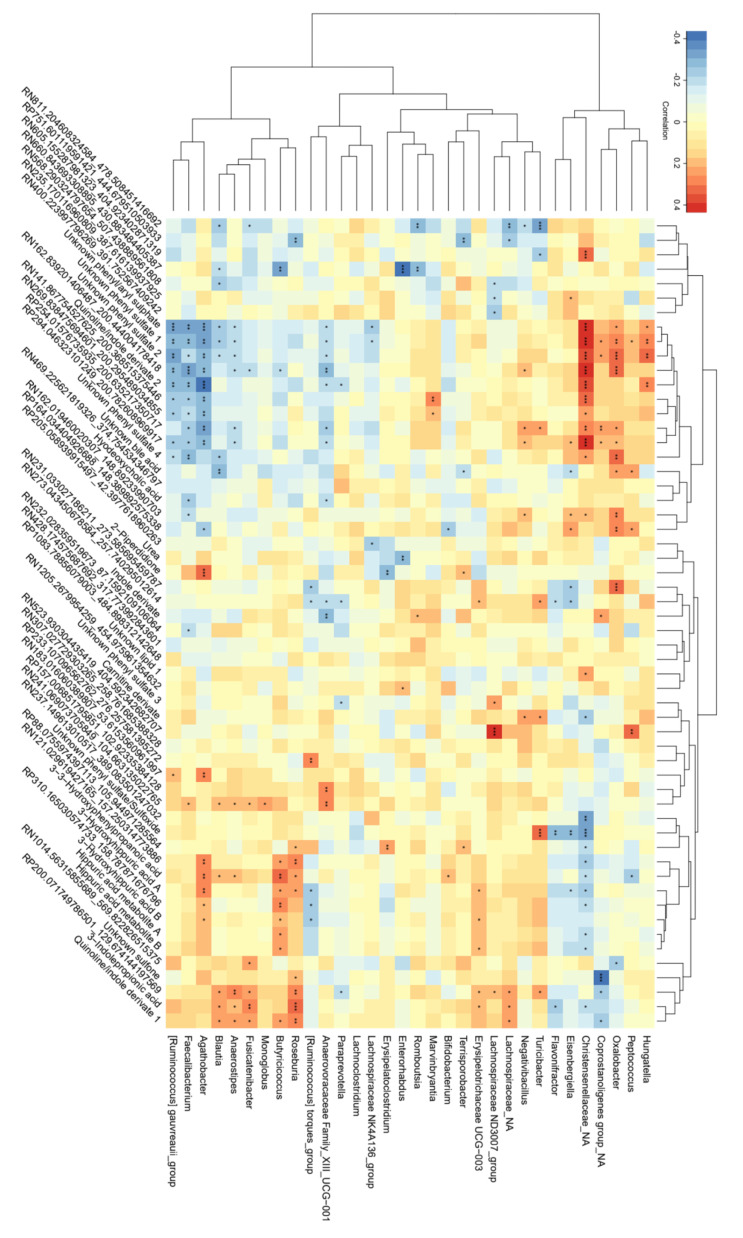
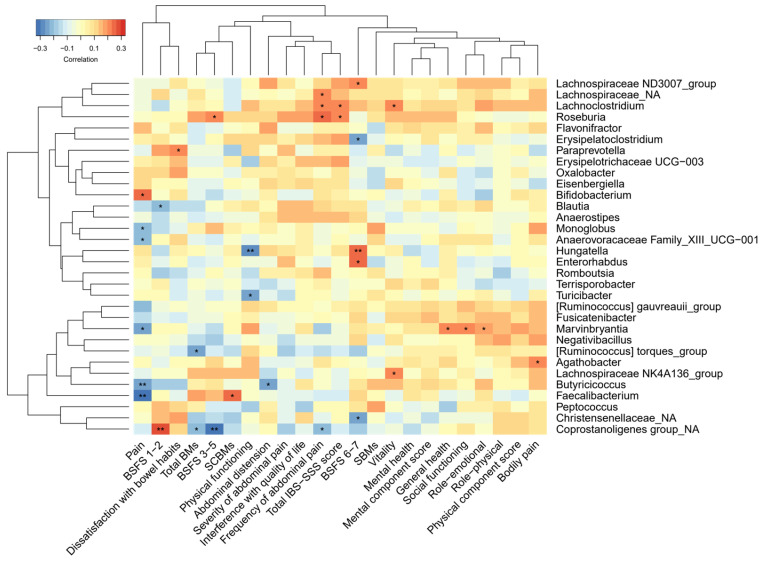
FODMAPs increased fecal saccharolytic bacteria, plasma phenolic-derived metabolites, 3-indolepropionate, and decreased isobutyrate and bile acids. Gluten decreased fecal isovalerate and altered carnitine derivatives, CoA, and fatty acids in plasma. For FODMAPs, modest correlations were observed between microbiota and phenolic-derived metabolites and 3-indolepropionate, previously associated with improved metabolic health, and reduced inflammation. Correlations between molecular data and IBS symptoms were weak.
FODMAPs, but not gluten, altered microbiota composition and correlated with phenolic-derived metabolites and 3-indolepropionate, with only weak associations with IBS symptoms. Thus, the minor effect of FODMAPs on IBS symptoms must be weighed against the effect on microbiota and metabolites related to positive health factors.
目前对于饮食治疗在肠易激综合征(IBS)中的作用机制尚不清楚。因此,我们旨在研究可发酵的寡糖、二糖、单糖和多元醇(FODMAP)和麸质如何影响肠道微生物群和循环代谢物谱,并研究肠道微生物群、代谢物与 IBS 症状之间的潜在联系。
我们使用了一项双盲、随机、交叉研究的数据,该研究对 IBS 患者进行了为期一周的 FODMAPs、麸质和安慰剂激发。为了研究激发对粪便微生物群、粪便和血浆短链脂肪酸、非靶向血浆代谢组学以及 IBS 症状的影响,我们使用了随机森林、线性混合模型和 Spearman 相关分析。
FODMAPs 增加了粪便产糖细菌、血浆酚类衍生代谢物、吲哚丙酸,并降低了异丁酸和胆汁酸。麸质减少了粪便异戊酸,并改变了肉碱衍生物、辅酶 A 和血浆中的脂肪酸。对于 FODMAPs,微生物群与酚类衍生代谢物和吲哚丙酸之间存在中等程度的相关性,这些代谢物与改善代谢健康和降低炎症有关。分子数据与 IBS 症状之间的相关性较弱。
FODMAPs 而非麸质改变了微生物群组成,并与酚类衍生代谢物和吲哚丙酸相关,与 IBS 症状的相关性较弱。因此,FODMAPs 对 IBS 症状的轻微影响必须与对与积极健康因素相关的微生物群和代谢物的影响相权衡。