Division of Population Medicine, Marie Curie Palliative Care Research Centre, Cardiff University, Cardiff, Wales, UK.
Marie Curie Palliative Care Research Centre, Wales Cancer Research Centre, Cardiff, Wales, UK.
Health Expect. 2023 Dec;26(6):2109-2126. doi: 10.1111/hex.13822. Epub 2023 Jul 13.
Patients with advanced incurable cancer face difficult decisions about palliative treatment options towards their end of life. However, they are often not provided with the appropriate information and support that is needed to make informed decisions. This review aimed to identify contexts and mechanisms associated with communication tools, patient decision-aids and shared decision-making (SDM) approaches that influence patient outcomes.
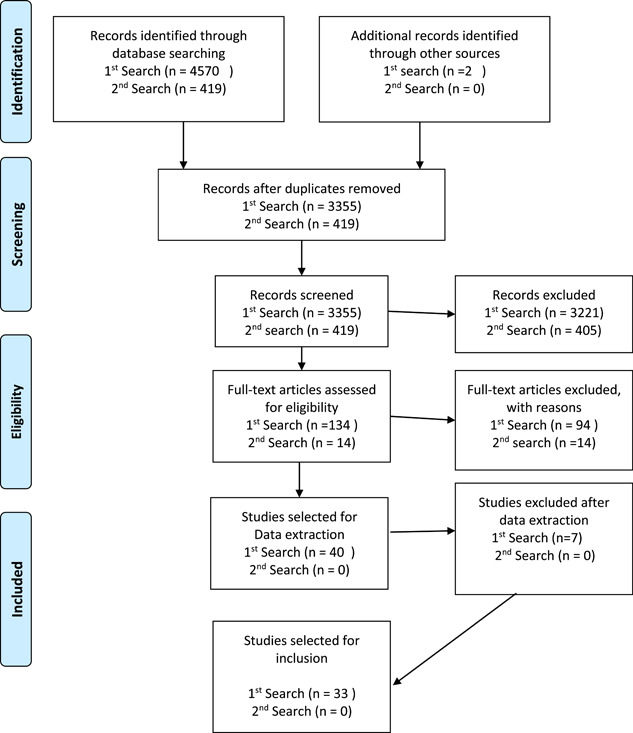
We used a realist review method to search for published studies of patients (adults > 18) with advanced cancer who were expected to make a decision about palliative treatment and/or supportive care in consultation with healthcare practitioners. We appraised and synthesised literature describing the contexts of (when and how) decision aids and SDM approaches are used, and how these contexts interact with mechanisms (resources and reasoning) which impact patient outcomes. Stakeholders including academics, palliative healthcare professionals (HCPs) and people with lived experience of supporting people with advanced incurable cancer contributed to identifying explanatory accounts. These accounts were documented, analysed and consolidated to contribute to the development of a programme theory.
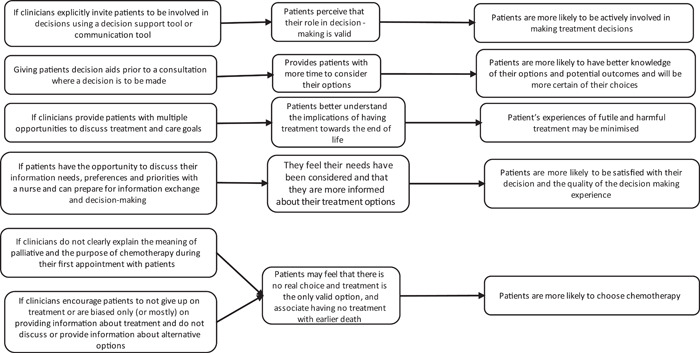
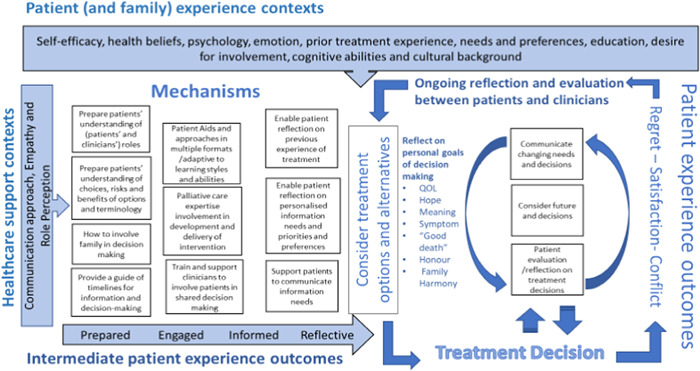
From the 33 included papers, we consolidated findings into 20 explanatory accounts to develop a programme theory that explains key contexts and mechanisms that influence patient and SDM. Contexts include underlying patients' and HCPs' attitudes and approaches. These need to be understood in relation to key mechanisms, including presenting information in multiple formats and providing adequate time and opportunities to prepare for and revisit decisions. Contexts influenced mechanisms which then influence the levels of patient decisional satisfaction, conflict and regret.
Our programme theory highlights mechanisms that are important in supporting shared treatment decisions for advanced noncurative cancer. The findings are informative for developing and evaluating interventions to improve understanding and involvement in SDM for patients with advanced incurable cancer.
We included patient and public involvement (PPI) representatives in four stakeholder meetings. PPI helped to define the scope of the review, identify their unique experiences and perspectives, synthesise their perspectives with our review findings, make decisions about which theories we included in our programme theory and develop recommendations for policy and practice and future research.
患有晚期绝症的患者在生命末期面临姑息治疗选择的艰难决策。然而,他们通常没有得到做出明智决策所需的适当信息和支持。本综述旨在确定与沟通工具、患者决策辅助工具和共同决策(SDM)方法相关的背景和机制,这些方法会影响患者的结局。
我们使用真实主义综述方法,检索了关于预计与医疗保健从业者协商做出姑息治疗和/或支持性护理决策的晚期癌症患者的已发表研究。我们评估并综合了描述决策辅助工具和 SDM 方法使用的背景(何时以及如何使用)以及这些背景如何与影响患者结局的机制(资源和推理)相互作用的文献。包括学者、姑息治疗保健专业人员和有支持晚期绝症患者经验的人在内的利益相关者都对识别解释性说法做出了贡献。这些说法被记录、分析和整合,以促进方案理论的发展。
从 33 篇纳入的论文中,我们将研究结果整合为 20 个解释性说法,以制定一个方案理论,解释影响患者和 SDM 的关键背景和机制。背景包括患者和医疗保健专业人员的基本态度和方法。这些需要与关键机制相关联,包括以多种格式呈现信息,并提供足够的时间和机会来准备和重新考虑决策。背景会影响机制,进而影响患者决策满意度、冲突和遗憾的水平。
我们的方案理论强调了支持晚期非治愈性癌症共同治疗决策的重要机制。研究结果为开发和评估干预措施提供了信息,以改善对晚期绝症患者 SDM 的理解和参与。
我们在四次利益相关者会议中纳入了患者和公众参与(PPI)代表。PPI 有助于定义审查范围、确定他们独特的经验和观点、将他们的观点与我们的审查结果综合起来、决定我们纳入方案理论的理论以及为政策和实践以及未来研究制定建议。