Instituto de Investigaciones Biomédicas Alberto Sols (CSIC-UAM), Arturo Duperier 4, 28029 Madrid, Spain.
Department of Biochemistry and Molecular Biomedicine-Institute of Biomedicine (IBUB), Faculty of Biology, Universitat de Barcelona, 08028 Barcelona, Spain.
Biochem Soc Trans. 2023 Aug 31;51(4):1429-1436. doi: 10.1042/BST20220504.
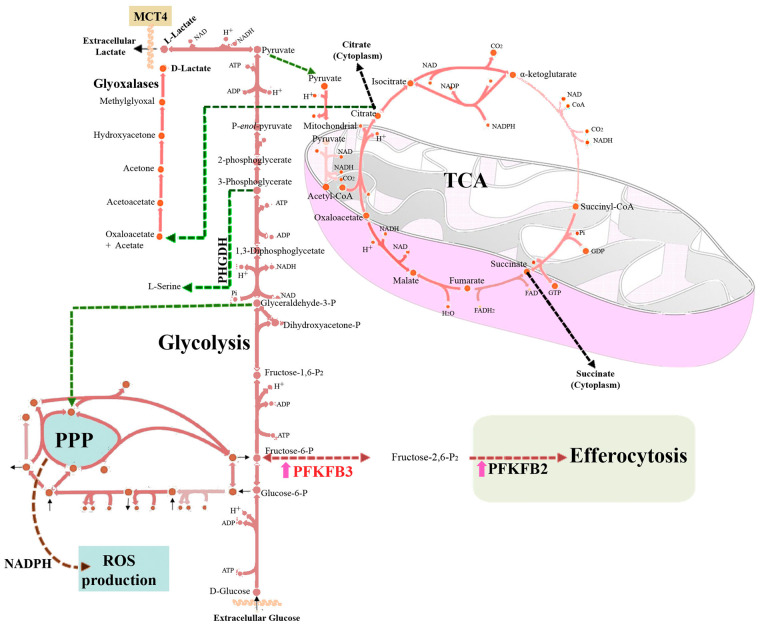
Macrophages are essential components of the innate immune system that play both homeostatic roles in healthy organs, and host defence functions against pathogens after tissue injury. To accomplish their physiological role, macrophages display different profiles of gene expression, immune function, and metabolic phenotypes that allow these cells to participate in different steps of the inflammatory reaction, from the initiation to the resolution phase. In addition, significant differences exist in the phenotype of macrophages depending on the tissue in which they are present and on the mammalian species. From a metabolic point of view, macrophages are essentially glycolytic cells; however, their metabolic fluxes are dependent on the functional polarisation of these cells. This metabolic and cellular plasticity offers the possibility to interfere with the activity of macrophages to avoid harmful effects due to persistent activation or the release of molecules that delay tissue recovery after injury.
巨噬细胞是先天免疫系统的重要组成部分,在健康器官中发挥着稳态作用,并在组织损伤后对病原体发挥宿主防御功能。为了完成其生理作用,巨噬细胞表现出不同的基因表达、免疫功能和代谢表型,使这些细胞能够参与炎症反应的不同阶段,从起始到缓解阶段。此外,根据存在的组织和哺乳动物种类的不同,巨噬细胞的表型存在显著差异。从代谢的角度来看,巨噬细胞本质上是糖酵解细胞;然而,它们的代谢通量取决于这些细胞的功能极化。这种代谢和细胞可塑性提供了干预巨噬细胞活性的可能性,以避免由于持续激活或释放延迟损伤后组织恢复的分子而产生的有害影响。