School of Nursing, Purdue University, West Lafayette, USA.
Johnson Hall of Nursing, 502 N University St, West Lafayette, IN, 47907, 260-449-0316, USA.
BMC Psychol. 2023 Jul 21;11(1):212. doi: 10.1186/s40359-023-01146-x.
Opioid overdose is the leading cause of injury-related death in the United States. Individuals who overdose outside of clinical settings have more positive clinical outcomes when they receive naloxone, an opioid antagonist, from a bystander as an early intervention before emergency personnel arrive. However, there is a gap in knowledge about successful instantaneous learning and intervention in a real-life stressful environment. The objective of this study is to explore the efficacy of different instructional delivery methods for bystanders in a stressful environment. We aim to evaluate which methods are most effective for instantaneous learning, successful intervention, and improved clinical outcomes.
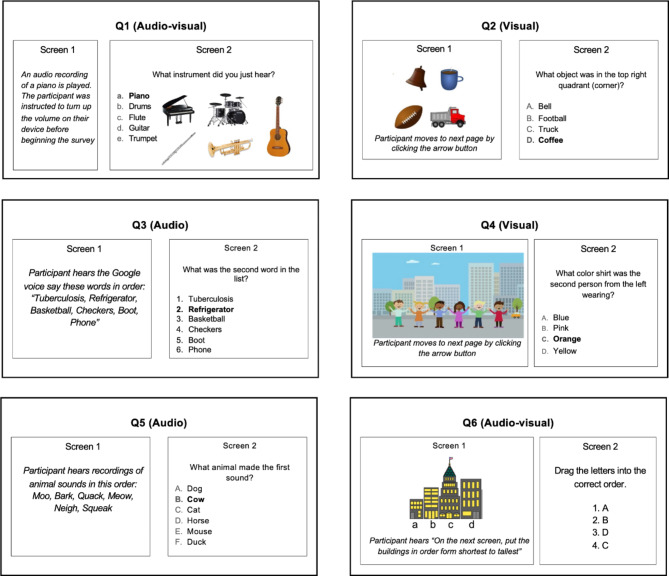
To explore instantaneous learning in a stressful environment, we conducted a quantitative randomized controlled trial to measure how accurately individuals responded to memory-based survey questions guided by different instructional methods. Students from a large university in the Midwest (n = 157) were recruited in a public space on campus and accessed the six-question survey on their mobile devices. The intervention group competed the survey immediately while the research team created a distracting environment. The control group was asked to complete the survey later in a quiet environment.
The intervention group correctly answered 0.72 questions fewer than the control group (p = .000, CI [0.337, 1.103]). Questions Q1 and Q5 contained direct instructions with a verbal component and showed the greatest accuracy with over 90% correct for both stressful and controlled environments.
The variability in the responses suggests that there are environmental factors as well as instructional design features which influence instantaneous learning. The findings of this study begin to address the gap in knowledge about the effects of stress on instantaneous learning and the most effective types of instruction for untrained bystanders in emergency situations.
在美国,阿片类药物过量是导致与伤害相关的死亡的主要原因。在临床环境之外发生过量用药的个体,如果在急救人员到达之前,由旁观者作为早期干预措施给予阿片类拮抗剂纳洛酮,他们的临床结局更积极。然而,在现实生活的应激环境中,成功的即时学习和干预方面存在知识空白。本研究的目的是探讨不同指导方法对旁观者在应激环境中的效果。我们旨在评估哪些方法对于即时学习、成功干预和改善临床结局最有效。
为了在应激环境中探索即时学习,我们进行了一项定量随机对照试验,以衡量个体在不同指导方法下对基于记忆的调查问题的回答的准确性。我们在中西部一所大型大学校园的公共区域招募了学生(n=157),并让他们在移动设备上访问六问题调查。干预组在研究团队营造出分散注意力的环境的同时立即完成调查,而对照组则在安静的环境中稍后完成调查。
干预组正确回答的问题比对照组少 0.72 个(p=0.000,CI[0.337,1.103])。问题 Q1 和 Q5 包含带有口头成分的直接指导,在应激和控制环境下的正确率都超过 90%。
响应的可变性表明,存在环境因素以及影响即时学习的教学设计特征。这项研究的结果开始解决关于应激对即时学习的影响以及在紧急情况下对未经训练的旁观者最有效的指导类型的知识空白。