Lu Hongyu, Hu Jisong, Wei Xijun, Zhang Kaiqi, Xiao Xiao, Zhao Jingxin, Hu Qiang, Yu Jing, Zhou Guangmin, Xu Bingang
Tsinghua Shenzhen International Graduate School, Tsinghua University, Shenzhen, 518055, P. R. China.
State Key Laboratory of Advanced Welding and Joining, School of Materials Science and Engineering, Harbin Institute of Technology, Harbin, 150001, P. R. China.
Nat Commun. 2023 Jul 22;14(1):4435. doi: 10.1038/s41467-023-40178-0.
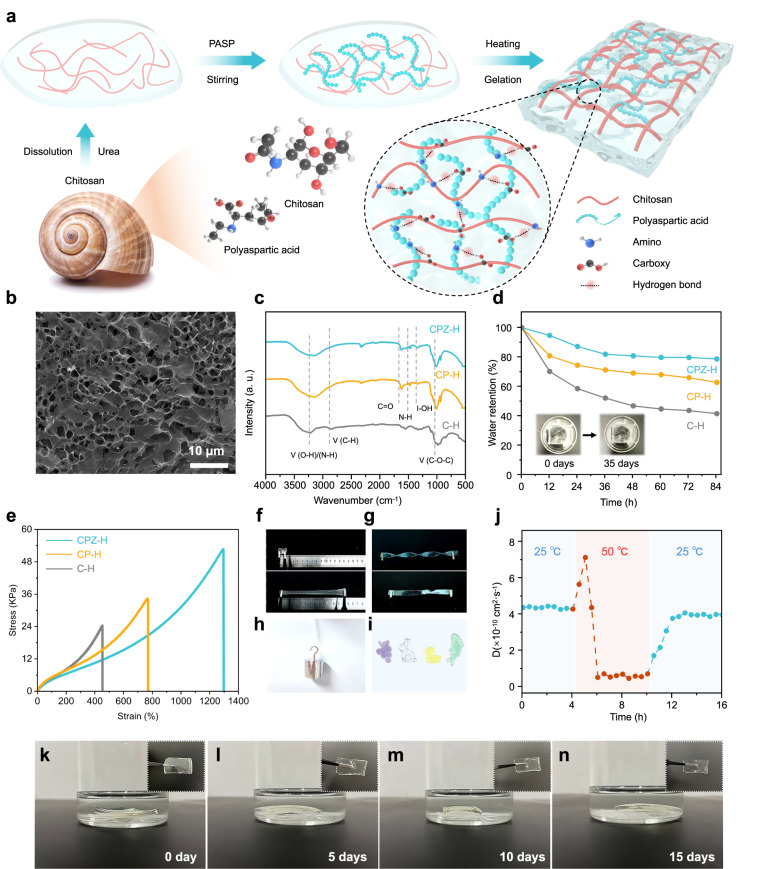
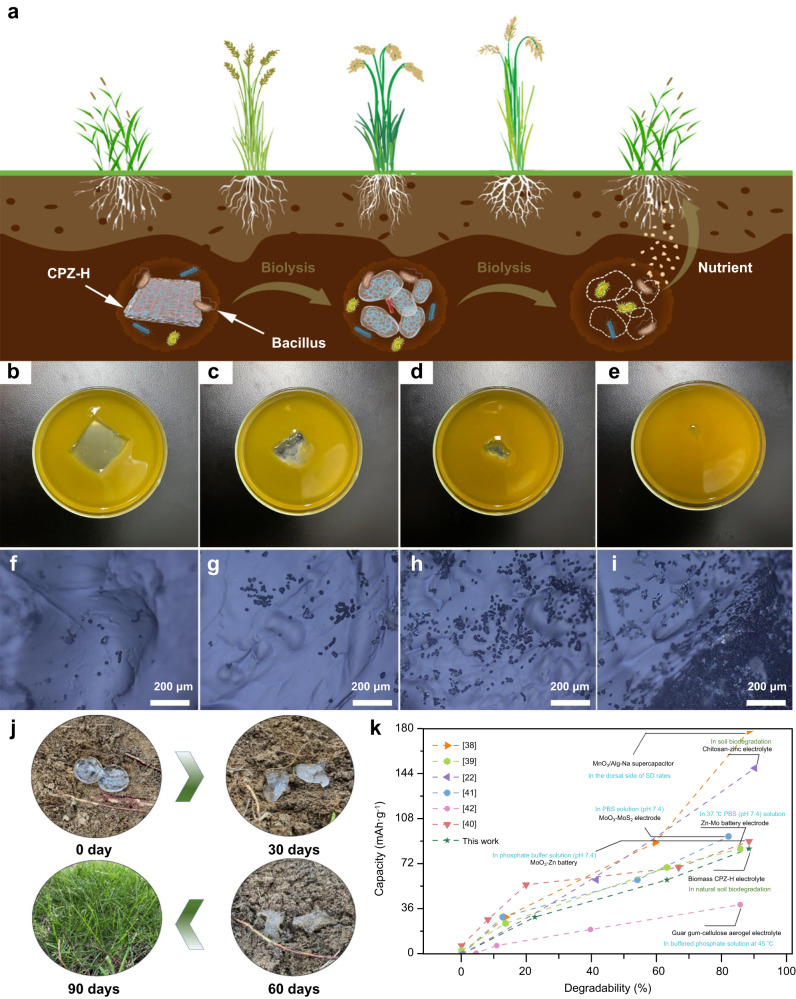
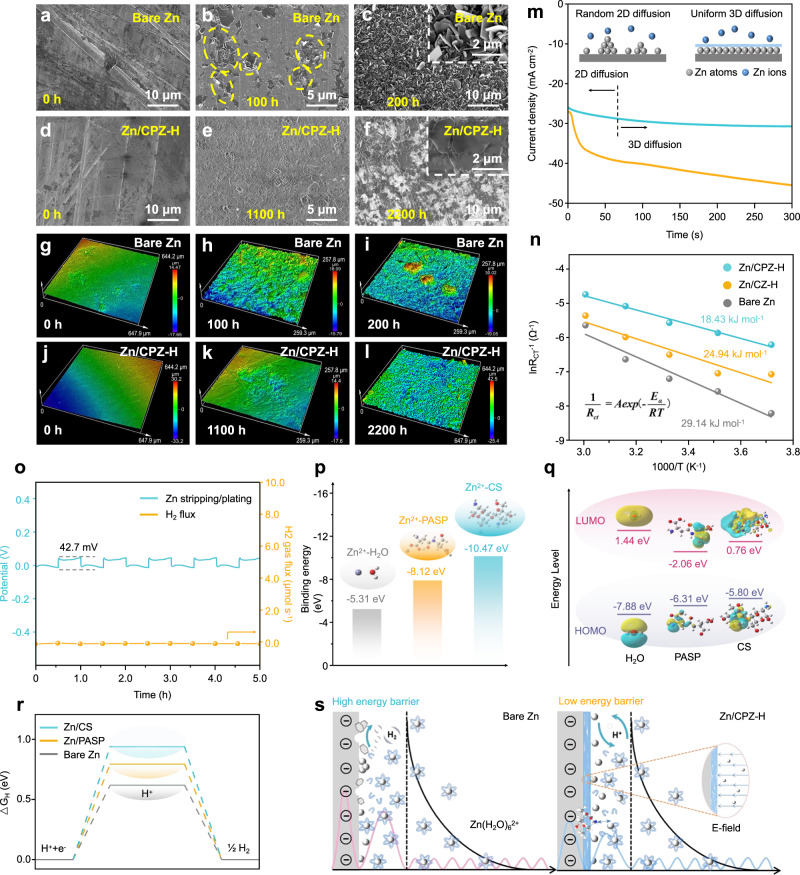
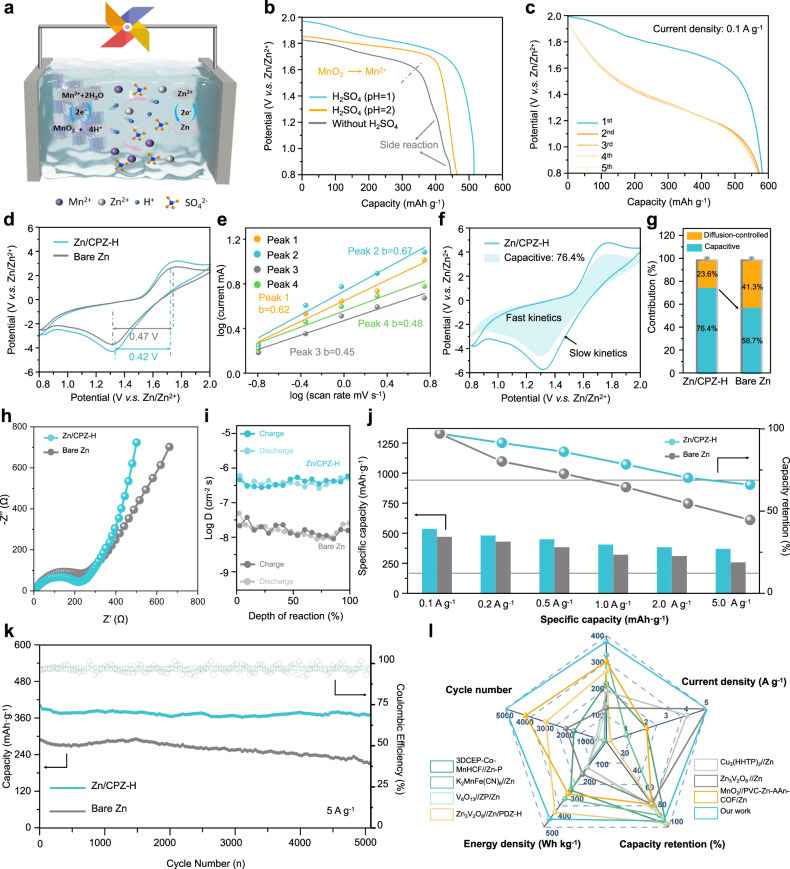
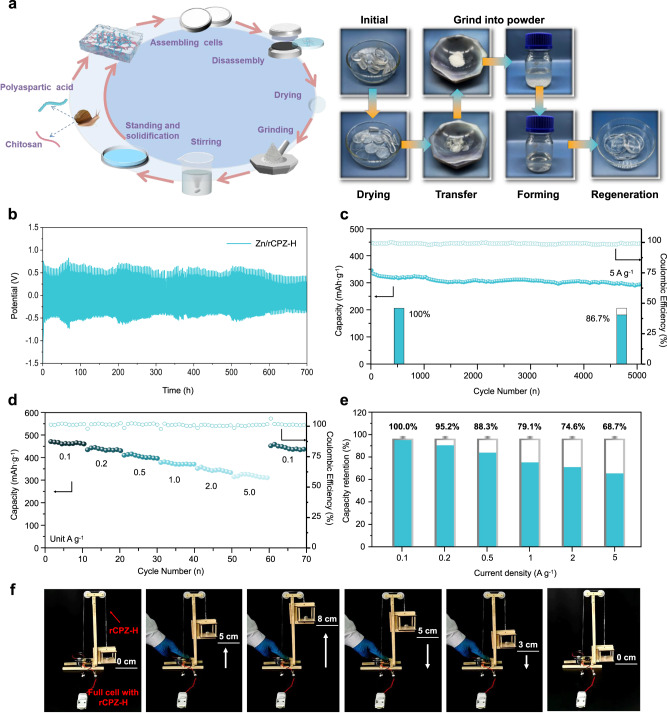
The operation of traditional aqueous-electrolyte zinc-ion batteries is adversely affected by the uncontrollable growth of zinc dendrites and the occurrence of side reactions. These problems can be avoided by the development of functional hydrogel electrolytes as replacements for aqueous electrolytes. However, the mechanism by which most hydrogel electrolytes inhibit the growth of zinc dendrites on a zinc anode has not been investigated in detail, and there is a lack of a large-scale recovery method for mainstream hydrogel electrolytes. In this paper, we describe the development of a recyclable and biodegradable hydrogel electrolyte based on natural biomaterials, namely chitosan and polyaspartic acid. The distinctive adsorptivity and inducibility of chitosan and polyaspartic acid in the hydrogel electrolyte triggers a double coupling network and an associated synergistic inhibition mechanism, thereby effectively inhibiting the side reactions on the zinc anode. In addition, this hydrogel electrolyte played a crucial role in an aqueous acid-based Zinc/MnO battery, by maintaining its interior two-electron redox reaction and inhibiting the formation of zinc dendrites. Furthermore, the sustainable biomass-based hydrogel electrolyte is biodegradable, and could be recovered from the Zinc/MnO battery for subsequent recycling.
传统水系电解质锌离子电池的运行受到锌枝晶不可控生长和副反应发生的不利影响。通过开发功能性水凝胶电解质来替代水系电解质,可以避免这些问题。然而,大多数水凝胶电解质抑制锌阳极上锌枝晶生长的机制尚未得到详细研究,并且缺乏针对主流水凝胶电解质的大规模回收方法。在本文中,我们描述了一种基于天然生物材料壳聚糖和聚天冬氨酸的可回收且可生物降解的水凝胶电解质的开发。壳聚糖和聚天冬氨酸在水凝胶电解质中的独特吸附性和诱导性触发了双耦合网络和相关的协同抑制机制,从而有效抑制了锌阳极上的副反应。此外,这种水凝胶电解质在基于水基酸的锌/二氧化锰电池中发挥了关键作用,通过维持其内部的双电子氧化还原反应并抑制锌枝晶的形成。此外,这种基于可持续生物质的水凝胶电解质是可生物降解的,并且可以从锌/二氧化锰电池中回收以进行后续再利用。